
Introduction to 1.5kW Fiber laser cutting Technology
The evolution of industrial manufacturing in Mexico, particularly within the industrial corridors of Toluca and Lerma, has seen a significant shift toward high-precision thermal processes. Among these, the 1.5kW fiber laser cutting machine has emerged as a cornerstone for small to medium-sized enterprises (SMEs) and specialized fabrication shops. Fiber laser technology utilizes an optical fiber doped with rare-earth elements as the active gain medium, delivering a high-intensity beam at a wavelength of approximately 1.064 micrometers. This wavelength is particularly advantageous for metal processing due to its high absorption rate in metallic substrates compared to traditional CO2 lasers.
For operations in Toluca, where the manufacturing sector supports automotive, electrical, and decorative industries, the 1.5kW power rating offers a balanced “sweet spot.” It provides sufficient energy density to process non-ferrous metals like brass while maintaining lower operational costs and infrastructure requirements than high-wattage 6kW or 12kW systems. This guide explores the technical intricacies of utilizing a 1.5kW fiber laser for brass, a material known for its aesthetic appeal and functional conductivity but notorious for its challenges in laser processing.
The Mechanics of Laser Cutting Brass
Understanding Material Reflectivity and Thermal Conductivity
Brass is an alloy of copper and zinc, and from an engineering perspective, it is classified as a “highly reflective” material. In the context of laser cutting, reflectivity is the primary hurdle. At the 1.064μm wavelength, brass reflects a significant portion of the laser energy back toward the source, especially during the initial piercing phase. If the machine is not equipped with proper back-reflection protection, this reflected energy can damage the delicate optical components of the fiber laser source.
Furthermore, brass possesses high thermal conductivity. This means that as the laser attempts to heat a localized spot to its melting point, the material rapidly dissipates that heat into the surrounding area. A 1.5kW system must, therefore, deliver a highly concentrated beam with a small spot size to overcome this heat sink effect. Precision in focal position and the use of high-pressure auxiliary gases are critical to ensuring that the melt is ejected before it can solidify or cause dross buildup on the underside of the workpiece.
Piercing Strategies for 1.5kW Systems
The piercing phase is the most critical moment when laser cutting brass. For a 1.5kW machine, the piercing of brass sheets (typically ranging from 1mm to 5mm) requires a multi-stage approach. Operators in Toluca often utilize “pulse piercing,” where the laser delivers high-frequency bursts of energy rather than a continuous wave. This minimizes the amount of reflected light and prevents the “cratering” effect that can occur with excessive heat buildup. Modern CNC controllers allow for the modulation of power, frequency, and duty cycle during these milliseconds to ensure a clean entry point.
Industrial Landscape: Why Toluca?
Toluca is one of Mexico’s most vital industrial hubs, hosting a massive cluster of automotive OEMs and Tier 1 suppliers. The demand for brass components in this region is driven by several factors. Brass is widely used for electrical connectors, bushings, decorative trim for high-end automotive interiors, and architectural hardware. The proximity to Mexico City and the presence of a skilled labor force make Toluca an ideal location for precision laser cutting services.
In the State of Mexico, the environmental conditions—specifically the altitude of Toluca (approximately 2,660 meters above sea level)—can influence the performance of pneumatic systems and cooling units. Engineers must ensure that the chillers integrated with the 1.5kW fiber laser are rated for the local atmospheric pressure to maintain the laser source at a stable operating temperature, typically between 20°C and 25°C. Consistent cooling is paramount when processing brass, as the machine often runs at higher power percentages to maintain cutting speeds.
Technical Specifications and Machine Configuration
The Laser Source and Optical Path
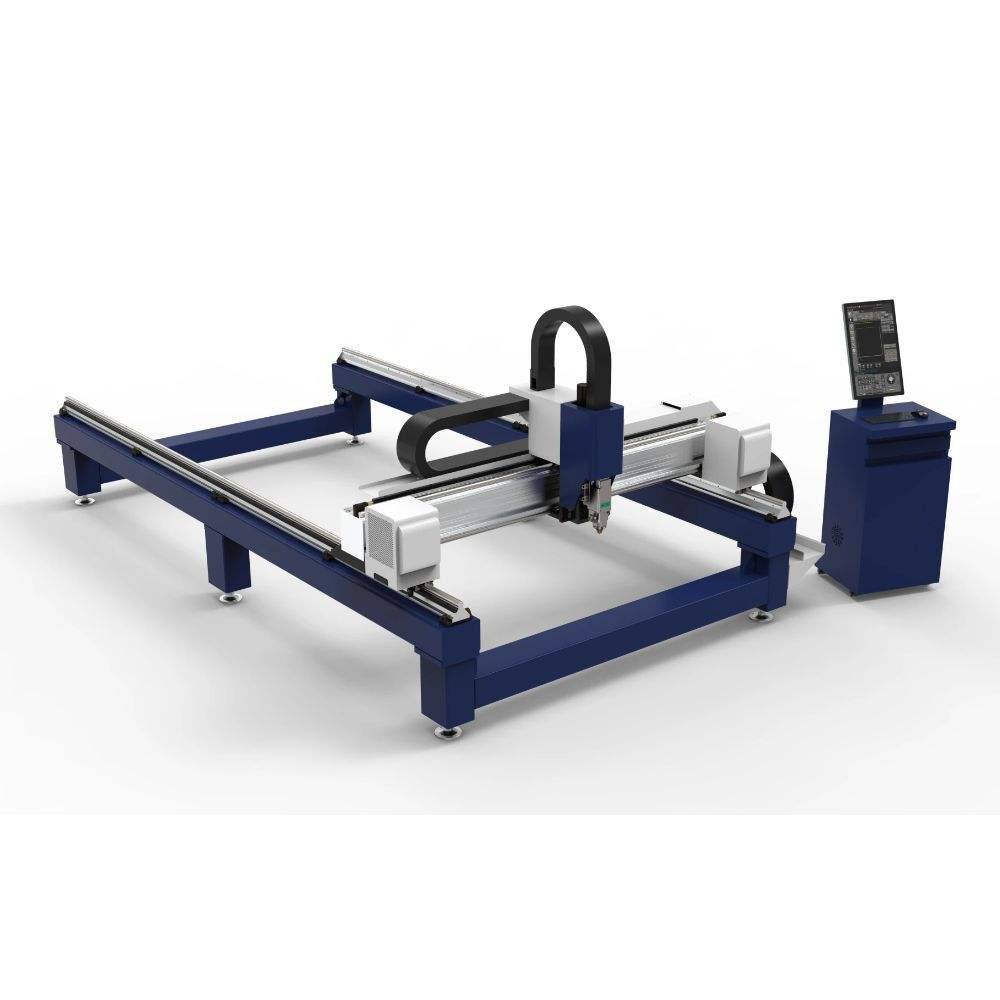
A reliable 1.5kW fiber laser cutting machine typically features a laser source from reputable manufacturers like Raycus, MaxPhotonics, or IPG Photonics. For brass processing, the source must include an optical isolator or a “back-reflection protection” mechanism. This hardware ensures that any light reflected from the brass surface is diverted or absorbed before it can reach the laser diodes. The delivery fiber carries the beam to the cutting head, which contains collimating and focusing lenses. For brass, a shorter focal length is often preferred to achieve the highest possible power density at the focal point.
The Importance of Auxiliary Gases
When laser cutting brass with a 1.5kW system, the choice of auxiliary gas significantly impacts the edge quality and speed.
- Nitrogen (N2): This is the most common choice for brass. Nitrogen acts as a shielding gas, preventing oxidation of the cut edge. High-pressure nitrogen (typically 12-18 bar) is used to mechanically blow the molten brass out of the kerf. This results in a clean, bright, and weld-ready edge.
- Oxygen (O2): While less common for thin brass, oxygen can be used to facilitate an exothermic reaction, adding thermal energy to the cut. However, this often leads to heavy oxidation and a darker edge finish.
- Compressed Air: For cost-effective production of non-critical parts, filtered and dried compressed air can be used. It contains enough nitrogen to provide some shielding and enough oxygen to assist the cut, though the edge quality is usually inferior to pure nitrogen.
Optimal Parameters for Brass Thicknesses
While a 1.5kW machine is capable of cutting various metals, its performance on brass is generally optimized for the following thicknesses:
1mm to 2mm Brass
In this range, the 1.5kW laser can achieve impressive speeds, often exceeding 15-20 meters per minute. The focus position is usually set slightly below the surface of the material to ensure a narrow kerf. High-pressure nitrogen is essential here to maintain the speed and prevent “dross” (hardened melt) from adhering to the bottom edge.
3mm to 5mm Brass
As the thickness increases, the cutting speed drops significantly. For 5mm brass, the machine may operate at 0.8 to 1.2 meters per minute. At these thicknesses, the 1.5kW limit is being tested. The operator must fine-tune the “nozzle standoff” distance—the gap between the nozzle tip and the material—to ensure laminar gas flow. If the gas flow becomes turbulent, the quality of the cut will degrade, resulting in a rougher surface finish.
Maintenance and Safety Protocols
Protecting the Optics
The primary maintenance concern when laser cutting brass is the cleanliness of the protective window (cover glass). Because brass is a soft alloy with a lower boiling point than steel, it tends to produce more “spatter” during the piercing phase. If these microscopic metallic droplets land on the protective window, they will absorb laser energy, heat up, and eventually crack the lens. Regular inspection of the optics—often multiple times per shift—is mandatory in a high-production Toluca facility.
Dust Extraction and Filtration
The vaporized zinc in brass produces fine fumes that can be hazardous if inhaled. A robust dust extraction system with HEPA filtration is a critical component of any 1.5kW fiber laser installation. In the enclosed industrial parks of Toluca, maintaining air quality within the shop floor is not only a safety requirement but also a regulatory one under Mexican STPS (Secretaría del Trabajo y Previsión Social) standards.
Economic Advantages for Toluca Manufacturers
Investing in a 1.5kW fiber laser cutting machine provides a significant competitive edge for local workshops. The low power consumption—often one-third that of a CO2 laser—translates to lower utility bills. Furthermore, the lack of moving parts in the laser source (unlike the turbines and blowers in CO2 systems) means that the “mean time between failures” (MTBF) is exceptionally high. For a manufacturer in Toluca, this means more “uptime” and the ability to meet the just-in-time (JIT) delivery requirements of the automotive industry.
The versatility of the 1.5kW system also allows shops to diversify. While the focus of this guide is brass, the same machine can effortlessly switch to stainless steel, carbon steel, or aluminum by simply changing the gas settings and cutting parameters in the CNC software. This flexibility is vital in the fluctuating economic landscape of the State of Mexico.
Conclusion: Mastering the 1.5kW Fiber Laser
The 1.5kW fiber laser cutting machine represents a sophisticated blend of physics and engineering, offering Toluca’s manufacturing sector a tool of immense precision and efficiency. While brass presents unique challenges due to its reflective nature and thermal properties, modern fiber laser technology—coupled with the right auxiliary gases and piercing strategies—overcomes these hurdles with ease. By focusing on proper maintenance, understanding material dynamics, and leveraging the local industrial infrastructure, operators can produce high-quality brass components that meet international standards. As the industrial heart of Mexico continues to beat strongly in Toluca, the adoption of such advanced laser cutting technologies will undoubtedly remain a driving force behind its growth.
















