
Introduction to 1.5kW Fiber laser cutting in Queretaro’s Industrial Landscape
The industrial corridor of Queretaro, Mexico, has established itself as a premier hub for aerospace, automotive, and electronic manufacturing. As the demand for high-precision components grows, the adoption of advanced laser cutting technology has become a necessity rather than a luxury. Among the various power configurations available, the 1.5kW fiber laser cutting machine represents a strategic “sweet spot” for small to medium-sized enterprises (SMEs) and specialized fabrication shops focusing on non-ferrous metals like brass.
Fiber laser technology has revolutionized the way we approach metal fabrication. Unlike traditional CO2 lasers, which rely on gas mixtures and complex mirror systems, fiber lasers utilize a solid-state gain medium. This results in a beam with a significantly shorter wavelength (typically around 1.064 micrometers), which is much more readily absorbed by reflective metals. In the context of Queretaro’s competitive manufacturing sector, the 1.5kW fiber laser offers an ideal balance of capital investment, operational efficiency, and the technical capability required to process complex brass geometries.

The Technical Advantage of the 1.5kW Power Class
A 1.5kW fiber source provides sufficient energy density to achieve high-speed processing on thin to medium-gauge materials. For brass, which is notoriously difficult to cut due to its high thermal conductivity and reflectivity, the 1.5kW threshold is where consistent production quality begins. At this power level, the machine can comfortably handle brass sheets ranging from 0.5mm to 5mm in thickness, depending on the auxiliary gas and beam parameters used.
The high beam quality (M2 factor) of a 1.5kW fiber laser ensures a small focal spot size. This high power density is critical for “breaking” the initial reflectivity of brass. Once the material is pierced, the continuous wave (CW) or pulsed delivery of energy maintains a stable melt pool, allowing for clean cuts with minimal dross. For Queretaro-based engineers working on electrical connectors or decorative architectural elements, this means reduced secondary finishing costs and faster turnaround times.
Processing Brass: Overcoming Reflectivity and Conductivity
Brass is an alloy of copper and zinc, and its physical properties pose unique challenges for laser cutting. It is highly reflective in the infrared spectrum and possesses high thermal conductivity, which tends to dissipate heat away from the cut zone rapidly. Historically, these factors made brass nearly impossible to cut with CO2 lasers without risking expensive back-reflection damage to the resonator.
The Role of Wavelength and Absorption
The 1.06µm wavelength of a fiber laser is absorbed by brass at a rate several times higher than the 10.6µm wavelength of a CO2 laser. This increased absorption allows the 1.5kW beam to melt the material efficiently. However, even with fiber technology, back-reflection remains a concern. Modern 1.5kW machines are equipped with optical isolators and back-reflection protection systems. These components detect any light bouncing back into the fiber delivery cable and shut down the source or deflect the energy to protect the laser diode modules. This is particularly important for the high-mix, low-volume production environments common in Queretaro’s job shops.
Thermal Management and Kerf Width
Because brass conducts heat so effectively, the laser cutting process must be fast enough to outpace the thermal diffusion. If the cutting speed is too slow, the heat spreads into the surrounding material, causing a wider kerf, melting of the edges, and potential warping of the part. A 1.5kW machine provides the necessary power to maintain high feed rates (often several meters per minute on 1mm brass), ensuring that the heat-affected zone (HAZ) remains narrow and the structural integrity of the alloy is preserved.
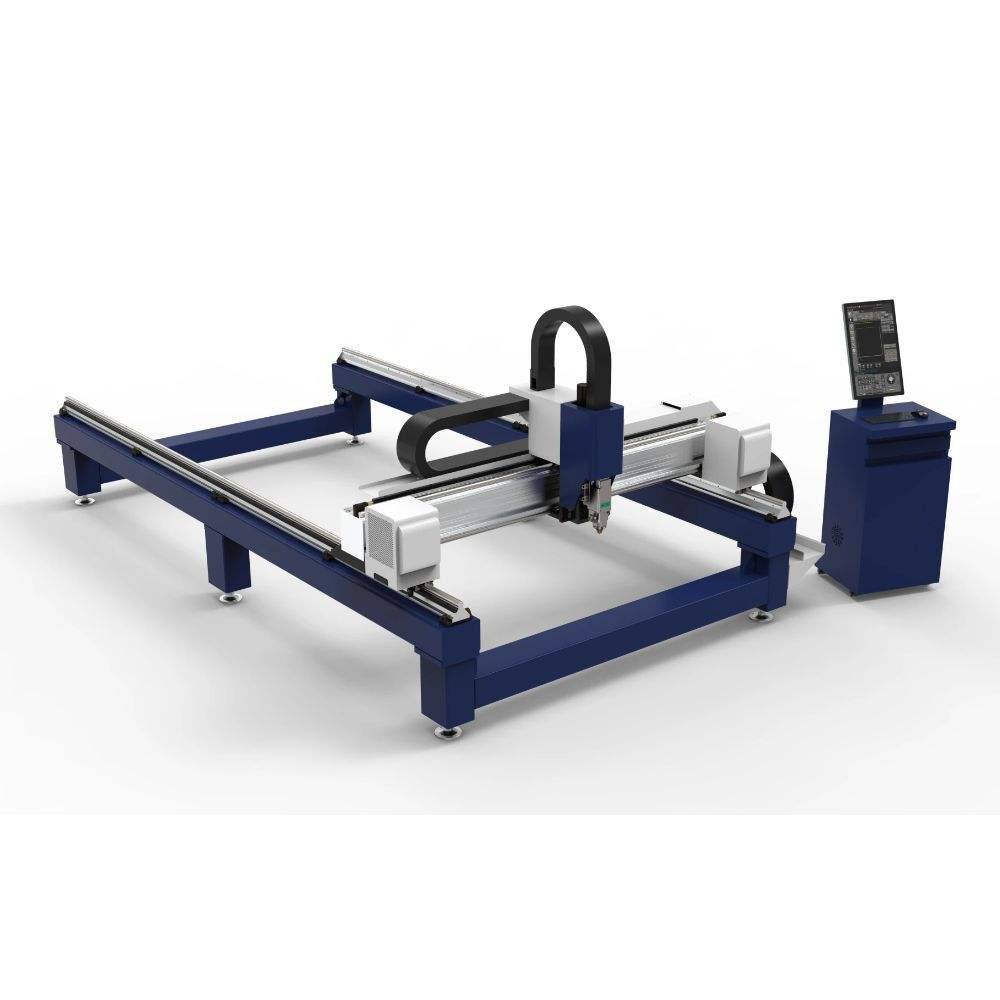
Optimizing Parameters for Brass in Queretaro’s Climate
Environmental factors in Queretaro, such as altitude and humidity, can subtly influence laser cutting performance, particularly concerning the purity of auxiliary gases. To achieve the best results on brass with a 1.5kW system, several parameters must be meticulously calibrated.
Auxiliary Gas Selection: Oxygen vs. Nitrogen
The choice of assist gas is the most critical factor in determining the edge quality of brass.
- Oxygen (O2): When cutting thicker brass (3mm to 5mm), oxygen can be used to initiate an exothermic reaction, adding thermal energy to the cut. This allows for faster speeds on thicker sections but results in an oxidized, darkened edge that may require cleaning if the part is for decorative use.
- Nitrogen (N2): For high-precision electrical components or decorative items where a bright, clean edge is required, high-pressure nitrogen is the standard. Nitrogen acts as a shielding gas, blowing the molten brass out of the kerf without allowing it to react with oxygen. This requires higher pressures (often 12-18 bar), making a robust gas delivery system essential for Queretaro facilities.
Focus Position and Nozzle Geometry
For brass, the focal point is typically set slightly below the surface of the material or right at the bottom edge to ensure the energy is concentrated where the melt needs to be ejected. Using a “double” nozzle or a specialized “high-speed” nozzle can help stabilize the gas flow, reducing turbulence and preventing the formation of “burrs” or dross on the underside of the brass sheet.
Integration into Queretaro’s Key Industries
The 1.5kW fiber laser cutting machine serves as a versatile tool across Queretaro’s dominant industrial sectors. Its ability to handle brass with precision opens doors to specialized manufacturing niches.
Aerospace and Defense
Queretaro is home to major aerospace players. Brass components, such as bushings, specialized fasteners, and housing for avionics, require tight tolerances. The 1.5kW fiber laser provides the repeatability needed to meet AS9100 standards, ensuring that every part cut is identical to the CAD model. The narrow kerf allows for nesting parts tightly, minimizing waste of expensive brass alloys.
Electrical and Electronics Manufacturing
Brass is a staple in the electrical industry due to its conductivity. Terminal blocks, busbars, and switchgear components are frequently manufactured in the Bajío region. A 1.5kW laser cutting system can rapidly prototype these parts and move into full-scale production without the need for expensive stamping dies. This agility is a significant competitive advantage for local manufacturers catering to the North American market.
Architectural and Decorative Applications
Queretaro’s rich architectural heritage and modern construction boom create a demand for custom brass signage, inlays, and decorative screens. The 1.5kW laser’s ability to execute intricate, “lace-like” designs in brass sheet allows architects and designers to push the boundaries of metalwork, providing high-end finishes that are both durable and aesthetically pleasing.
Maintenance and Operational Best Practices
To ensure the longevity of a 1.5kW fiber laser cutting machine, especially when processing reflective materials like brass, a rigorous maintenance schedule is mandatory. The high-tech manufacturing environment in Queretaro demands high uptime and reliability.
Optical Path Integrity
While the fiber itself is a closed system, the cutting head contains several critical optical elements, including the protective window (cover glass) and the focusing lens. When laser cutting brass, the risk of “spatter” is higher. Operators must inspect the cover glass daily. Even a tiny speck of dust or a brass droplet can absorb laser energy, heat up, and shatter the lens, leading to costly downtime.
Cooling Systems (Chillers)
The fiber source and the cutting head generate significant heat. In Queretaro’s climate, where temperatures can fluctuate, a high-quality dual-circuit chiller is essential. The chiller must maintain the laser source at a constant temperature (usually around 22-25°C) to prevent thermal drifting of the wavelength and to ensure the stability of the 1.5kW output. Regular coolant replacement and filter cleaning are non-negotiable tasks for the maintenance team.
Software and Motion Control
Modern 1.5kW machines are paired with sophisticated CNC software that includes “Lead-in” and “Lead-out” strategies specifically designed for reflective metals. Implementing a “power ramp” where the laser power increases as the machine accelerates prevents burning at the corners of brass parts. Queretaro’s technicians should be trained in these software nuances to maximize the machine’s potential.
Economic Impact and ROI for Local Manufacturers
Investing in a 1.5kW fiber laser cutting machine offers a compelling Return on Investment (ROI) for Queretaro’s fabrication shops. The primary drivers of this ROI are speed, energy efficiency, and material versatility. Fiber lasers consume approximately 70% less electricity than CO2 lasers of equivalent power, which is a significant factor given industrial electricity rates in Mexico.
Furthermore, the maintenance costs of a fiber system are substantially lower. There are no mirrors to align and no vacuum pumps to service. For a shop in Queretaro, this translates to more hours of “beam-on” time and lower overhead per part. When processing brass, the speed advantage of the 1.5kW fiber laser over traditional mechanical sawing or older laser technologies can increase throughput by 200-300%, allowing local businesses to take on more contracts and scale their operations effectively.
Conclusion: The Future of Metal Fabrication in Queretaro
As Queretaro continues to evolve into a global manufacturing powerhouse, the adoption of precision tools like the 1.5kW fiber laser cutting machine will define the leaders in the industry. For the processing of brass, this technology provides the perfect intersection of power, precision, and protection. By understanding the unique metallurgical challenges of brass and optimizing the laser parameters accordingly, manufacturers in the region can deliver world-class components to the aerospace, automotive, and electronics sectors. The 1.5kW fiber laser is not just a piece of equipment; it is a catalyst for innovation and economic growth in the heart of Mexico’s industrial landscape.




























