Introduction to 1.5kW Fiber laser cutting in Guadalajara’s Industrial Landscape
Guadalajara, often referred to as the “Silicon Valley of Mexico,” has established itself as a premier hub for high-tech manufacturing, automotive assembly, and aerospace engineering. As the industrial sector in Jalisco continues to modernize, the demand for precision fabrication tools has surged. Among these, the 1.5kW fiber laser cutting machine has emerged as a cornerstone technology for small to medium-sized enterprises (SMEs) and specialized fabrication shops. This power rating strikes an optimal balance between capital investment and processing capability, particularly when handling non-ferrous metals.
The transition from traditional CO2 systems to fiber laser technology represents a significant leap in efficiency. Fiber lasers utilize a solid-state gain medium, delivering a beam through a flexible fiber optic cable. This results in a beam quality that is significantly higher than gas-based systems, allowing for a smaller focal spot and higher energy density. For manufacturers in Guadalajara, where energy costs and production throughput are critical competitive factors, the 1.3 to 1.5kW range offers a versatile solution for high-speed processing of thin to medium-gauge materials.
The Rise of Fiber Laser Technology in Jalisco
The regional growth in Guadalajara is driven by a diverse range of industries, from electronics enclosures to customized automotive components. The 1.5kW fiber laser cutting machine is particularly suited for these applications because it excels at processing the specific thicknesses of aluminum and stainless steel most commonly found in these sectors. Unlike older mechanical punching or plasma cutting methods, laser cutting provides a non-contact, high-precision finish that requires little to no post-processing, a vital advantage for the lean manufacturing environments typical of the El Salto and Zapopan industrial corridors.
Technical Specifications of the 1.5kW Fiber Laser System
A 1.5kW fiber laser cutting system is engineered for precision. At its core is the laser source—typically a multi-module or single-module fiber unit—that generates a wavelength of approximately 1.064 microns. This wavelength is highly absorbed by metals, particularly compared to the 10.6 microns of a CO2 laser. This absorption rate is the primary reason why a 1.5kW fiber laser can often outperform a 3kW or 4kW CO2 laser when cutting thin aluminum alloys.

Core Components and Motion Control
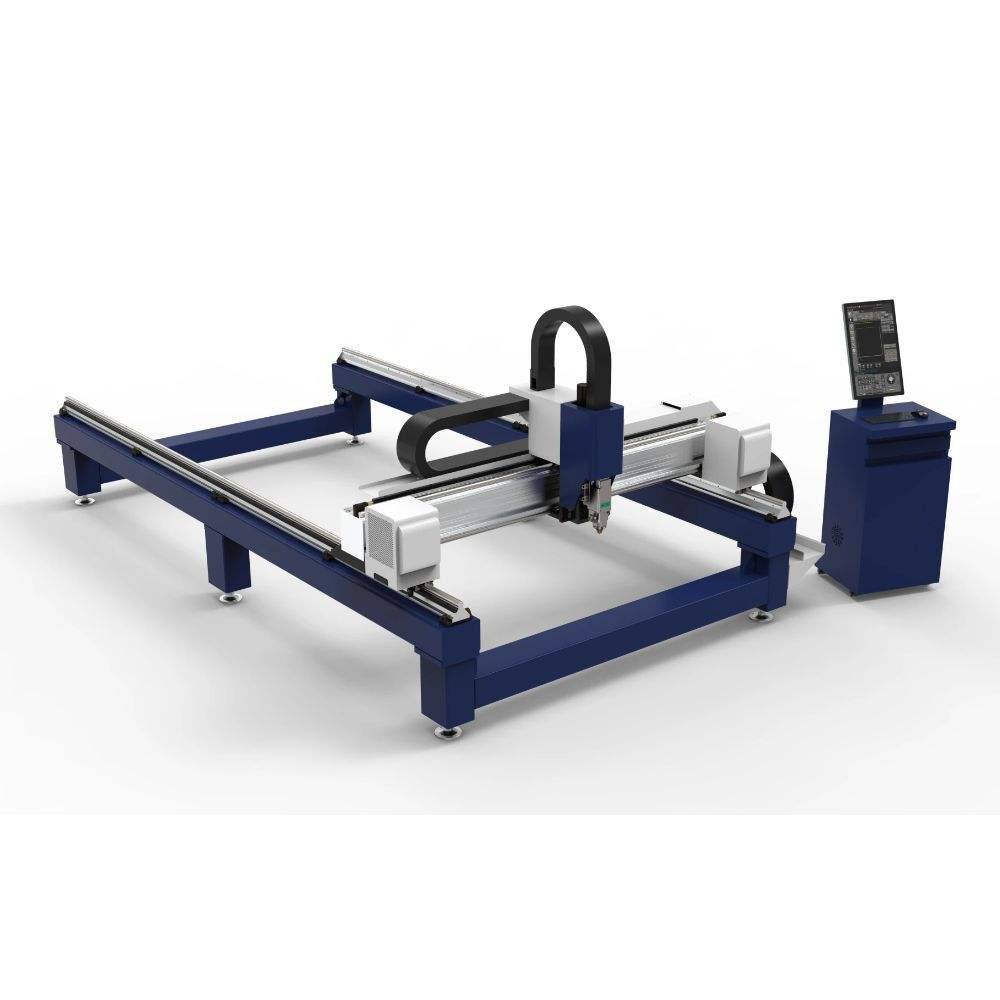
The effectiveness of the laser cutting process is not solely dependent on the power source. The machine’s gantry system, drive motors, and CNC controller play equally important roles. High-performance machines in this category often feature aviation-grade aluminum gantries to minimize weight and maximize acceleration. In the context of 1.5kW systems, the ability to maintain high feed rates (often exceeding 30-50 meters per minute on thin sheets) is essential to prevent heat buildup and ensure a clean kerf.
The cutting head is another critical component, usually equipped with an autofocus system. For aluminum alloy processing, the ability to dynamically adjust the focal position is paramount. Because aluminum is highly reflective and thermally conductive, the focal point must be precisely managed to maintain a stable melt pool. Advanced controllers used by Guadalajara-based fabricators often include integrated nesting software, which optimizes material usage—a key factor in maintaining profitability when working with expensive aluminum stocks.
Processing Aluminum Alloys: Challenges and Solutions
Aluminum is one of the most widely used materials in Guadalajara’s manufacturing sector due to its strength-to-weight ratio and corrosion resistance. However, it is also one of the most challenging materials for laser cutting. Aluminum alloys, such as the 5000 and 6000 series (common in the region), possess high thermal conductivity and high reflectivity.
Overcoming Material Reflectivity
One of the historical hurdles in laser cutting aluminum was back-reflection. When the laser beam hits a polished aluminum surface, a significant portion of the energy can be reflected back into the delivery fiber, potentially damaging the laser source. Modern 1.5kW fiber lasers are equipped with back-reflection protection mechanisms, such as optical isolators or specific beam delivery designs that divert reflected energy. This allows Guadalajara’s workshops to safely process reflective alloys like 6061-T6 and 5052-H32 without risking hardware failure.
Thermal Conductivity and Edge Quality
Aluminum dissipates heat rapidly. During the laser cutting process, the heat from the beam can quickly spread away from the cut zone, leading to a larger heat-affected zone (HAZ) or dross (burr) formation on the bottom edge of the workpiece. To counter this, a 1.5kW system must utilize high-pressure assist gases and high-speed motion. By concentrating the energy and moving the beam quickly, the machine ensures that the material is vaporized or melted and ejected before the heat can soak into the surrounding metal. This results in a sharp, clean edge that meets the aesthetic and functional requirements of the aerospace and electronics industries.
Optimizing Parameters for Aluminum Cutting
Achieving the perfect cut on aluminum with a 1.5kW fiber laser requires a deep understanding of parameter synchronization. Operators in Guadalajara must balance power, speed, gas pressure, and nozzle height to achieve repeatable results.
Assist Gas Selection: Nitrogen vs. Compressed Air
The choice of assist gas is critical. For high-quality aluminum laser cutting, Nitrogen is the industry standard. Nitrogen acts as a shielding gas, preventing oxidation of the cut edge and ensuring a “bright” finish. This is particularly important for parts that will later be welded or anodized. However, for cost-sensitive projects in the Guadalajara market, high-pressure compressed air is an increasingly popular alternative. While it may introduce slight oxidation, modern 1.5kW systems can achieve very respectable speeds and edge quality using filtered, dried compressed air, significantly reducing the hourly operating cost.
Feed Rates and Power Modulation
For a 1.5kW laser, the “sweet spot” for aluminum is typically between 1mm and 4mm thickness. In this range, the machine can maintain high feed rates. For example, 2mm aluminum might be cut at speeds of 8 to 12 meters per minute depending on the alloy. Power modulation is also vital; when the laser slows down to navigate tight corners or intricate geometries, the power must be reduced proportionally to prevent over-burning. Modern CNC systems handle this automatically, ensuring consistent kerf width across the entire geometry of the part.
Guadalajara’s Manufacturing Ecosystem and Laser Integration
Integrating a 1.5kW fiber laser cutting machine into a Guadalajara-based facility requires more than just the machine itself. The local ecosystem provides a unique set of advantages and challenges. The proximity to major automotive OEMs means that tier 2 and tier 3 suppliers must adhere to strict quality standards, such as ISO 9001 or IATF 16949. The precision of laser cutting is essential for meeting these tolerances.
Strategic Advantages for Local Workshops
By adopting 1.5kW fiber technology, local shops can transition from being simple component suppliers to high-value fabrication partners. The ability to prototype rapidly is a major advantage. In the fast-paced electronics industry of Guadalajara, being able to turn around a custom aluminum chassis design in 24 hours can be the difference between winning and losing a contract. Furthermore, the compact footprint of many 1.5kW machines makes them ideal for the urban industrial parks found throughout the metropolitan area, where floor space is at a premium.
Maintenance and Operational Longevity
To ensure the longevity of a laser cutting investment, a rigorous maintenance schedule is mandatory. This is especially true in Guadalajara, where ambient temperatures and humidity can fluctuate, potentially affecting the performance of the laser’s cooling system.
Climate Considerations for Guadalajara Operators
The 1.5kW fiber laser requires a stable operating environment. The dual-circuit water chiller is the most critical piece of auxiliary equipment. It cools both the laser source and the cutting head. In Guadalajara’s warmer months, ensuring the chiller is properly sized and maintained is vital to prevent thermal drifting or automatic shutdowns. Additionally, the high-quality optics in the cutting head must be kept free of dust and debris. In an industrial environment, using a positive-pressure cabin or a dedicated clean room for lens changes can significantly extend the life of the protective windows and focus lenses.
Conclusion
The 1.5kW fiber laser cutting machine represents a transformative technology for the aluminum fabrication industry in Guadalajara. By offering a combination of high precision, low operating costs, and the ability to handle challenging reflective materials, it empowers local manufacturers to compete on a global scale. As the region continues to evolve into a primary center for advanced manufacturing, the mastery of laser cutting processes will remain a fundamental requirement for any workshop looking to thrive in the competitive landscape of Jalisco’s industrial sector. Through proper parameter optimization, maintenance, and a focus on material-specific challenges, Guadalajara’s engineers can unlock the full potential of fiber laser technology, driving innovation and efficiency across the Mexican manufacturing heartland.