Zero-Tail Tube Laser Cutting: What the Remnant Costs, How Three Chucks Remove It, and a Saving Calculator
By Jack Lee, Technical Manager, PCL Group · Updated 2026-10-29
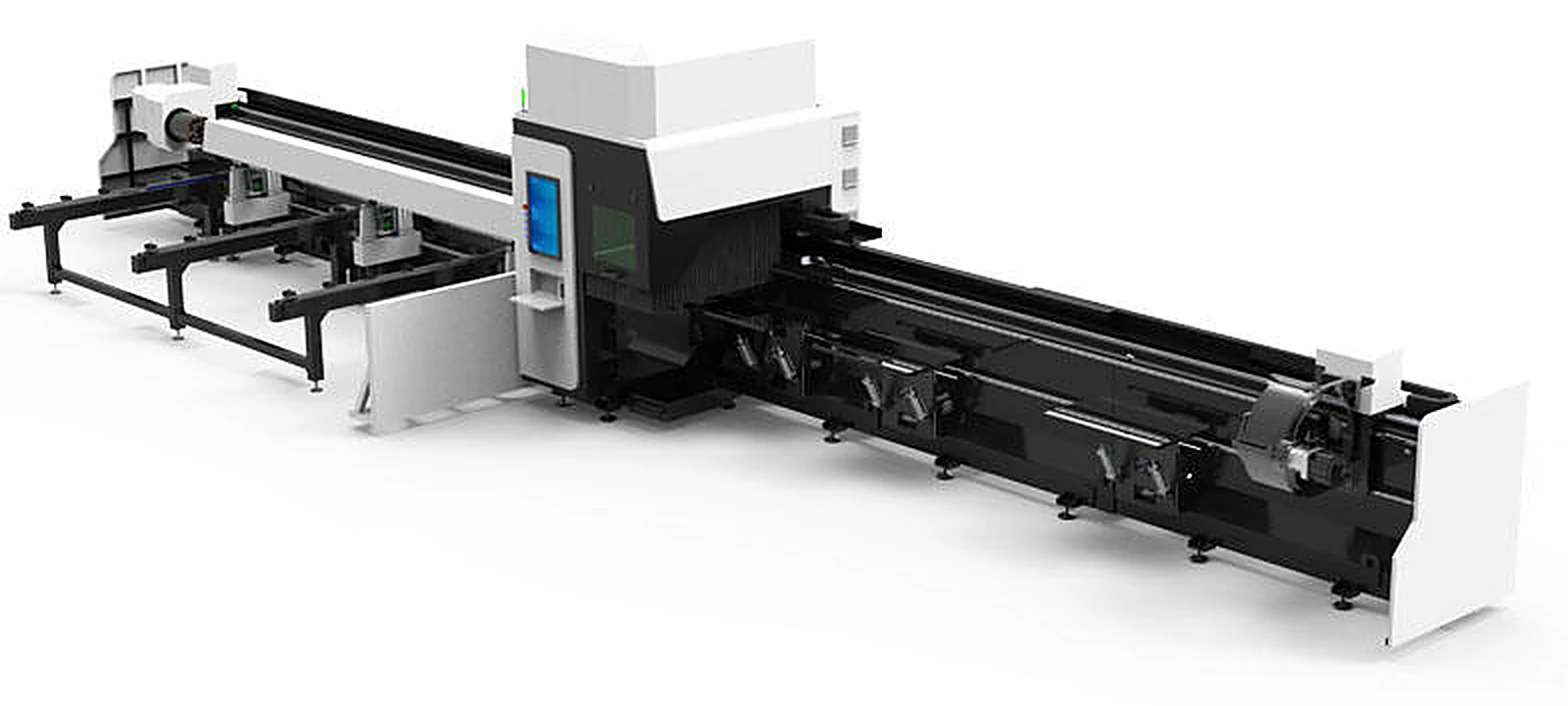
Short answer
- On a two-chuck tube laser the length held by the rear chuck at the end of each bar cannot be cut into parts and goes to scrap.
- Yearly cost of the tail = tail length × weight per metre × bars per year × (material price − scrap value).
- With a 200 mm tail on 5,000 bars a year, 50 × 50 × 2 mm tube loses about 3 tonnes of material; in stainless that is worth far more than in carbon steel.
- A three-chuck machine hands the tube from the rear chuck to the middle and front chucks, so the last part is cut from the end of the bar.
On this page
Where the tail comes from
A two-chuck tube laser holds the bar in a rear chuck that pushes and turns it, and a front chuck next to the cutting head. As the bar is used up, the rear chuck travels towards the head. It can only come so close: its jaws, its body and a safety distance from the head mean that the last stretch of tube is still clamped when the program runs out of room. That stretch is the tail. It is cut off and dropped as scrap, on every bar, whether the parts are expensive or not.
The tail length depends on the machine: chuck design, jaw length and how close the rear chuck may approach the head. Machine makers state it, and it is worth asking before you compare prices, because it repeats thousands of times a year.
What the tail costs: the formula
Yearly loss = tail length (m) × weight per metre (kg/m) × bars per year × (material price − scrap value) per kg.
Two worked examples, both with a 200 mm tail and 5,000 bars a year (20 bars a day over 250 working days):
| Stainless 50 × 50 × 2 mm | Carbon steel 50 × 50 × 2 mm | Carbon steel 100 × 100 × 5 mm | |
|---|---|---|---|
| Weight per metre | 2.96 kg | 2.93 kg | 14.41 kg |
| Lost per bar | 0.59 kg | 0.59 kg | 2.88 kg |
| Lost per year | 2,963 kg | 2,934 kg | 14,410 kg |
| Example price minus scrap value | 3.5 − 0.8 = 2.7 per kg | 0.9 − 0.25 = 0.65 per kg | 0.9 − 0.25 = 0.65 per kg |
| Yearly loss | about 8,000 | about 1,900 | about 9,400 |
Prices are examples in any currency; use your own. The pattern is what matters: the tail costs most on expensive material and on heavy sections, and very little on light carbon steel tube.
How three chucks remove the tail
- Normal cutting. The rear chuck feeds and rotates the bar; the middle chuck, just behind the head, supports it close to the cut; the front chuck holds it on the far side.
- Approaching the end. When the rear chuck reaches the middle chuck, it opens and stops.
- Hand-over. The middle and front chucks now clamp the tube and pull it through the cutting zone.
- Last part. Because nothing holds the tube behind the head any more, the final part is cut from the very end of the bar. Nothing is left in a chuck.
The middle chuck also helps during normal cutting: long, thin tube is supported next to the cut instead of sagging between two chucks several metres apart, which keeps hole positions accurate along the whole bar.
Calculator: your tube, your tail, your payback
Weights use EN 10219 corner radii for square tube. Prices are in any currency; the defaults are the stainless example on this page. Ask us for the tail length of your present machine if you do not know it.
When zero tail pays, and when it does not
| Usually pays back | Usually does not |
|---|---|
| Stainless steel, aluminium and coated tube | Light carbon steel tube at low prices |
| Thousands of bars a year | A few bars a day |
| Heavy-wall and large sections | Small, light sections |
| Short parts, where the tail is a large share of each bar | Long parts that already leave a remnant |
| Long, thin tube that sags between two chucks | Short, stiff tube |
Before deciding, look at the other ways to reduce waste on a two-chuck machine: nesting short parts into the tail, ordering bar lengths that suit the part mix, and common-line cutting between parts. These are covered in CNC tube cutting software. Zero tail removes what nesting cannot.
Machines
PCL’s three-chuck machines are the LT3 series: side-mounted head, square chucks of 240, 360 or 520 mm, zero tail, 6 or 12 m tube, 6-30 kW, with an optional 45° bevel head. For lighter carbon steel work where the tail matters less, the two-chuck LT series costs less. For stainless work in particular, see stainless steel tube laser cutting, and for the wider cost picture, tube laser vs saw and drill.
Have a cutting job in mind? Send the section size, wall thickness and a drawing, and an engineer will tell you which method or machine fits.
Ask on WhatsAppMachines mentioned in this article
LT3 Three-Chuck Heavy Tube Laser
Zero tail, 6-30 kW.
Compare all models →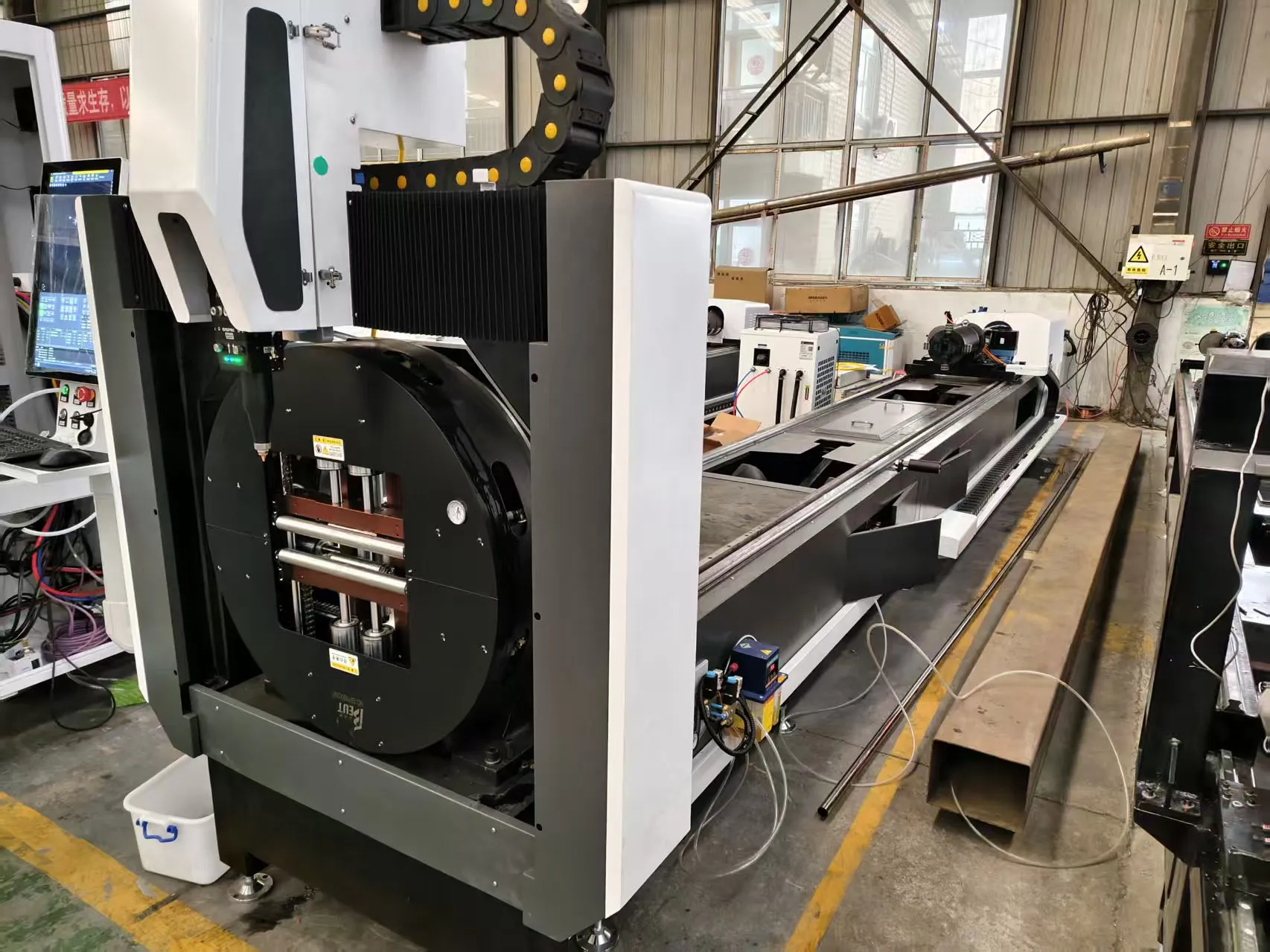
LT Series Tube Laser
Two chucks, lower price.
View machine →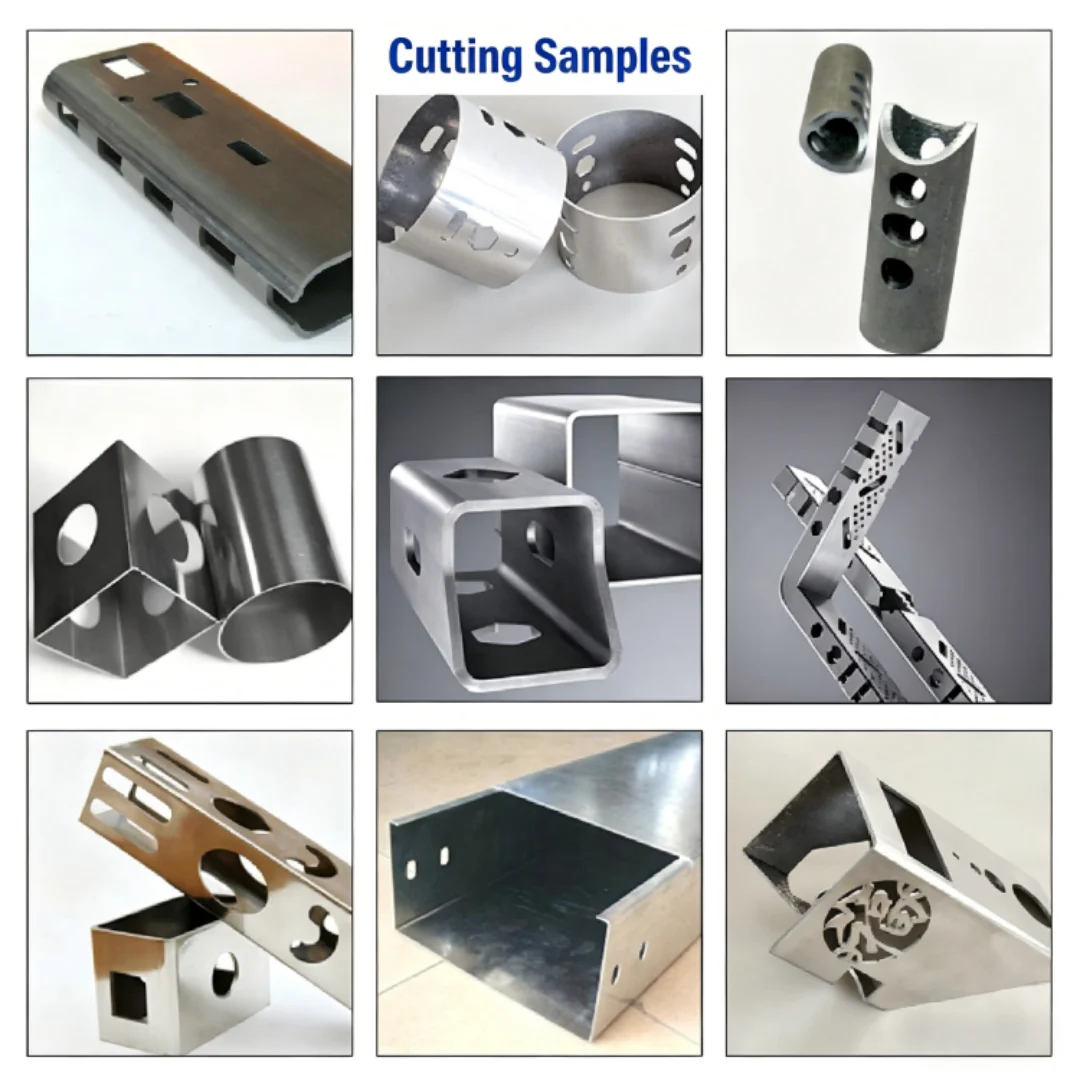
Stainless Steel Tube Laser Cutting
Gas, cost and edge quality.
View machine →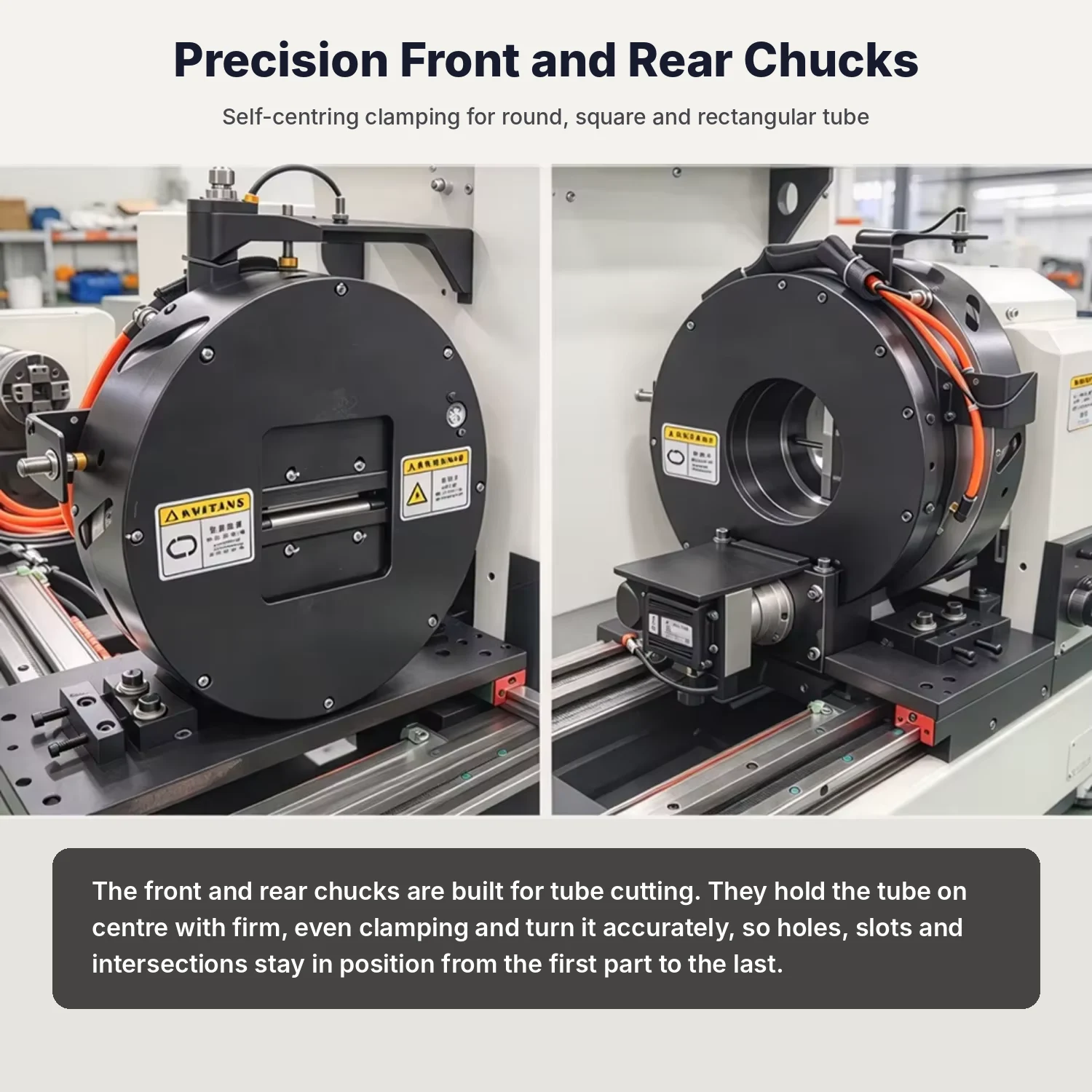
Tube Laser vs Saw and Drill
Cost per part calculator.
View machine →FAQ
What is the tail on a tube laser?
The length of tube still held by the rear chuck when no more parts can be cut from the bar. On a two-chuck machine it is cut off as scrap at the end of every bar.
What does zero tail mean?
The machine can cut parts right to the end of the bar, so no remnant is left in a chuck. Three-chuck machines do this by handing the tube from the rear chuck to the middle and front chucks.
How do I calculate the cost of the tail?
Tail length in metres times weight per metre times bars per year, times the material price minus the scrap value per kg.
How much material does a 200 mm tail waste?
On 50 × 50 × 2 mm tube and 5,000 bars a year, about 3 tonnes. On 100 × 100 × 5 mm tube, over 14 tonnes.
Is a three-chuck tube laser worth it?
Usually for stainless steel, aluminium, heavy sections and high bar counts. For light carbon steel tube at low volume, a two-chuck machine is often the better buy.
Does a three-chuck machine cut slower?
No. The hand-over happens only near the end of the bar; cutting speed is set by laser power and wall thickness.
Can nesting software remove the tail?
Nesting can place short parts near the end, but it cannot cut inside the length held by the rear chuck. Only a chuck hand-over removes that.
Which PCL machines have zero tail?
The LT3 series: LT3-240, LT3-360 and LT3-520, with 6 or 12 m beds and 6-30 kW.