Plasma vs Oxy-Fuel for Cutting Thick-Wall Pipe: Thickness, Speed, Bevels and Cost
By the PCL Group engineering team, Jinan · Updated 2026-10-28
Short answer
- Plasma is the faster, cleaner choice on walls up to about 40 mm and the only one of the two that cuts stainless and aluminium.
- Oxy-fuel cuts carbon and low-alloy steel only, but goes far thicker: 200 mm walls and beyond.
- Between about 6 and 40 mm both work; plasma wins on speed, oxy-fuel on low consumable cost and equipment price.
- Shops with a wide wall range use machines that carry both torches and switch by thickness.
On this page
How each process cuts
Plasma melts the metal with an electric arc constricted through a small nozzle, at temperatures far above the melting point of steel, and blows the molten metal out of the kerf with the gas stream. It does not depend on a chemical reaction, so it cuts any electrically conductive metal: carbon steel, stainless steel, aluminium, copper alloys.
Oxy-fuel works differently. A preheat flame (acetylene, propane, propylene or natural gas with oxygen) heats the steel to its ignition temperature, around 870-900 °C, then a jet of pure oxygen burns the iron and blows the oxide away. That reaction only works when the oxide melts at a lower temperature than the metal itself. It does for carbon and low-alloy steel; it does not for stainless steel (chromium oxide) or aluminium, which is why oxy-fuel cannot cut them.
Which process for which wall thickness
| Wall thickness (carbon steel) | Best process | Why |
|---|---|---|
| Under 6 mm | Plasma | Oxy-fuel overheats thin walls and distorts them |
| 6-25 mm | Plasma | Several times faster, narrow heat-affected zone, clean bevels |
| 25-40 mm | Plasma or oxy-fuel | Plasma for speed with a high-current source; oxy-fuel for low running cost |
| 40-200 mm | Oxy-fuel | Beyond the range of most production plasma sources |
| Stainless or aluminium, any thickness | Plasma | Oxy-fuel does not cut them |
For pipe the useful number is the length of the cut, not just the wall: a 37.5° bevel on a 30 mm wall is a 38 mm cut, which can push a joint from plasma range into oxy-fuel range.
Plasma vs oxy-fuel compared
| Plasma | Oxy-fuel | |
|---|---|---|
| Materials | All conductive metals | Carbon and low-alloy steel only |
| Practical thickness on pipe | Up to about 40-50 mm, depending on source | From about 6 mm to 200 mm and more |
| Speed on 10-25 mm | High | Low to medium |
| Piercing | Instant, but pierce thickness is limited | Needs preheat; thick walls often edge-started |
| Heat-affected zone | Narrow | Wider; more heat into the pipe |
| Edge | Slight edge angle; small dross on thick walls | Square, smooth on thick sections; top edge may round slightly |
| Running cost | Electricity, gas or compressed air, electrodes and nozzles | Oxygen and fuel gas; long-life tips |
| Equipment cost | Higher, rises with current | Low |
Speed on pipe
On walls up to about 25 mm a plasma torch typically cuts several times faster than an oxy-fuel torch, and it does not need a preheat before piercing. As the wall gets thicker, plasma speed falls quickly while oxy-fuel speed falls slowly, so the gap narrows. Around 40-50 mm of carbon steel the two are comparable on many machines; above that oxy-fuel is the practical process. On pipe, preheat time matters too: every branch hole or slot starts with a pierce, and on thick walls an oxy-fuel pierce can take far longer than the cut itself.
Bevel quality
Both processes cut weld bevels when the torch is tilted, including the 37.5° and 30° bevels used for pipe butt welds. Plasma leaves a narrow kerf and a narrow heat-affected zone, but one face of the cut is slightly off square, which a CNC machine compensates in the bevel angle. Oxy-fuel leaves a square, smooth face on thick sections with more heat in the part. For code welding on either, many shops clean or lightly grind the bevel to bright metal before fit-up. Bevel types and standard angles are covered in our guide to pipe bevel types and angles.
Oxy-acetylene vs oxy-propane for pipe
| Acetylene | Propane (or propylene) | |
|---|---|---|
| Flame temperature with oxygen | About 3,100 °C, the hottest | About 2,800 °C |
| Preheat and pierce | Fastest; good for frequent piercing and bevels | Slower to start |
| Gas cost | Higher | Lower; uses more oxygen |
| Best for | Many short cuts, holes, bevels | Long straight cuts on thick walls |
Alloy and high-strength pipe
- Carbon steel and line pipe grades (for example API 5L): both processes.
- Cr-Mo and other alloy steels: oxy-fuel and plasma both work, but like welding, thermal cutting can harden the cut edge. Some procedures call for preheating before cutting and removing the heat-affected layer by grinding or machining.
- Stainless steel and duplex: plasma only. Use fume extraction; the fume contains hexavalent chromium.
- Aluminium: plasma only.
- Clad or lined pipe: check with the cladding specification; the process is chosen for the cladding material.
Machines with both plasma and oxy-fuel
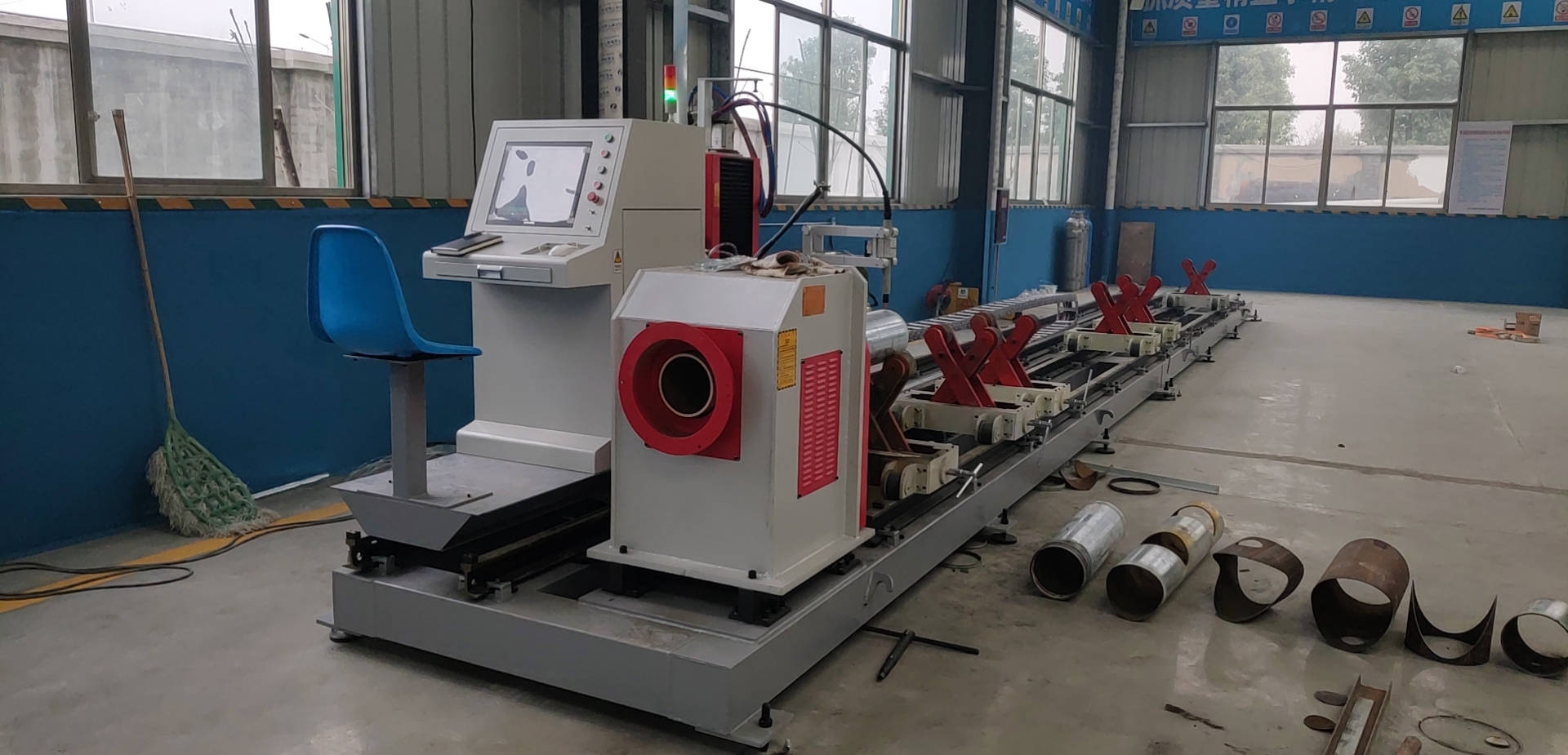
Pipe shops rarely cut one wall thickness. A header may be 12 mm, the next job a 60 mm penstock section. Machines that carry a plasma torch and an oxy-fuel torch on the same head let the program pick the process by thickness: plasma for speed on normal walls, oxy-fuel when the wall or the bevel length goes beyond plasma range. Our 5-axis plasma and oxy-fuel pipe bevel cutting machine carries both as standard (plasma 0-40 mm, oxy-fuel 6-200 mm), and the other PCL plasma pipe cutters can be fitted with an oxy-fuel system as an option.
Choosing a machine by wall range
| Your pipe | Machine |
|---|---|
| Round pipe Ø40-600 mm, walls up to 200 mm, bevels | 5-axis plasma and oxy-fuel pipe bevel cutter |
| Pipe Ø200-1500 mm up to 12 m, plasma 40 mm, oxy-fuel 200 mm | Roller-bed CNC plasma pipe cutting machine |
| Pipe Ø600-2000 mm, plasma 200-400 A, oxy-fuel option | 6-axis large diameter pipe cutter |
| Site work, Ø50-600 mm, plasma 6-40 mm, oxy-fuel option | Portable CNC plasma pipe cutter |
Have a pipe job in mind? Send the pipe size, wall and joint, and an engineer will tell you which method or machine fits.
Ask on WhatsAppMachines mentioned in this article
5-Axis Plasma and Oxy-Fuel Pipe Bevel Cutter
Plasma 0-40 mm, oxy-fuel 6-200 mm.
Compare all models →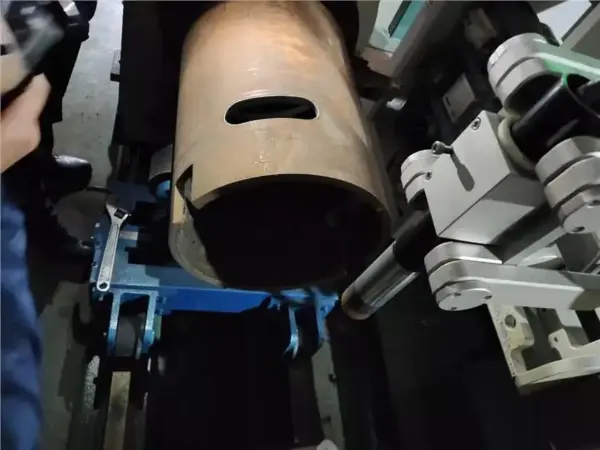
Roller-Bed CNC Plasma Pipe Cutting Machine
Ø200-1500 mm, oxy-fuel to 200 mm.
View machine →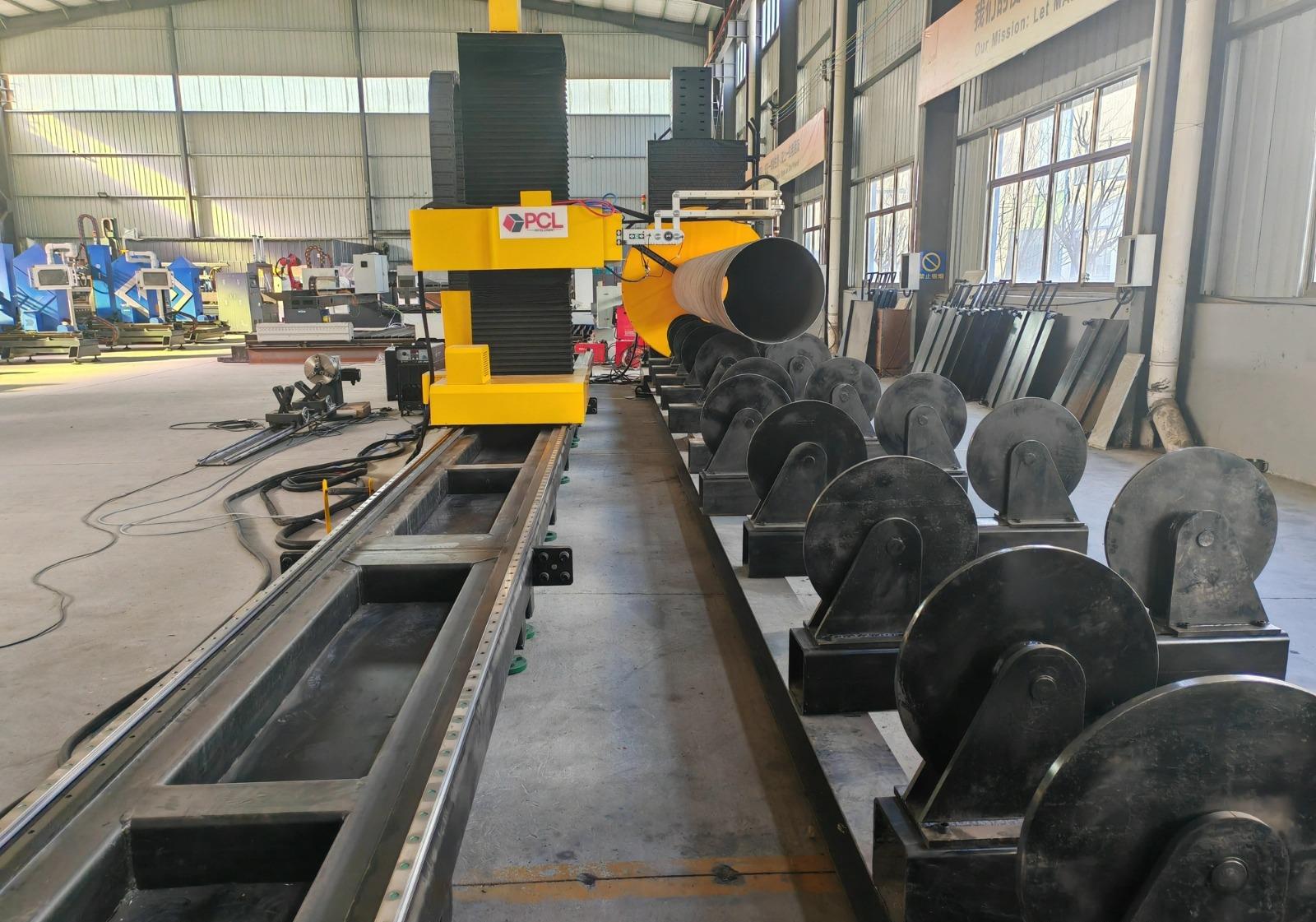
6-Axis Large Diameter Pipe Cutter
Ø600-2000 mm, plasma 200-400 A.
View machine →CNC Pipe Cutting and Beveling Machines
All pipe cutting models compared.
View machine →FAQ
Is plasma or oxy-fuel better for cutting pipe?
Plasma is better on walls up to about 25 mm and for stainless or aluminium. Oxy-fuel is better on carbon steel thicker than about 40 mm. Between 25 and 40 mm both work.
Can oxy-fuel cut stainless steel pipe?
No. Stainless forms chromium oxide, which melts at a higher temperature than the steel, so the oxygen cutting reaction stops. Use plasma.
How thick can oxy-fuel cut?
Oxy-fuel cuts carbon steel from about 6 mm to well over 200 mm. PCL dual-torch pipe cutters are rated for 6-200 mm.
How thick can plasma cut pipe?
Production plasma on pipe typically reaches 40-50 mm of carbon steel with a 200-400 A source. Pierce thickness is lower than edge-start cut thickness.
Is plasma faster than oxy-fuel?
Yes, several times faster on walls up to about 25 mm. The difference narrows as walls get thicker and disappears around 40-50 mm.
Which leaves a better bevel for welding?
Both cut usable bevels. Plasma gives a narrower heat-affected zone; oxy-fuel gives a square, smooth face on thick walls. Clean the bevel before welding either way.
Oxy-acetylene or oxy-propane for pipe cutting?
Acetylene preheats and pierces fastest, which suits holes and bevels. Propane is cheaper for long cuts on thick walls but slower to start.
What is an oxy-fuel pipe cutting machine?
A machine that rotates the pipe or moves a torch round it and cuts with an oxy-fuel flame. CNC versions cut holes, saddles and bevels on thick carbon steel pipe.
Can one machine do both plasma and oxy-fuel?
Yes. Dual-torch CNC pipe cutters carry both and choose by wall thickness, covering thin to very heavy walls on one machine.
Does thermal cutting harden pipe edges?
It can, especially on alloy steels. Some procedures require preheating before cutting and removing the heat-affected layer before welding.