By Casper Geng, Sales Manager, PCL Group · Updated 2026-10-28

Short answer
- Angle iron cuts easily with plasma; the challenge is accuracy on two legs at 90° and holes on both faces.
- Hand plasma suits one-off cut-offs; CNC cuts holes, notches and mitres on both legs from one program.
- Fiber laser gives a 0.2-0.5 mm kerf and clean small holes; plasma about 1.5-3 mm and holes from about 1.5 times the leg thickness.
- Most angle work in frames and towers is holes plus end cuts, which is where CNC pays back fastest.
On this page
Angle sizes you will meet
Steel angle (angle iron, L-section) comes as equal-leg or unequal-leg. Common equal angles to EN 10056-1:
| Equal angle | Leg (mm) | Thickness (mm) | Typical use |
|---|---|---|---|
| L50 × 5 | 50 | 5 | Brackets, light frames, bracing |
| L75 × 8 | 75 | 8 | Platform frames, purlin cleats |
| L100 × 10 | 100 | 10 | Bracing, lattice members |
| L150 × 15 | 150 | 15 | Tower legs, heavy bracing |
| L200 × 20 | 200 | 20 | Transmission towers, heavy structures |
In the US, angles are given as leg × leg × thickness in inches, for example L4 × 4 × 3/8 (about 102 × 102 × 9.5 mm) to ASTM A36 or A572. The thickness of the leg sets the cutting process, the speed and the smallest hole.
Cutting angle iron with a hand plasma cutter
- Mark both legs with a square from the heel, so the line on each leg meets at the corner.
- Clamp the angle heel up or toe down so the cut line is accessible and the drop falls clear.
- Cut one leg, then the other, starting from the toe of each leg and finishing at the heel, with the torch square to the face.
- Clean the dross from the underside before fitting.
For a 5-10 mm leg a 30-45 A air plasma is enough; for 15-20 mm legs plan on 60-85 A. Hand cutting is fine for cut-offs. Holes, notches and accurate mitres are where it becomes slow and inconsistent.
CNC plasma vs laser cutting steel angles
| CNC plasma | Fiber laser | |
|---|---|---|
| Kerf | About 1.5-3 mm | About 0.2-0.5 mm |
| Smallest clean hole | About 1.5 × leg thickness | About equal to the thickness |
| Hole taper | Slight | Very little |
| Heat-affected zone | Wider | Narrow |
| Edge | Some dross on thick legs | Clean, ready to weld or paint |
| Marking | Plasma marking | Fine laser marking of part numbers |
| Machine cost | Lower | Higher |
On an L100 × 10 bracing member with M16 bolts (18 mm holes under EN 1090-2), both processes cut acceptable holes. On an L50 × 5 member with M12 bolts (13 mm holes), plasma is at its limit and laser or punching is the safer choice.
Bolt holes in both legs
- Gauge lines: holes sit on a gauge line measured from the heel, not the toe, so the bolt clears the other leg. Detailing software exports the gauge in the DSTV file.
- Edge and end distances: under EN 1993-1-8 the minimum end and edge distance is 1.2 times the hole diameter. On narrow legs that limits the bolt size more than the cutting process does.
- Staggered holes: holes on the two legs are often staggered so the bolt heads do not clash at the heel.
- Both legs in one set-up: a CNC machine that reaches both faces cuts all holes without turning the angle, so the hole pattern stays true.
Ends, notches and mitres
| Cut | Where it is used |
|---|---|
| Square cut-off | Bracing, cleats, frames |
| Clipped corner (leg cut back at an angle) | Clearance at gusset plates and in lattice towers |
| Notch in one leg | Angle bent or folded to form a frame corner |
| 45° mitre on both legs | Welded rectangular frames, platform edges |
| Slots | Adjustable connections, purlin cleats |
A 45° mitre on an angle is two cuts at different angles, one on each leg, which is why hand-cut frame corners rarely close perfectly. On a CNC machine both cuts come from the program and the frame squares up at fit-up.
Angles in lattice towers and frames
Transmission towers, telecom masts and lattice structures use thousands of angle members, each with a few holes and a clipped end. The work is repetitive and the hole pattern has to match the gusset plates exactly, which is why tower fabricators have long used dedicated angle lines and now also CNC laser and plasma. For mixed structural work, the same machines that cut H-beams and channels cut angles too.
Which CNC angle iron cutting machine to choose
A CNC angle iron cutting machine (also called a CNC angle steel cutting machine) cuts the holes, clipped ends, notches and mitres on both legs from the DSTV file. PCL builds them with laser and with plasma:
| Your work | Machine |
|---|---|
| Angles, channels and beams with many holes, laser edge | H-beam laser cutting machine (angles up to 800 mm leg) |
| Angles and channels with copes and bevels, plasma or oxy-fuel | H-Series robotic beam coping machine |
| Angles plus round pipe and box sections | 8-axis robotic plasma beam cutter or 5-axis tube plasma cutter |
| Angles, channels and I-beams on a laser | Channel, angle and I-beam laser cutting |
Have a cutting job in mind? Send the section size, wall thickness and a drawing, and an engineer will tell you which method or machine fits.
Ask on WhatsAppMachines mentioned in this article
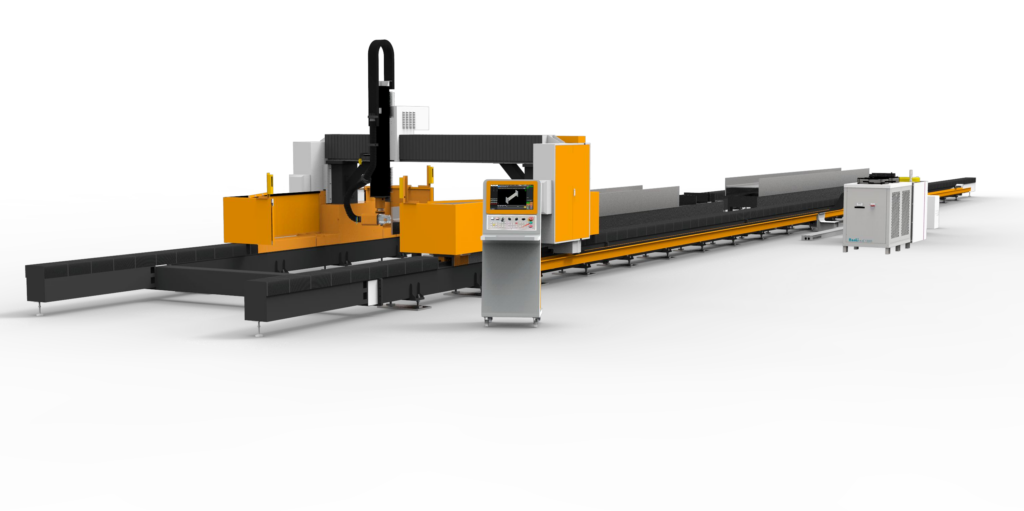
H-Beam Laser Cutting Machine
Angles up to 800 mm leg, laser edge.
Compare all models →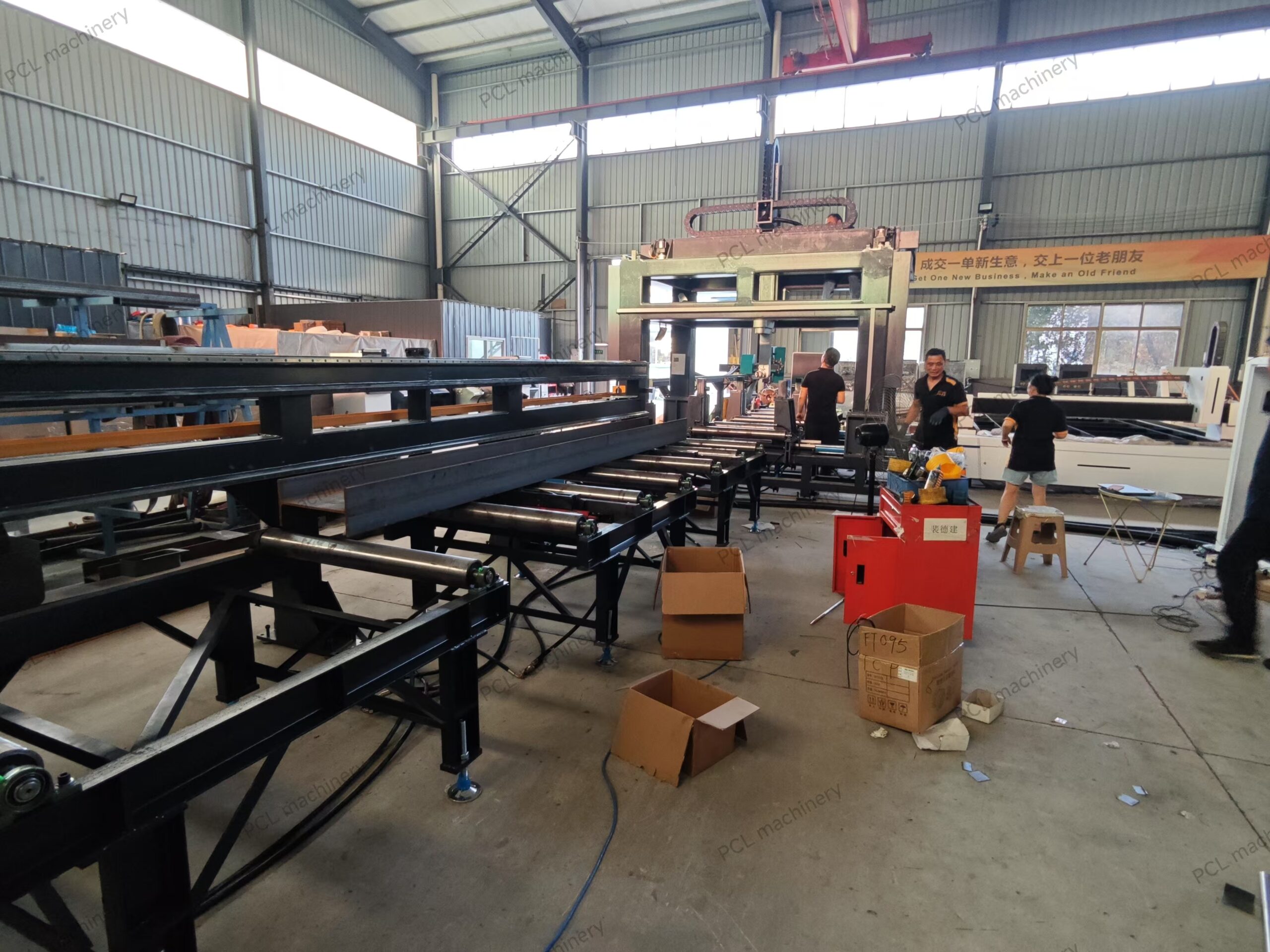
H-Series Robotic Beam Coping Machine
Plasma and oxy-fuel for H, I, U and L.
View machine →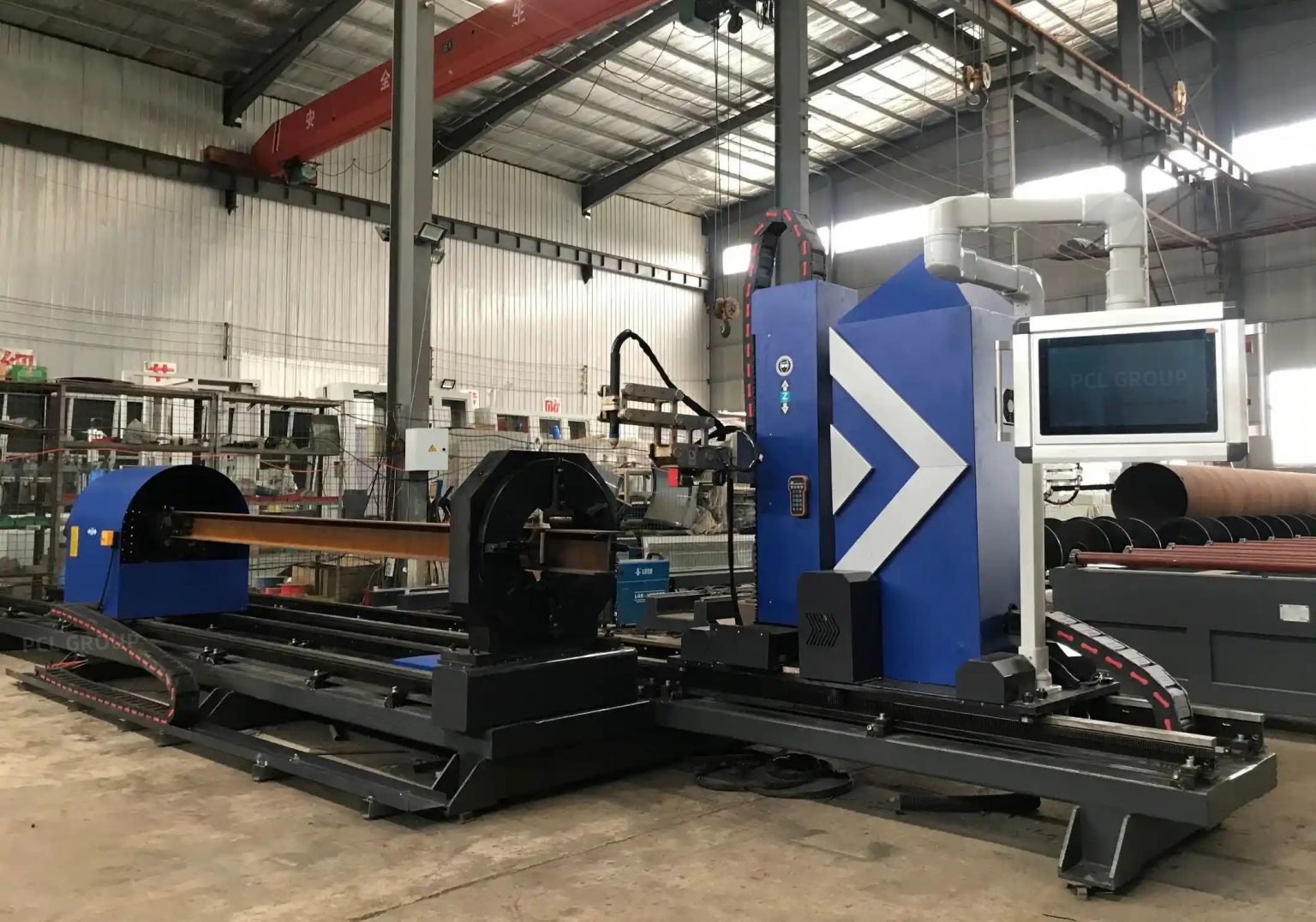
8-Axis Robotic Plasma Beam Cutter
Angles, beams, box sections and pipe.
View machine →All Beam Cutting Machines
Laser, plasma and production lines.
View machine →FAQ
Can you cut angle iron with a plasma cutter?
Yes. A 30-45 A plasma cuts angle legs up to about 10 mm; 60-85 A covers 15-20 mm legs. Cut each leg from the toe towards the heel with the torch square to the face.
What is the best way to cut angle iron?
For one-off cut-offs, a saw or hand plasma. For holes, notches and mitres in quantity, a CNC plasma or laser that cuts both legs from one program.
Plasma or laser for angle iron?
Plasma costs less and suits thicker legs and larger holes. Laser has a 0.2-0.5 mm kerf, cleaner small holes and a narrower heat-affected zone.
What is the smallest hole plasma can cut in angle?
About 1.5 times the leg thickness for a clean round hole. On a 10 mm leg that is about 15 mm; an 18 mm M16 bolt hole is fine.
Where do holes go on an angle?
On gauge lines measured from the heel, with end and edge distances of at least 1.2 times the hole diameter under EN 1993-1-8.
How do you cut a 45 degree mitre on angle iron?
It takes a different cut on each leg. By hand, mark both legs from a square and a protractor; on CNC both cuts come from the program.
What size is L100 x 10 angle?
An equal angle with 100 mm legs and 10 mm thickness, to EN 10056-1, common for bracing and lattice members.
Can one machine cut angles, channels and beams?
Yes. CNC beam cutters with plasma or laser take angles, channels, I-beams and H-beams; some also cut pipe.
How do tower fabricators cut angle members?
With dedicated angle lines or CNC laser and plasma machines that cut holes and clipped ends from DSTV files, so hole patterns match the gusset plates.
Can I get a test cut on my angle?
Yes. Send the section, hole pattern or DSTV file and we cut a sample at our factory in Jinan and send the video.