Can a Fiber Laser Cut Copper, Brass and Aluminum Sheet?
Fiber Laser Materials Guide · Non-Ferrous Metals
On this page
- Can a Fiber Laser Cut Copper, Brass and Aluminum Sheet?
- Can a Fiber Laser Cut Copper, Brass and Aluminum?
- How Copper, Brass and Aluminum Differ in Laser Cutting
- What Does Reflective-Metal Compatibility Mean?
- What Affects Cut Quality on Copper, Brass and Aluminum?
- How to Plan a Useful Sample-Cut Test
- Questions to Ask Before Choosing a Fiber Laser
- Do Not Choose Power from Material Name Alone
- Frequently Asked Questions
- Request a Non-Ferrous Metal Cutting Test
Can a Fiber Laser Cut Copper, Brass and Aluminum Sheet?
Fiber lasers are used to cut copper, brass and aluminum, but these materials should not be treated as interchangeable. Reflectivity, thermal conductivity, alloy, thickness, surface condition and machine configuration all affect how a job should be tested.
This guide helps fabricators assess material compatibility, plan a representative sample cut and ask better questions when specifying a fiber laser cutting machine.
- Copper sheet
- Brass sheet
- Aluminum sheet
- Sample-test planning
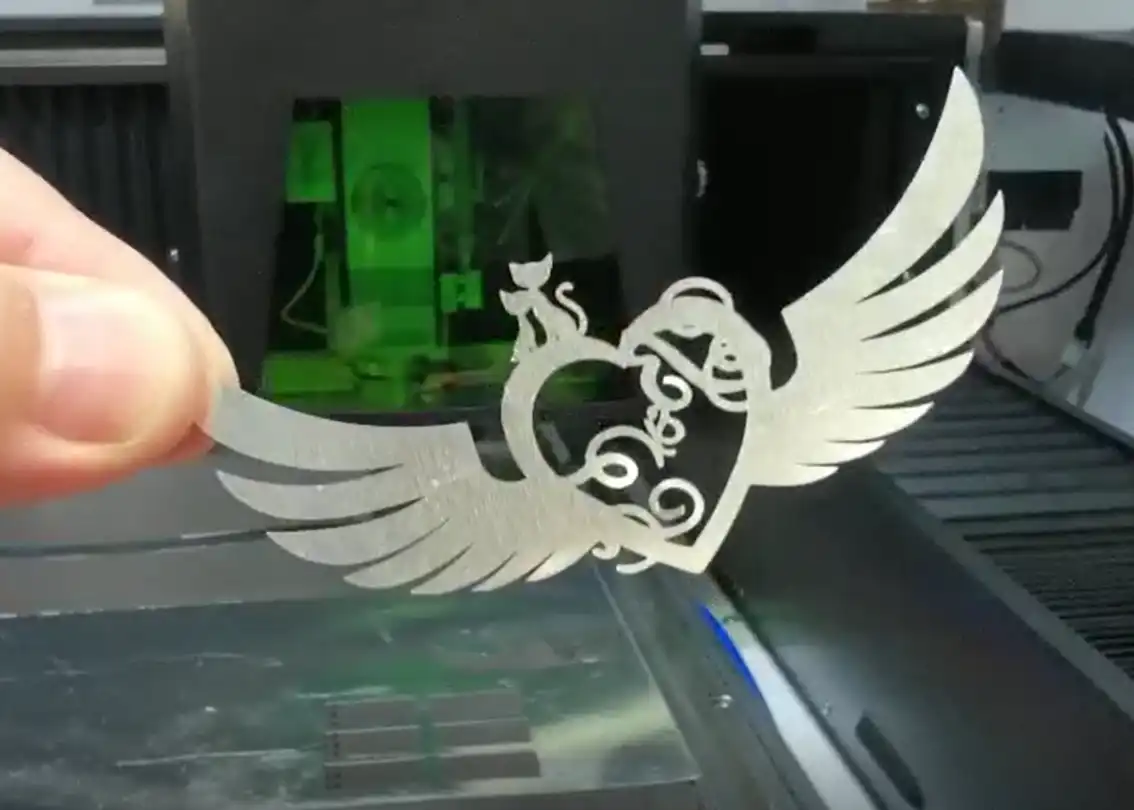
Can a Fiber Laser Cut Copper, Brass and Aluminum?
In many applications, yes. Fiber laser systems are used for non-ferrous sheet-metal cutting, including aluminum, copper and brass. The practical question is whether a particular machine configuration can produce your required parts at the edge quality, consistency and production rate you need.
Copper and brass are reflective metals, and aluminum transfers heat differently from many steels. These characteristics make it especially important to verify the laser source and optical protection, cutting head, process settings and safety configuration for the intended material.
PCL’s published fiber laser information lists aluminum, copper and brass among supported materials. For a project decision, ask for a test using your actual material grade, thickness and drawing.
See the PCL fiber laser cutting machine page for machine information, and use the fiber laser cutting speed chart as a reference starting point where applicable.
How Copper, Brass and Aluminum Differ in Laser Cutting
The material name alone is not enough to select a process. Alloy, temper, coating, thickness and surface condition can change the result. Treat each material family as a separate test case.
Reflectivity and heat transfer
Copper’s reflective and thermal properties make source compatibility, optical protection and stable process setup important. Verify the machine’s approved configuration for the copper grade and thickness you plan to cut.
Alloy composition matters
Brass grades vary in composition and surface condition. Confirm the exact alloy and any coating or finish, then evaluate the cut edge and consistency on a representative sample.
Alloy and surface condition
Aluminum alloys, tempers, surface films and thickness can affect cut quality. Include the production alloy and finish in the test request instead of testing a different aluminum grade.
| Material | What to identify | What the test should verify |
|---|---|---|
| Copper | Grade, thickness, surface condition and reflectivity-related machine requirements. | Reliable piercing, stable cutting, edge condition and the machine maker’s approved source/head configuration. |
| Brass | Alloy designation, thickness, finish and any protective film or coating. | Cut consistency, dross or burr condition, detail quality and repeatability across the sheet. |
| Aluminum | Alloy, temper, thickness, surface film and protective coating. | Edge quality, heat effects, part flatness and performance on the actual production grade. |
What Does Reflective-Metal Compatibility Mean?
“Reflective-metal compatible” should describe a tested machine configuration and its protection measures—not just a marketing label. Ask the supplier to explain which laser source and cutting head are proposed, what protection is included and what material range has been tested.
For copper and brass in particular, discuss reflected-light protection with the machine manufacturer. Confirm the laser source’s operating requirements, the cutting head’s specifications, alarms or protective functions, and any restrictions on material type or thickness.
What Affects Cut Quality on Copper, Brass and Aluminum?
Cut quality is the result of the complete process. When evaluating a sample, record the material and machine conditions alongside the part so the result can be repeated.
Material specification
Use the same alloy, thickness, temper, coating and surface condition as the production material.
Laser and cutting head
Confirm source type, rated power, head rating, optical protection and supported process range.
Assist gas and settings
Have the supplier document gas, pressure, nozzle, focus and speed used for the test. Do not copy settings from a different material or machine.
Part design and nesting
Small holes, narrow webs, sharp corners and dense nests can behave differently from a simple straight cut.
Inspect the sample for edge consistency, dross or burrs, heat effects, dimensional accuracy, small-feature quality and repeatability. If the parts will be anodized, plated, welded or formed later, evaluate the edge against that downstream process too.
How to Plan a Useful Sample-Cut Test
A representative test is more useful than a generic demonstration. Send the supplier the information needed to reproduce the real job:
- Material: exact alloy or grade, temper if relevant, thickness and surface finish.
- Drawings: DXF or another accepted format with a typical production part—not only a large rectangle.
- Quality target: edge appearance, dimensional tolerance, burr limits and downstream finishing requirements.
- Production target: parts per sheet, expected daily volume and number of shifts.
- Process record: ask the supplier to note the source, head, nozzle, gas, focus, speed and other relevant settings.
- Sample review: inspect the finished part and, if needed, repeat the test to check consistency.
For a fair comparison between machine quotations, ask each supplier to test the same drawing and material specification. Compare the finished parts and documented process—not just a video or a claimed cutting speed.
Questions to Ask Before Choosing a Fiber Laser
- Is the proposed laser source approved for the copper, brass or aluminum grade I use?
- What optical and reflected-light protection is included for this configuration?
- Which cutting head, nozzle and process range are specified?
- Can you test my exact alloy, thickness and part geometry?
- What edge quality and dimensional result did the test achieve?
- What gas, electrical, cooling and extraction requirements apply?
- Which consumables and service support are available for my location?
- Are the enclosure and safety systems suitable for the intended operating environment?
For a compact machine option, review the PCL small laser cutting machine. For larger sheet and plate applications, compare the working area and machine configuration on the fiber laser cutting machine page.
Do Not Choose Power from Material Name Alone
“Copper,” “brass” and “aluminum” each cover multiple grades and thicknesses. Laser power is only one selection factor; the usable process range also depends on the source, cutting head, optics, motion system, gas setup, part geometry and required quality.
Share your material list and production drawings with the supplier before choosing a power level. For general power-selection questions, see how to choose fiber laser power. For price and configuration factors, read the fiber laser cutting machine price guide.
Frequently Asked Questions
Can a fiber laser cut copper sheet?
Fiber lasers are used for copper cutting, but compatibility and results depend on the source, cutting head, material grade, thickness and process setup. Confirm the manufacturer’s approved configuration and test your actual copper before purchase.
Can a fiber laser cut brass?
It may be suitable for brass sheet and plate within the validated process range. Brass composition and surface condition can vary, so provide the exact alloy and thickness for a sample test.
Can a fiber laser cut aluminum sheet?
Fiber laser systems are commonly used for aluminum sheet cutting. The result still depends on alloy, temper, thickness, surface condition, machine configuration and process parameters. Test the production material, not just a substitute grade.
Are copper and brass more difficult to cut than mild steel?
They have different optical and thermal properties, so the process and machine requirements can differ. The practical answer depends on the material grade, thickness, machine design and required edge quality. Ask for a documented test.
Can I use the same cutting settings for aluminum, copper and brass?
No. Each material and thickness requires a process validated for that specific combination. Use the machine supplier’s approved parameters and do not transfer settings between materials without testing.
What should I send for a copper or aluminum cutting test?
Provide the exact alloy or grade, thickness, surface condition, part drawing, edge-quality target and expected production volume. Ask the supplier to document the machine configuration and test conditions.
Request a Non-Ferrous Metal Cutting Test
Send PCL your copper, brass or aluminum grade, thickness, surface condition and part drawing. The team can review the machine configuration and confirm whether a sample test is appropriate for your application.
Material compatibility and cutting results vary by alloy, thickness, machine configuration and process settings. Confirm the requirements with the manufacturer and validate them using a representative sample.