Robot Brands
Robot selection depends on the required working range, payload, control configuration and project requirements. Available brand options include:
PCL robotic welding systems are configured primarily for laser welding. Robot options include KUKA, Panasonic, Yaskawa and FANUC. MAX and Raycus laser sources are available in 1.5 kW, 2 kW, 3 kW and 6 kW options, subject to the selected configuration.
MAG welding can also be requested as an optional process configuration. The right setup depends on the workpiece, joint, material and production requirements.
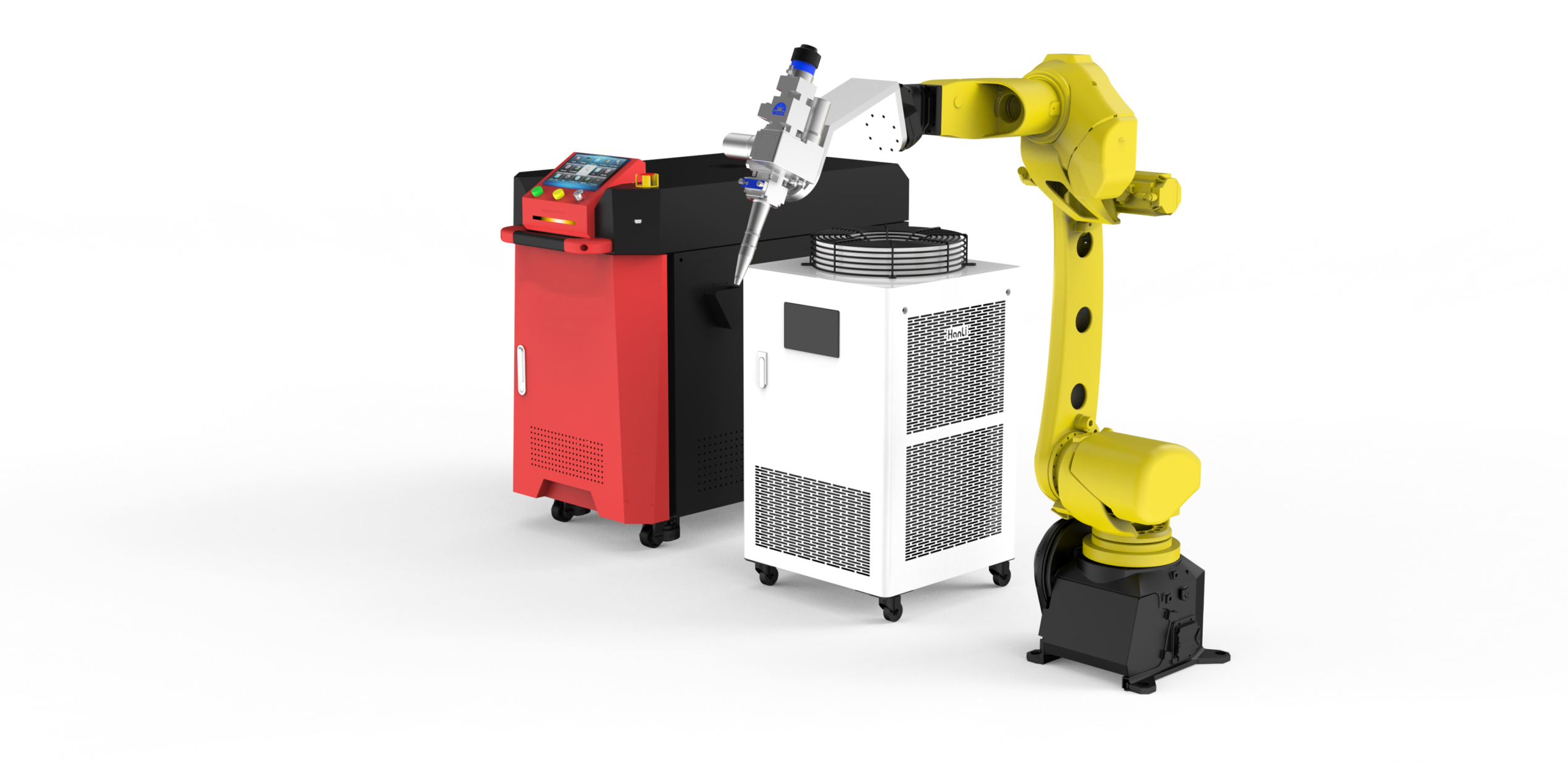
A robotic laser welding cell brings together a robot, laser source, welding head, controls and workholding. These elements need to be selected around the part shape and weld locations. Robot reach, access and part positioning should be checked against the actual workpiece.
Laser welding is the primary process on this page. The final setup depends on details such as material, thickness, joint preparation and production needs. Drawings or representative samples help the engineering team review the application.
Watch the video for a view of the robotic laser welding process. Contact PCL with your part details to discuss whether a similar setup fits your application.
Robotic laser welding demonstration
Robot selection depends on the required working range, payload, control configuration and project requirements. Available brand options include:
MAX and Raycus laser sources are available in the following power options. Confirm the source model and available configuration when requesting a quotation.
Available source brands: MAX and Raycus.

Welding tool shown for the optional MAG configuration
Laser welding is the main process for this system. MAG welding can be selected as an optional configuration when it better suits the material, joint design or production requirements.
The photo shows a welding tool associated with the optional MAG configuration. Confirm the process and equipment arrangement with PCL based on your parts.
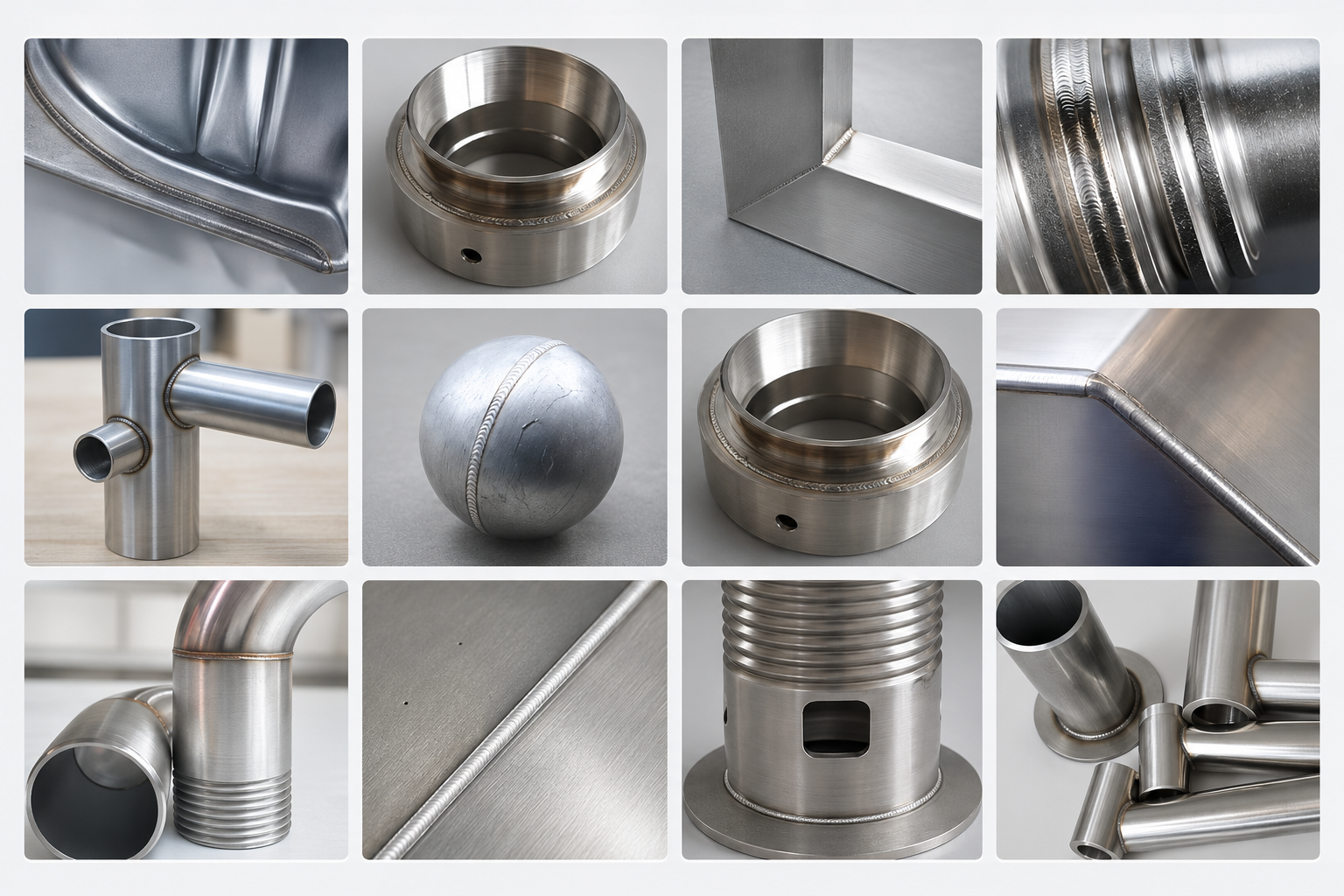
The examples show different metal components and joint geometries. Weld appearance and process suitability depend on the material, fit-up, joint design and selected welding parameters. Test representative parts to assess your own application.
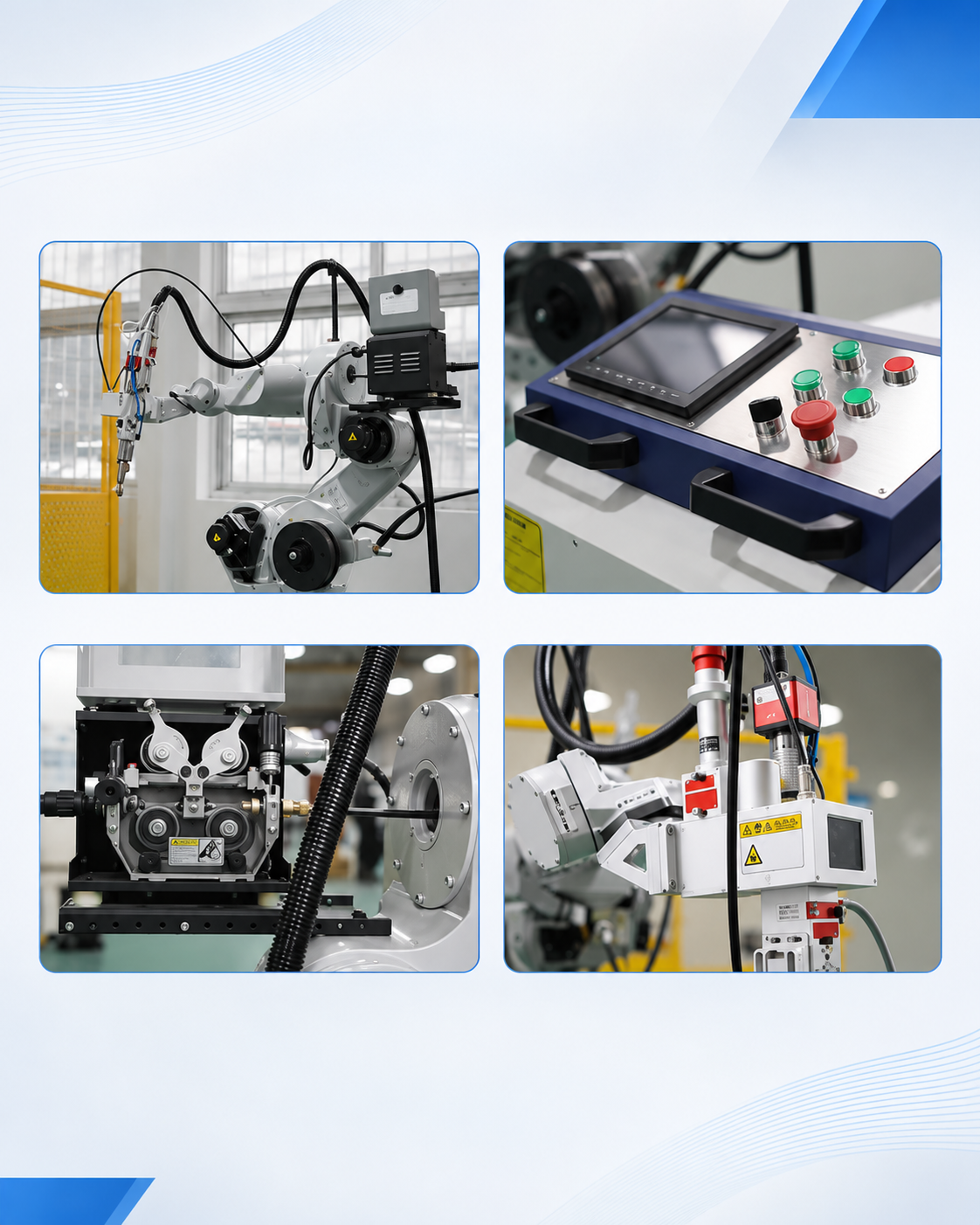
The image shows system components, including the welding head and control equipment. Available equipment depends on the selected machine configuration.
Robot reach, torch access and workpiece positioning should be assessed against the weld locations. A positioner or external rail may be considered when the part size, shape or working range calls for it.
Share part drawings or samples, material and thickness, joint details and production volume. This gives the team a practical basis for discussing the welding process and machine layout.
The system is primarily configured for robotic laser welding. MAG welding can be discussed as an optional process configuration for applications that call for it.
Robot options include KUKA, Panasonic, Yaskawa and FANUC. Confirm the suitable robot model and configuration for your workpiece and project requirements.
MAX and Raycus laser sources are available in 1.5 kW, 2 kW, 3 kW and 6 kW options. Confirm the source model and power configuration for the machine being quoted.
MAG welding is an optional process configuration. Share your material, thickness and joint details so the process can be reviewed for your application.
A positioner or external rail may be considered depending on workpiece size, shape and required working range. The layout should be checked against your parts.
Send part drawings or photos, material and thickness, weld locations, part dimensions, expected production quantity and your preferred welding process.
Send PCL Group your part details and production requirements to discuss a robotic laser welding system or an optional MAG welding configuration.
Contact PCL Group