1.5 kW vs 2 kW vs 3 kW vs 6 kW Fiber Laser: How to Choose
Choosing between a 1.5 kW, 2 kW, 3 kW and 6 kW fiber laser cutting machine is not simply a matter of buying the highest power available. The right configuration depends on the materials you cut, your normal sheet thickness, the edge quality your parts require and how many hours the machine will run.
On this page
Quick answer: choose power for the work you repeat
A 1.5 kW system may suit shops focused on thinner sheet and moderate production. A 2 kW or 3 kW configuration may provide more process capacity for a broader mix of sheet-metal work. A 6 kW system may be appropriate when the production plan calls for higher throughput or processing thicker material within the machine’s supported range.
These are selection starting points, not universal thickness guarantees. Material grade, assist gas, nozzle, focus, machine configuration and cut-quality requirements all affect the result. Ask for a test cut on representative material before choosing a power level.
PCL lists 1,000 W, 1,500 W, 2,000 W, 3,000 W and 6,000 W options for its general flat-sheet fiber laser machine, with a standard 3,000 × 1,500 mm working area that can be customized. Confirm the exact source, head, chiller and working area in the quotation.
1.5 kW vs 2 kW vs 3 kW vs 6 kW
| Power | Questions to ask | Buyer consideration |
|---|---|---|
| 1.5 kW | Is most of the work thin sheet? What cycle time and edge finish are required? | Consider when the regular part mix fits the process range and the budget is a priority. |
| 2 kW | Would additional capacity improve the shop’s common jobs? | Compare against 1.5 kW using the same material, drawing and acceptance criteria. |
| 3 kW | Will the expected production volume use the extra capacity? | Evaluate for shops with a broader material or thickness mix and regular production. |
| 6 kW | Are the machine structure, cutting head, chiller, gas supply and electrical service matched to the work? | Consider when the production plan justifies the higher system investment. |
Five factors that matter more than the kilowatt number
1. Material and grade
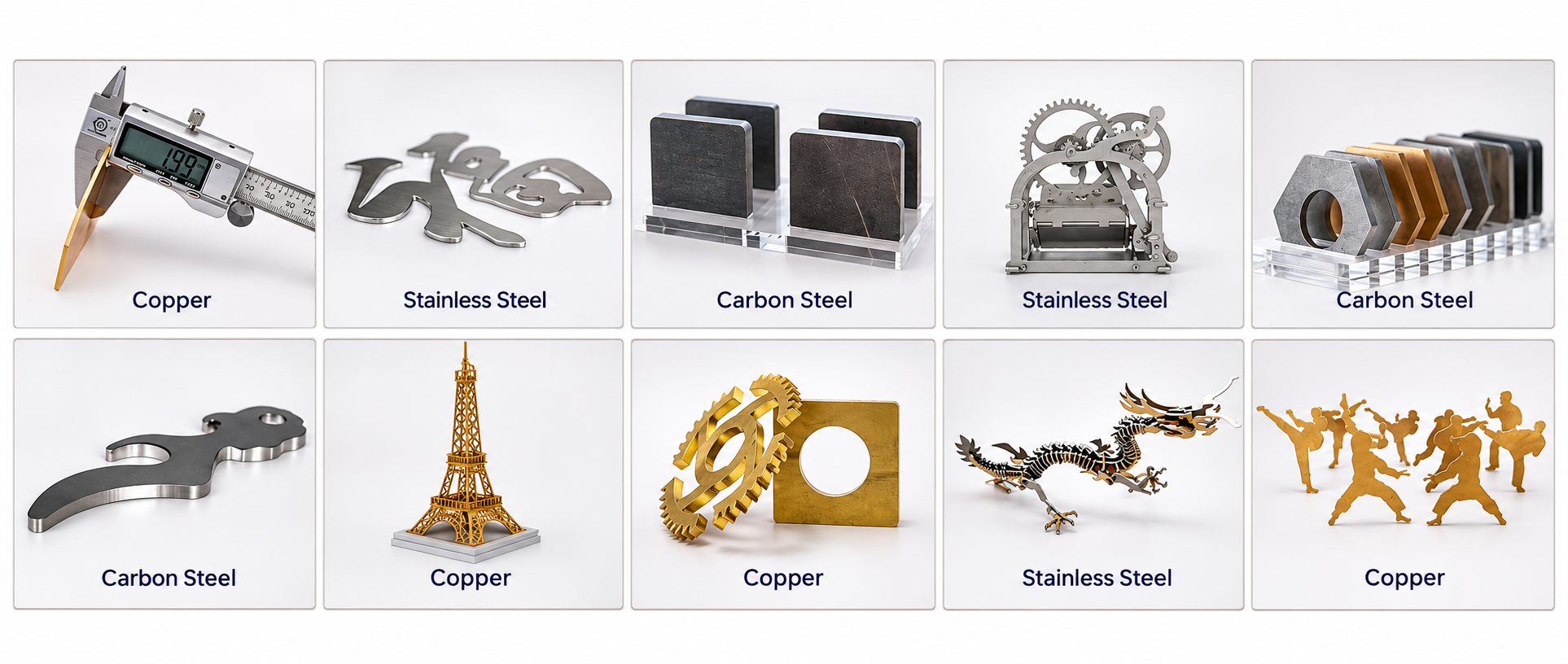
Carbon steel, stainless steel, aluminum, copper and brass do not behave identically during laser cutting. Reflectivity, thermal properties, surface condition and grade can change the process window. Tell the supplier exactly what materials you cut, including grade where known.
2. Typical thickness, not only the maximum
List the thickness you cut every day and the maximum thickness you cut occasionally. Ask the supplier to distinguish stable production cutting from a maximum cut-through or severance figure. For parts that will be painted, welded or used as visible surfaces, describe the required edge condition too.
3. Assist gas and downstream work
Assist gas affects edge oxidation, cutting speed, gas consumption and secondary finishing. A low-cost cutting recipe may not be economical if it creates extra grinding, polishing or rework. Include your finishing requirements when comparing machine demonstrations.
4. Production volume and part geometry
For intricate parts, small holes and short contours, acceleration, motion control, nesting and handling can matter as much as rated laser power. For long straight cuts or repeat production, cycle time and material loading may have a larger effect on output.
5. Total system and site requirements
Compare the complete configuration: laser source, cutting head, chiller, CNC system, enclosure, extraction, electrical supply, gas equipment, installation and training. Higher power may require upgraded utilities and more attention to gas flow and cooling.
How to compare two power options fairly
- Choose one drawing and the material and thickness you run most often.
- Ask both suppliers to cut the same part using the intended production gas and finish requirement.
- Record cycle time, edge condition, burr, dross and any required secondary work.
- Compare the full machine configuration and site requirements, not only the source power.
- Estimate cost per finished part using your actual production volume and operating schedule.
After narrowing down the power options, compare the full configuration and budget in our fiber laser cutting machine price guide.
When should you choose more power?
More power may be justified when test results show a meaningful improvement in throughput, when thicker material is part of regular production, or when it helps meet a required production schedule. If most jobs are thin sheet and the machine spends much of its time waiting for loading, unloading or programming, investing in more laser power alone may not solve the bottleneck.
For detailed material and thickness parameters, use the fiber laser cutting speed chart as a reference and confirm the process with your machine supplier. See the PCL flat-sheet fiber laser cutting machine for available machine configurations.
What to send for a power recommendation
- Material grades and the thickness range you cut regularly.
- Your largest sheet size and preferred working area.
- Representative DXF drawings or sample parts.
- Required edge condition and any welding, coating or polishing steps.
- Expected shifts, operating hours and monthly production volume.
- Destination country and any installation or training requirements.
A useful recommendation should connect the proposed power to your real parts, test results and production target. Request an itemized quotation so you can compare the same scope across different options.