1.0 Executive Summary: High-Power Laser Integration in the Rosario Industrial Corridor
The following technical report details the operational deployment and performance metrics of a 30kW Fiber Laser Universal Profile Steel Laser System, equipped with an Infinite Rotation 3D Head. The evaluation was conducted within the heavy-engineering cluster of Rosario, Argentina, focusing on the fabrication of offshore and onshore wind turbine tower segments. The primary objective was to replace conventional plasma cutting and mechanical edge milling with a unified laser-based process to achieve superior weld preparation geometries and throughput.
In the context of wind energy infrastructure, structural integrity is non-negotiable. Rosario’s manufacturing sector, tasked with producing massive conical and cylindrical sections, has historically struggled with the limitations of 2D cutting and manual beveling. The introduction of 30kW fiber optics combined with 5-axis infinite rotation kinematics represents a paradigm shift in how S355 and S460 structural steels are processed at scale.
2.0 30kW Fiber Laser Dynamics and Thermal Management
2.1 Power Density and Penetration Flux
The core of the system is a 30kW ytterbium-doped fiber laser source. At this power level, the energy density at the focal point exceeds 10^8 W/cm². In the production of wind tower sections, where plate thicknesses typically range from 20mm to 50mm, the 30kW source allows for “high-speed” melt-shear cutting. Unlike lower-wattage systems that rely on slow, oxygen-assisted combustion cutting, the 30kW system utilizes high-pressure nitrogen or mixed gas to achieve a “cold” cut relative to the material thickness.
This power level ensures that the Heat Affected Zone (HAZ) is minimized to less than 0.2mm. In Rosario’s humid, river-adjacent environment, minimizing the HAZ is critical to preventing micro-cracking and hydrogen embrittlement in high-tensile steel alloys used for turbine towers. The system demonstrates a stable cutting speed of 1.8 m/min on 30mm carbon steel, a 300% increase over traditional plasma arc cutting (PAC).
2.2 Beam Quality and Kerf Consistency
The Beam Parameter Product (BPP) of the 30kW source is optimized for thick-plate processing. By employing variable beam shaping (VBS) technology, the system adjusts the energy distribution from a Gaussian profile to a “donut” or “top-hat” profile. This adjustment is essential when transitioning from straight vertical cuts to complex 3D beveling. It ensures that the kerf width remains consistent even when the laser head is tilted at a 45-degree angle, where the “effective thickness” of the material increases significantly.
3.0 The Infinite Rotation 3D Head: Kinematics and Beveling
3.1 Mechanical Architecture of the 5-Axis Head
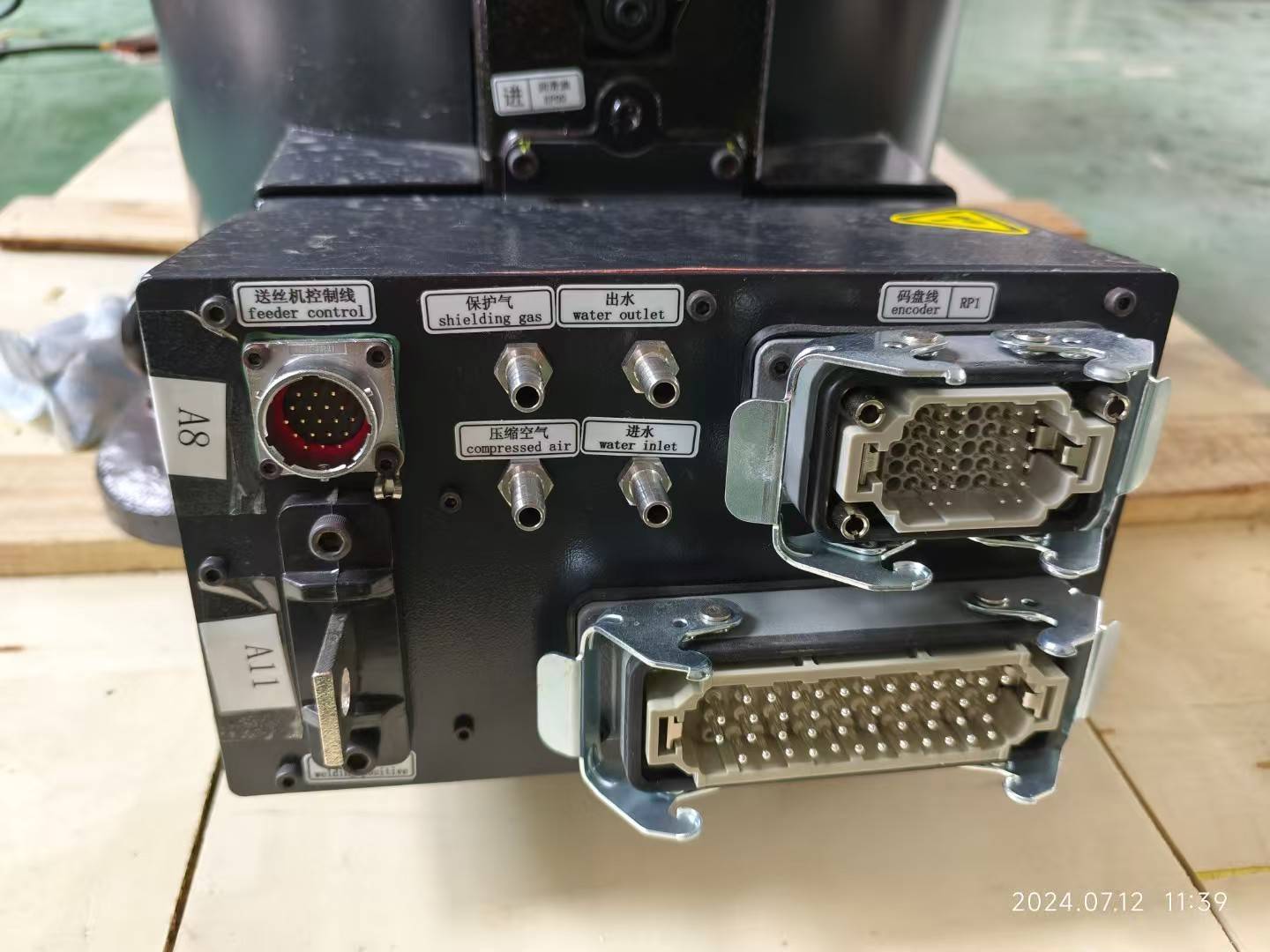
The “Infinite Rotation” capability is the cornerstone of the Universal Profile Steel Laser System. Traditional 3D heads are limited by internal cabling and gas hose torsion, requiring “unwinding” movements that interrupt the cutting path and introduce mechanical lag. The Infinite Rotation head utilizes a specialized slip-ring and rotary joint assembly for gas, coolant, and electrical signals.
For Rosario’s wind tower manufacturers, this means the laser can execute continuous, complex bevels (V, Y, K, and X joints) around the circumference of large-diameter flanges and door frames without a single stop-start point. This continuity is vital for the structural fatigue resistance of the tower; every “re-strike” of a laser or plasma arc is a potential point of failure under the cyclic loading conditions of a wind turbine.
3.2 Precision in Complex Geometries
Wind turbine towers are not simple cylinders; they are conical sections requiring precise longitudinal and circumferential weld preparations. The 3D head operates with a ±45° tilt capacity and a positioning accuracy of ±0.03mm. During the processing of “door frames”—the reinforced openings at the base of the tower—the system must cut thick-walled elliptical profiles with varying bevel angles. The 30kW system manages these transitions dynamically, adjusting focal position and gas pressure in real-time via the CNC’s look-ahead algorithms.
4.0 Application in Rosario’s Wind Energy Sector
4.1 Solving the “Profile Steel” Challenge
While plate processing is central to tower shells, the “Universal Profile” aspect of the system addresses the internal structural components: L-profiles, I-beams, and heavy-wall tubing used for internal platforms and ladder supports. In the Rosario facilities, these were previously cut on separate lines. The 3D head allows the laser to track the surface of non-planar profiles, compensating for material deviations (warpage or twist) via capacitive height sensing that remains active even at extreme tilt angles.
4.2 Integration with Automatic Structural Handling
The system is integrated with heavy-duty roller beds and hydraulic clamping units capable of handling workpieces up to 12,000mm in length. In the Rosario field test, the synergy between the 30kW source and the automated handling system reduced “floor-to-floor” time by 60%. The automation software compensates for the weight of the profile steel, ensuring that the 3D head maintains a constant stand-off distance despite the massive gravitational loads on the machine frame.
5.0 Metallurgical Considerations and Weld Prep Quality
5.1 Eliminating Secondary Operations
The primary bottleneck in wind tower production in Argentina has been the post-cut grinding required to remove dross and oxide layers before welding. The 30kW fiber laser, using nitrogen as an assist gas, produces an oxide-free surface. The 3D head’s ability to produce a “K-bevel” (a double-V bevel with a root face) in a single pass eliminates the need for mechanical milling.
Upon metallurgical inspection of the cut edge on S355J2+N steel, the surface roughness (Ra) was measured at 12.5 μm, which exceeds the requirements for automated Submerged Arc Welding (SAW) typically used in tower longitudinal seams. The absence of carbonization at the edge ensures that the weld chemistry remains within specification, preserving the fracture toughness of the joint.
5.2 Thermal Compensation Algorithms
Cutting heavy steel with 30kW of power introduces significant thermal energy into the workpiece. In a large-scale fabrication environment like Rosario, ambient temperature swings can also affect machine calibration. The system employs a real-time thermal compensation matrix. Sensors on the 3D head monitor the temperature of the protective windows and the collimating lenses, while the CNC adjusts the coordinate system to account for the linear expansion of the steel profile during long cutting cycles.
6.0 Economic and Operational Efficiency Metrics
Data collected over a 30-day period in the Rosario facility indicates the following performance improvements over traditional methods (Plasma + Milling):
- Energy Consumption: While the 30kW draw is high, the dramatically reduced cycle time results in a 25% lower energy-per-meter cost compared to plasma systems.
- Consumable Longevity: The use of high-grade copper nozzles with optimized cooling jackets allowed for 80 hours of continuous cutting before replacement, compared to 8–10 hours for high-definition plasma electrodes.
- Labor Reduction: The “Single-Pass Beveling” capability allowed for the redirection of four technicians from the grinding/milling station to the final assembly area.
7.0 Conclusion
The deployment of the 30kW Fiber Laser Universal Profile Steel Laser System with Infinite Rotation 3D Head in Rosario’s wind tower sector represents the pinnacle of current structural steel processing technology. By solving the twin challenges of “thick-plate speed” and “complex-angle precision,” the system eliminates the traditional manufacturing bottlenecks inherent in renewable energy infrastructure.
The infinite rotation capability, in particular, removes the mechanical constraints that have long hindered the adoption of lasers in heavy-duty 5-axis applications. For senior engineering management, the transition to this system is justified not only by the increase in throughput but by the significant enhancement in the structural integrity of the final product. As wind turbines scale to higher altitudes and harsher environments, the precision of the 30kW laser interface becomes the baseline for global manufacturing excellence.
Field Report End.
Authorization: Senior Laser Systems Consultant
Location: Rosario, Argentina













