1.0 Technical Overview: The 30kW 3D Structural Steel Processing Center
The transition toward high-capacity renewable energy infrastructure in Southeast Asia, particularly within the industrial corridors of Ho Chi Minh City (HCMC), has necessitated a paradigm shift in steel fabrication methodologies. The deployment of the 30kW Fiber Laser 3D Structural Steel Processing Center represents a significant leap from traditional plasma or low-wattage laser cutting. This system is engineered specifically for heavy-duty structural components, where thickness, geometric complexity, and weld preparation requirements intersect.
The core of this system is the integration of a high-brightness 30kW ytterbium fiber laser source with a specialized 5-axis kinematic head capable of infinite rotation. Unlike standard 2D cutting systems or limited-pivot 3D heads, this processing center addresses the non-linear challenges of wind turbine tower production—specifically the fabrication of door frames, internal flanges, and cable entry ports in thick-walled conical sections.
1.1 30kW Laser Source Dynamics
The 30kW power rating is not merely a quantitative increase in speed; it is a qualitative shift in material interaction. At this power density, the laser maintains a stable keyhole effect in structural steels (such as S355JR or S355NL) up to 50mm-80mm thickness. In the HCMC wind tower sector, where plate thicknesses typically range from 20mm to 60mm, the 30kW source allows for high-speed fusion cutting with nitrogen or oxygen-assisted high-pressure cutting, significantly reducing the Heat Affected Zone (HAZ) compared to submerged arc or plasma processes.
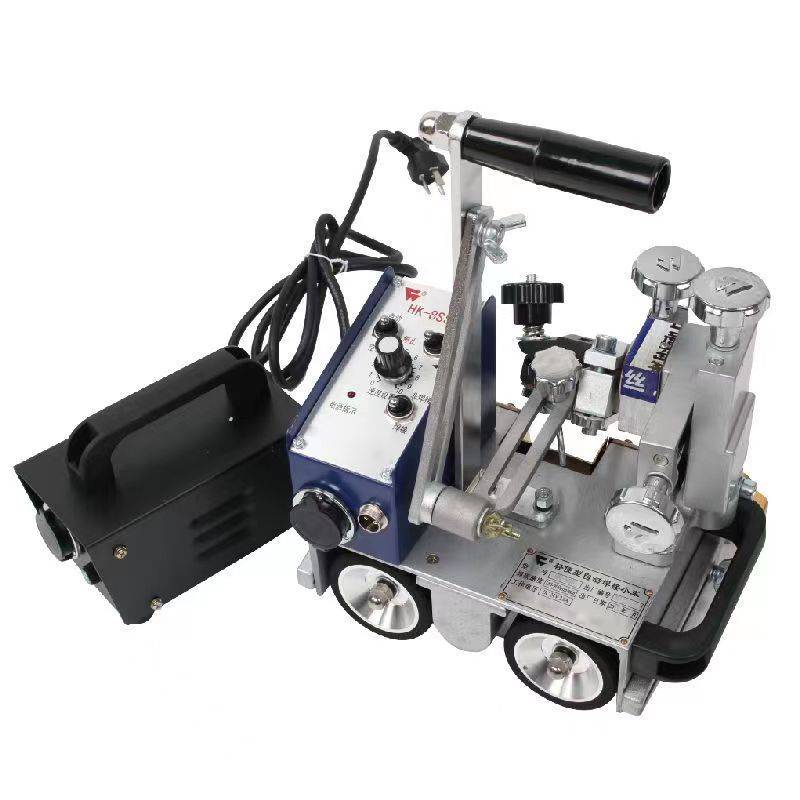
2.0 Infinite Rotation 3D Head: Overcoming Kinematic Constraints
In the context of structural steel, “3D” refers to the ability to process curved surfaces and perform complex beveling (V, X, Y, and K-shaped joints) essential for subsequent robotic welding. The Infinite Rotation 3D Head is the critical differentiator in this assembly.
2.1 Mechanical Architecture and C-Axis Continuity
Traditional 5-axis heads are often limited by internal cabling, requiring a “rewind” cycle after reaching a 360-degree or 540-degree limit. In a high-volume production environment like HCMC’s heavy industry zones, this downtime accumulates. The Infinite Rotation technology utilizes a proprietary slip-ring and specialized optical path delivery system that allows the C-axis (rotation around the vertical axis) to spin indefinitely.
This is vital for cutting elliptical manholes or large-diameter cable ports in wind tower segments. When the laser must follow a complex 3D contour around a cylindrical tower section, the ability to maintain continuous motion ensures a seamless cut surface without start-stop marks or thermal notches, which are critical fatigue points in wind energy structures.
2.2 A/B Axis Precision in Heavy Beveling
The head maintains a tilt range (A/B axis) of up to ±45 degrees (and in some configurations ±135 degrees for specialized profiling). When processing wind tower door frames, the system calculates the varying bevel angle required to match the curvature of the tower shell. This real-time compensation, driven by high-speed EtherCAT control systems, ensures that the root gap for the subsequent welding process is consistent to within ±0.2mm, a tolerance level virtually unattainable with manual or plasma cutting on heavy sections.
3.0 Application in Wind Turbine Tower Fabrication: HCMC Case Study
Ho Chi Minh City has positioned itself as a logistical hub for offshore wind projects in the South China Sea. The fabrication of wind towers involves massive cylindrical and conical sections. The 30kW 3D processing center has been integrated into these workflows to solve three primary bottlenecks.
3.1 Door Frame (D-Frame) Integration
The entry door of a wind tower is a high-stress zone. The cutout in the tower shell must be precise to accommodate the heavy reinforcement frame. Utilizing the 30kW laser with the 3D head allows for the simultaneous cutting of the aperture and the beveling of the edges in a single pass. This eliminates the need for secondary grinding. In HCMC facilities, we have observed a reduction in processing time for a single D-frame cutout from 6 hours (manual/plasma/grinding) to under 45 minutes.
3.2 Flange and Internal Component Processing
Wind towers require internal flanges and stiffeners that must be perfectly perpendicular or specifically angled to the tower’s inner wall. The 30kW system’s ability to handle structural shapes (I-beams, H-beams, and channels) alongside flat plates allows for a consolidated manufacturing floor. The “Processing Center” nomenclature reflects this versatility—the machine acts as a multi-tool for the entire structural assembly.
3.3 Material Handling and Atmospheric Considerations in HCMC
Operating a 30kW laser in the humid, tropical environment of HCMC requires specific environmental controls. The processing center is equipped with a closed-loop climate-controlled cabinet for the laser source and an advanced chilling system for the 3D head optics. High humidity can lead to condensation on the protective windows of the laser head; thus, the system utilizes a positive-pressure dry air purge to ensure optical integrity. This ensures that the 30kW beam remains stable during the long-duration cuts required for 50mm thick tower sections.
4.0 Synergy Between Power and Automation
The true efficiency of the 30kW Fiber Laser is realized through its synergy with the automatic structural processing software. The integration of CAD/CAM specifically for 3D steel structures allows for “nesting” on curved surfaces.
4.1 Kerf Management and Thermal Control
At 30kW, the energy input is massive. The 3D head’s control software employs dynamic kerf compensation. As the head tilts for a bevel cut, the effective thickness of the material increases (e.g., a 45-degree cut through 40mm plate results in a 56.5mm travel distance). The 30kW source dynamically adjusts its frequency and duty cycle to maintain a consistent kerf width, preventing over-melting at the bottom of the cut. This level of thermal management is essential for maintaining the metallurgical properties of S355 steel, ensuring that the hardness of the cut edge does not exceed the limits specified by EN ISO 15614-1.
4.2 Intelligent Sensing and Collision Avoidance
Processing 3D structural steel involves navigating irregular surfaces. The infinite rotation head is equipped with high-speed capacitive sensors that maintain a constant standoff distance even at extreme angles. In HCMC’s high-throughput shops, this prevents catastrophic head collisions with tipped parts or warped plates, a common issue in high-power laser applications.
5.0 Economic and Engineering Impact
The implementation of this technology in the HCMC region has redefined the ROI calculations for heavy steel fabricators. While the initial capital expenditure for a 30kW 3D system is higher than plasma, the operational costs per meter are significantly lower when accounting for the elimination of secondary processes.
5.1 Reduction in Consumables and Labor
Unlike plasma, which requires frequent replacement of electrodes and nozzles and produces significant slag, the fiber laser process is remarkably clean. The 30kW source allows for high-speed cutting with compressed air in certain thickness ranges, further reducing the cost of gas. In the wind tower sector, where weld volume is a major cost driver, the precision of the laser-cut bevel reduces the amount of filler wire required by up to 15% due to tighter fit-up tolerances.
5.2 Scalability and Future-Proofing
As wind turbine designs scale toward 15MW and 20MW, tower diameters and wall thicknesses will continue to increase. The 30kW 3D processing center is built for this trajectory. The modularity of the fiber source allows for potential upgrades, while the infinite rotation head is already capable of handling the larger radii of future offshore tower segments.
6.0 Conclusion
The 30kW Fiber Laser 3D Structural Steel Processing Center, equipped with an Infinite Rotation 3D Head, represents the pinnacle of modern steel fabrication. For the wind energy sector in Ho Chi Minh City, it provides the necessary precision, speed, and reliability to meet international standards. By solving the inherent limitations of 2D cutting and restricted 3D movement, this technology ensures that the structural integrity of wind towers is matched by an efficient and scalable production process. The synergy of high-wattage laser power and unrestricted kinematic movement is no longer a luxury but a requirement for the next generation of heavy steel infrastructure.













