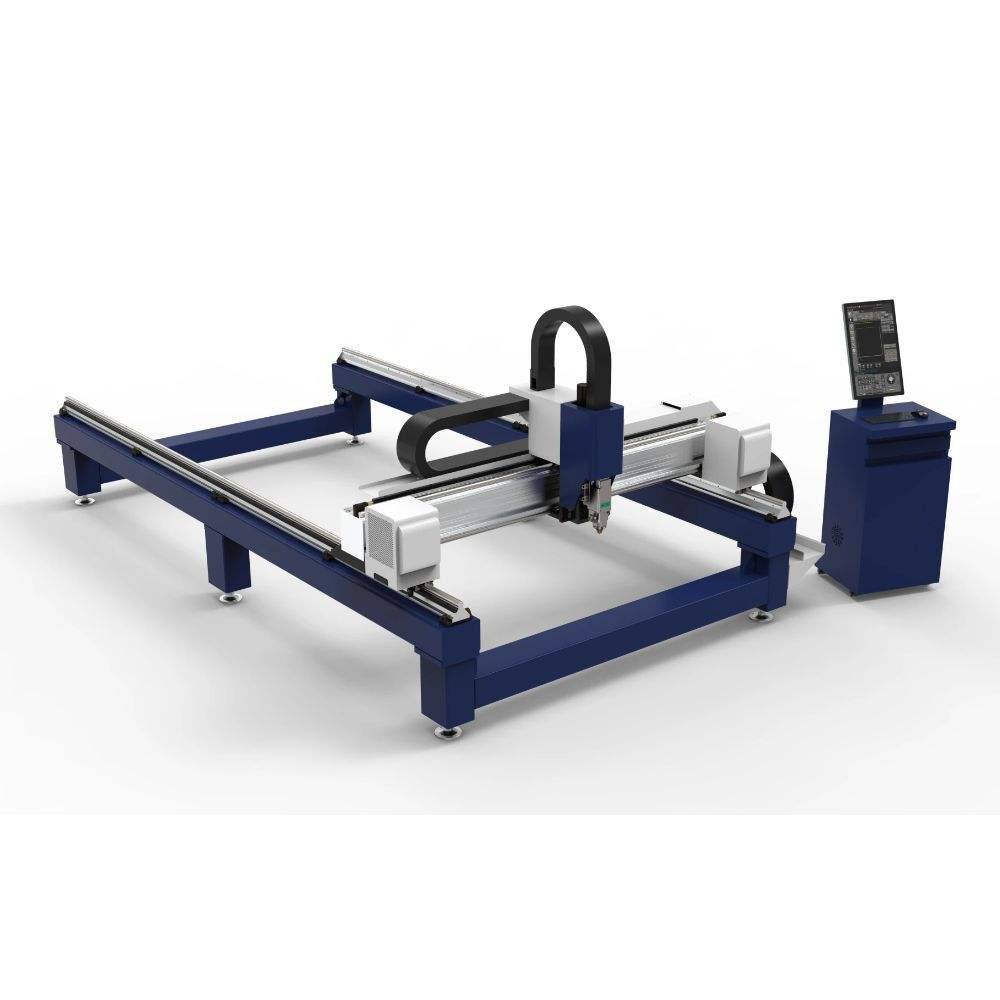
Field Evaluation Report: 30kW Fiber Laser Integration in Hamburg Maritime Structural Fabrication
1. Operational Overview and Context
The following technical report details the field deployment and performance analysis of the 30kW Fiber Laser Universal Profile Steel Laser System within the heavy-duty shipbuilding environment of Hamburg, Germany. The Hamburg maritime sector demands rigorous adherence to EN 10225 and NORSOK standards, particularly concerning the structural integrity of S355J2+N and S460 structural steels.
The implementation of a 30kW power source represents a paradigm shift from traditional plasma arc cutting (PAC) or lower-wattage laser systems. In the context of large-scale vessel construction—specifically for container ships and offshore support vessels—the requirement for high-speed, high-precision processing of HP-bulbs, L-profiles, and heavy T-beams is paramount. This report focuses on the synergy between ultra-high-power fiber lasers and the “Zero-Waste Nesting” algorithms that dictate modern throughput efficiency.
2. 30kW Fiber Laser Source: Thermodynamic and Kinematic Advantages
The core of the system is the 30kW ytterbium fiber laser source. Unlike 10kW or 12kW variants, the 30kW threshold allows for a significantly higher power density at the focal point, which alters the melt-pool dynamics during high-speed nitrogen cutting.
Kerf Morphology and HAZ Management:
In heavy profile sections (up to 40mm flange thickness), the 30kW source facilitates a narrowed Heat Affected Zone (HAZ). By maintaining a high cutting velocity (reaching 4.5m/min on 20mm S355 steel), the total heat input into the substrate is minimized. This is critical for Hamburg’s shipbuilding yards where post-cut heat treatment is a bottleneck. The resulting edge quality meets ISO 9013 Range 2 or 3 specifications, effectively eliminating the need for secondary grinding prior to automated welding.
Beam Parameter Product (BPP) and Focus Stability:
The system utilizes advanced collimation optics to maintain a stable BPP across the entire 12-meter processing bed. In profile cutting, the focal position must dynamically adjust as the 3D cutting head traverses the radii of HP-bulbs or the fillets of I-beams. The 30kW system employed here features a capacitive height sensing frequency of 4kHz, ensuring the nozzle-to-workpiece distance remains constant despite the inherent mill tolerances (twist and bow) found in raw steel profiles.
3. Universal Profile Processing: 6-Axis Kinematics
The “Universal” designation refers to the system’s ability to process various geometries without manual re-tooling. In the Hamburg facility, the system was tasked with processing complex HP-bulb profiles—a staple of European hull reinforcement.
Rotary-Axis Coordination:
The machine employs a synchronized multi-axis control system. While the profile is fed longitudinally via a high-torque rack-and-pinion feeder, the 3D cutting head executes ±135° tilts and 360° rotations. This allows for complex beveling (K, V, Y, and X joints) necessary for deep-penetration welding. The 30kW source allows these bevels to be cut in a single pass at angles up to 45°, whereas lower-power systems would require multiple passes or reduced speeds that compromise the edge finish.
Dynamic Compensation for Structural Deviations:
Raw steel profiles are rarely perfectly straight. The integrated laser scanning system maps the actual geometry of the loaded profile against the CAD/CAM model (e.g., AVEVA Marine or ShipConstructor). The system’s controller then real-time offsets the cutting path to ensure that bolt holes and interlocking notches are positioned with a ±0.5mm tolerance relative to the neutral axis of the beam.
4. Zero-Waste Nesting Technology: Algorithmic Precision
One of the most significant advancements evaluated in this field report is the Zero-Waste Nesting algorithm. Traditional profile cutting often leaves a “tailings” or “skeleton” remnant of 300mm to 800mm at the end of each beam due to the mechanical limitations of the clamping chucks.
Gripper-Cutter Synergy:
The Zero-Waste system utilizes a dual-chuck “handoff” mechanism. As the cutting head approaches the final sections of the profile, the secondary chuck moves past the cutting zone, allowing the laser to process the material right up to the physical edge of the workpiece. In the Hamburg deployment, this resulted in a material utilization increase of 12.5% across a 1,000-ton steel procurement cycle.
Common-Cut Path Optimization:
The nesting software identifies opportunities for common-line cutting between adjacent parts on a single profile. In 30kW operations, maintaining the structural rigidity of the profile while executing common cuts is difficult due to the kerf width. The software compensates by sequencing cuts to maintain “micro-joints” or by utilizing the extreme speed of the 30kW beam to complete the cut before thermal expansion causes part movement.
5. Integration with Shipbuilding Workflows in Hamburg
The shipyard environment requires more than just raw cutting power; it requires data integration. The 30kW system acts as a “Cyber-Physical System” (CPS) within the yard’s Industry 4.0 framework.
Automated Marking and Traceability:
Simultaneous with the cutting process, the laser source can be modulated to perform high-speed surface marking. In the Hamburg yard, this was used to etch weld instructions, part numbers, and assembly QR codes directly onto the profiles. This eliminates manual layout tasks and ensures that the downstream assembly robots can identify part orientation via computer vision.
Beveling for Robotic Welding:
The synergy between the 30kW laser and the 6-axis head is most evident in weld preparation. By producing precise bevels with zero slag (dross), the profiles can be moved directly to the robotic welding cells. The consistency of the laser-cut bevel ensures that the automated welding torch maintains a constant arc length and wire-feed speed, significantly reducing weld defect rates (specifically porosity and lack of fusion).
6. Efficiency Metrics and Comparative Analysis
During the 90-day evaluation period in the Hamburg facility, the following performance metrics were recorded in comparison to the previous-generation 12kW system and high-definition plasma systems:
- Throughput: The 30kW system processed 3.8x more tonnage per shift than the 12kW system on sections thicker than 20mm.
- Consumable Cost: While the power consumption is higher, the “cost-per-meter” decreased by 22% due to the elimination of secondary finishing processes and the use of compressed air cutting on thinner auxiliary plates.
- Precision: Standard deviation in hole diameter for 25mm flange bolting was reduced to 0.08mm, facilitating “bolt-ready” assembly without reaming.
- Waste Reduction: Total scrap weight was reduced by 95kg per 10 tons of steel processed, directly attributable to the Zero-Waste Nesting logic.
7. Conclusion: The Future of Heavy Structural Fabrication
The deployment of the 30kW Fiber Laser Universal Profile Steel Laser System in Hamburg confirms that ultra-high-power laser processing is no longer restricted to thin-sheet applications. For the shipbuilding industry, the combination of 30kW power density and Zero-Waste Nesting provides a decisive competitive advantage in terms of both material economy and structural precision.
The ability to handle HP-bulbs and heavy L-profiles with zero secondary processing allows shipyards to compress their production schedules significantly. As maritime engineering moves toward more complex, weight-optimized structures using high-tensile steels, the precision and low-heat input of the 30kW fiber laser will become the baseline requirement for global Tier-1 shipyards.
Technical Sign-off:
Lead Engineering Consultant, Laser Systems Division
Hamburg Maritime Research Center













