The Dawn of Ultra-High Power: Why 30kW Matters
In the realm of fiber lasers, the move from 10kW or 12kW to 30kW is not merely an incremental upgrade; it is a fundamental shift in processing capability. For Istanbul’s railway sector, where heavy-duty structural steel is the primary building block, a 30kW fiber laser provides the “brute force” necessary to pierce through thick-walled I-beams and H-sections while maintaining a clean, dross-free edge.
At 30kW, the energy density at the focal point is immense. This allows for high-speed fusion cutting, even in materials exceeding 30mm to 50mm in thickness. In railway infrastructure, where structural beams must support immense dynamic loads, the quality of the cut is paramount. Traditional thermal cutting methods often leave a wide Heat Affected Zone (HAZ), which can compromise the metallurgical integrity of the steel. The 30kW fiber laser, however, moves so rapidly that the heat input into the surrounding material is minimized, preserving the tensile strength and fatigue resistance of the I-beam.
Heavy-Duty I-Beam Profiling: Beyond Simple Cutting
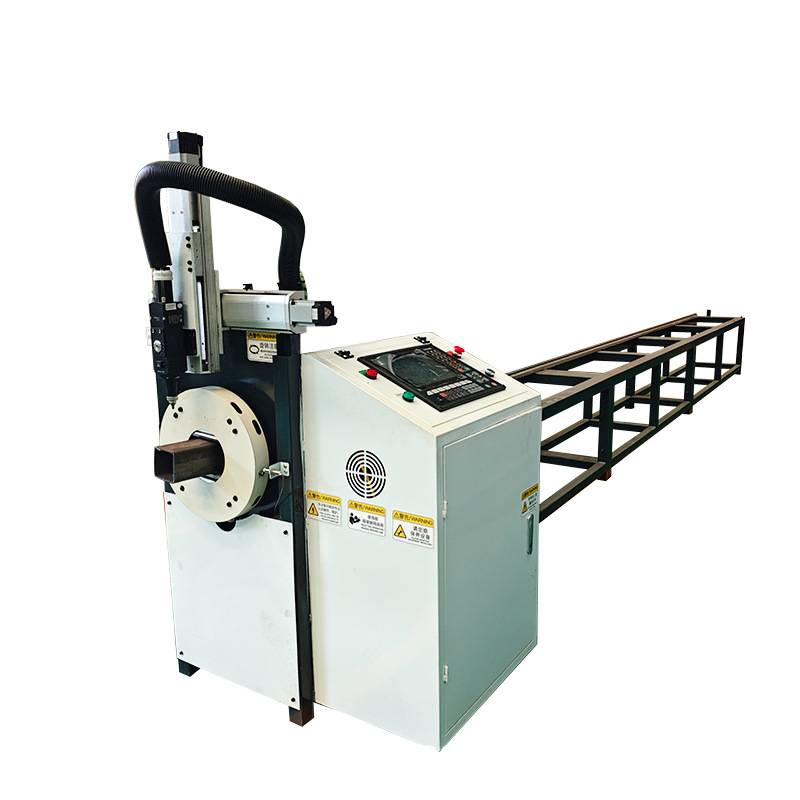
A 30kW laser profiler designed for heavy-duty I-beams is a marvel of mechanical engineering. Unlike flat-sheet lasers, these systems utilize a 3-dimensional processing environment. The machine must handle beams that can weigh several tons and span lengths of 12 meters or more.
The profiler typically employs a multi-axis cutting head (often 5 or 6 axes) that can rotate around the beam. This enables the machine to execute complex geometries: bevel cuts for weld preparations, precise bolt holes, and intricate notches for interlocking joints. In the context of Istanbul’s railway stations or elevated track sections, these “ready-to-assemble” parts drastically reduce the time spent on-site. Instead of manual layout and torch cutting, the 30kW laser executes the entire blueprint in a single pass, ensuring that every beam fits perfectly with its counterpart, much like a giant, structural jigsaw puzzle.
The Efficiency of Automatic Unloading Systems
One of the greatest bottlenecks in heavy-duty laser processing is material handling. A 30kW laser can cut through steel so fast that a manual unloading team simply cannot keep up. This is where the Automatic Unloading System becomes indispensable.
In a high-throughput facility in Istanbul, the unloading system uses a series of synchronized conveyors, hydraulic lifts, and lateral transfer arms. Once the laser has finished profiling an I-beam, the system automatically detects the completed part and moves it from the cutting zone to a designated staging area. This prevents “machine idle time,” where a multi-million dollar laser sits dormant while a crane operator struggles to clear the bed. Furthermore, in the heavy-duty sector, handling 600kg or 1000kg beams manually poses significant safety risks. Automation removes the human element from the “danger zone,” ensuring that the only manual intervention required is the final quality check.
Strategic Importance for Istanbul’s Railway Infrastructure
Istanbul is currently undergoing one of the most significant transit expansions in the world. From the expansion of the M7 and M9 metro lines to the integration of transcontinental freight corridors, the demand for structural steel is insatiable. The 30kW Fiber Laser Heavy-Duty I-Beam Profiler is the engine behind this growth.
Railway infrastructure requires specific components like catenary masts, bridge girders, and station canopies. These structures must withstand not only the weight of the trains but also the seismic activity common in the Marmara region. Laser-cut beams offer superior consistency compared to plasma or manual methods. When a project requires 5,000 identical support brackets for a new underground station, the 30kW laser ensures that the 5,000th part is identical to the first. This level of repeatability is critical for the safety certifications required by the Turkish State Railways (TCDD) and international oversight bodies.
The Technical Synergy: Software and Precision
A 30kW laser is only as good as the software that drives it. For I-beam profiling, advanced CAD/CAM suites are used to “nest” parts within the beam to minimize scrap. These systems can import 3D models directly from architectural software (BIM), allowing for a seamless transition from the architect’s vision to the physical beam.
In Istanbul’s competitive industrial zones, such as İkitelli or Gebze, the ability to minimize material waste is a key economic driver. Steel prices are volatile, and a 30kW laser’s narrow kerf (the width of the cut) means more of the raw material ends up in the final structure and less in the scrap bin. Additionally, the precision of the laser allows for “interference-free” assembly. When holes are cut with a tolerance of +/- 0.1mm, bolts slide in perfectly, eliminating the need for reaming or “forcing” fits on the construction site.
Environmental and Economic Impact in the Turkish Market
The shift to 30kW fiber lasers also aligns with Turkey’s increasing focus on sustainable manufacturing. Compared to CO2 lasers, fiber lasers are significantly more energy-efficient, converting a higher percentage of electrical wall-plug power into light energy. For a heavy-duty operation in Istanbul, this translates to lower utility bills and a smaller carbon footprint.
Furthermore, the speed of the 30kW system allows Istanbul-based fabricators to take on international contracts. By reducing the “cost-per-part” through automation and high-speed processing, Turkish firms can compete with European and Asian manufacturers for large-scale infrastructure tenders across the Middle East and Africa. The 30kW I-beam profiler is not just a tool for local projects; it is an export-multiplier for the Turkish engineering sector.
Maintenance and Technical Support in the Region
Operating a 30kW system requires specialized knowledge. Istanbul has become a hub for laser expertise, with local technicians trained in the maintenance of high-power resonators, chiller systems, and gas delivery networks. Using nitrogen as a shield gas at these power levels requires a robust supply chain, which Istanbul’s industrial infrastructure provides.
Preventive maintenance is vital. The optical path must be kept pristine, as even a speck of dust at 30,000 watts can lead to catastrophic lens failure. Modern profilers are equipped with “smart sensors” that monitor the health of the cutting head in real-time, sending alerts to operators’ smartphones or central control rooms. This “Industry 4.0” approach ensures that the railway production lines never grind to a halt.
Conclusion: Building the Future, One Beam at a Time
The implementation of a 30kW Fiber Laser Heavy-Duty I-Beam Profiler with Automatic Unloading represents the pinnacle of current structural steel fabrication. For the city of Istanbul, it provides the technological horsepower needed to keep pace with its rapid urbanization and its role as a global transit bridge.
By marrying the raw power of the 30kW source with the intelligence of automated unloading and 3D profiling, the railway infrastructure of tomorrow is being built today with higher precision, better safety, and superior efficiency. As the tracks spread further across the city and the nation, the silent, high-speed pulse of the fiber laser remains the invisible force driving Turkey’s industrial evolution.