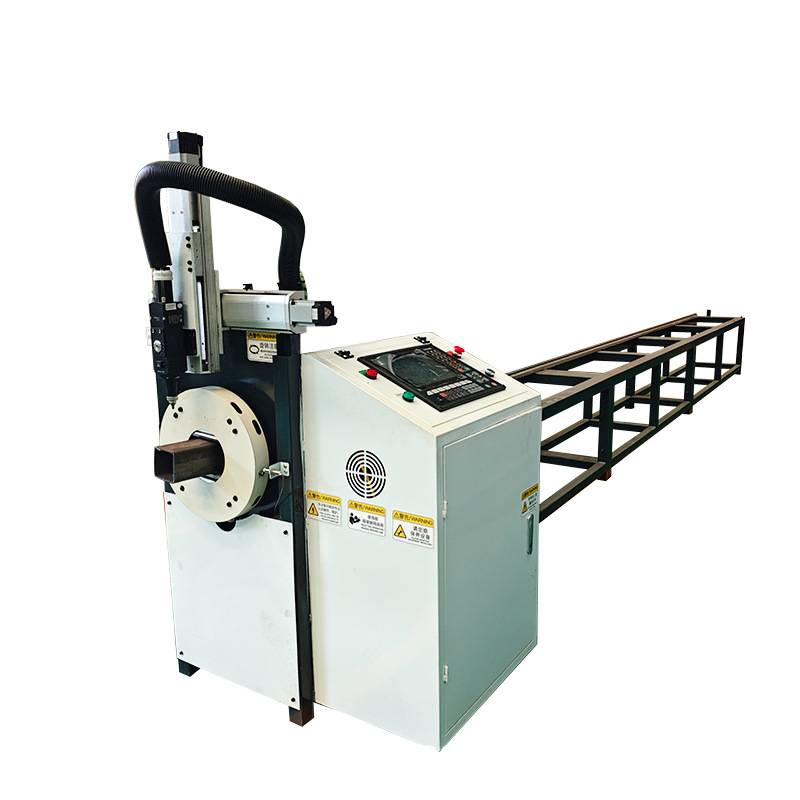
Field Report: Evaluation of 30kW Ultra-High Power 3D Laser Processing in Mexico City Airport Structural Steel Infrastructure
1. Project Scope and Environmental Parameters
The structural requirements for the airport construction sector in Mexico City present unique engineering challenges. Due to the region’s high seismic activity and the specific soil composition (lacustrine deposits), structural steel components must adhere to exceptionally tight tolerances to ensure optimal load distribution and energy dissipation. This report evaluates the deployment of a 30kW Fiber Laser CNC Beam and Channel Cutter equipped with an Infinite Rotation 3D Head for the fabrication of complex terminal support structures and long-span trusses.
Traditional fabrication methods—primarily plasma cutting, mechanical drilling, and manual oxy-fuel beveling—have historically introduced significant thermal stress and dimensional deviations. The transition to 30kW fiber laser technology represents a shift toward high-frequency precision, specifically targeted at H-beams, I-beams, C-channels, and heavy-walled Rectangular Hollow Sections (RHS) utilized in the airport’s primary skeleton.
2. Technical Analysis of 30kW Fiber Laser Integration
The implementation of a 30kW fiber laser source is not merely a matter of increased throughput; it is a fundamental shift in the physics of structural steel processing. At 30kW, the power density at the focal point allows for the sublimation of thick-walled carbon steel (up to 40mm-50mm) with significantly reduced Heat Affected Zones (HAZ).
Thermal Management and Material Integrity:
In the context of Mexico City’s seismic building codes, maintaining the metallurgical integrity of A992 or A572 Grade 50 steel is paramount. Higher power allows for increased feed rates, which inversely reduces the duration of thermal exposure. The 30kW source achieves a “cold” cut relative to plasma, preserving the crystalline structure of the steel and preventing the local embrittlement that often leads to fatigue failure in seismic joints.
Kerf Morphology:
The 30kW source, when coupled with advanced nitrogen or oxygen assist gas delivery, produces a kerf with minimal taper. For thick-webbed beams used in airport gantry systems, this ensures that bolt holes and interlocking notches require zero secondary machining. The perpendicularity of the cut surface remains within ±0.1mm across a 300mm beam depth, a metric unattainable by conventional mechanical means.
3. Infinite Rotation 3D Head: Overcoming Geometric Constraints
The core innovation of the system is the Infinite Rotation 3D Head. Traditional 5-axis laser heads are often limited by cable winding and mechanical stops, necessitating “re-homing” or unwinding cycles that interrupt the cutting path.
Kinematics of Infinite Rotation:
The infinite C-axis rotation allows the cutting head to orbit the structural profile without interruption. In the fabrication of Mexico City’s airport terminal trusses—which feature complex, non-orthogonal junctions—the ability to maintain a continuous vector change is critical. This technology enables the simultaneous execution of beveling, coping, and slotting across multiple faces of a beam in a single program cycle.
Weld Preparation and Beveling:
For heavy structural steel, weld preparation is the most labor-intensive phase. The 30kW 3D head executes precision V, X, Y, and K-bevels directly onto the beam ends. By utilizing the infinite rotation capability, the system maintains a constant angle of attack even as it transitions from the flange to the web of an H-beam. This results in a precision-fit “saddle cut” or “complex cope” that allows for full-penetration welds with minimal filler metal, significantly reducing the airport’s overall structural weight and welding costs.
4. Application in Mexico City Airport Infrastructure
The specific architectural design of the Mexico City airport involves massive cantilevered roofs and organic, flowing steel geometries. These designs require beams that are not only structural but also serve as aesthetic elements.
Precision Coping for Seismic Joints:
Seismic-resistant frames require “Reduced Beam Sections” (RBS), often referred to as “dogbone” cuts. The 30kW laser executes these parabolic profiles with high repeatability. The Infinite 3D Head ensures that the transition between the flange and the web is radiused perfectly, eliminating stress risers that are common with manual torch cutting.
Channel and Angle Processing:
The airport’s secondary support systems utilize extensive C-channel and L-angle profiles for MEP (Mechanical, Electrical, and Plumbing) supports. The CNC beam cutter’s ability to detect material deviation via touch-sensing or laser scanning, and then compensate in real-time using the 3D head’s Z-axis, ensures that even deformed or “bowed” raw material from the mill is processed with absolute accuracy relative to the CAD model.
5. Synergy Between Laser Source and Automatic Structural Processing
The efficiency of the 30kW system is maximized through its integration into a fully automated workflow. In the Mexico City deployment, the bottleneck is rarely the cutting speed, but rather the material handling.
Digital Twin and BIM Integration:
The system operates on a direct-to-machine workflow using TEKLA or Revit structural models. The software decomposes the 3D BIM data into G-code that optimizes the infinite rotation paths. This synergy eliminates human error in layout marking. Every bolt hole, notch, and bevel is cut based on the global coordinate system of the airport’s master plan.
Automated Sensing and Correction:
Structural steel is rarely perfectly straight. The 30kW system employs high-speed sensors to map the actual profile of the beam once it is loaded onto the conveyor. The 3D head then adjusts its toolpath to the actual geometry of the beam while maintaining the nominal dimensions of the cut features. This “best-fit” logic is essential for the long-span sections used in airport hangar construction, where a 2mm deviation over 12 meters could otherwise lead to massive assembly failures on-site.
6. Comparative Analysis: Traditional vs. 30kW 3D Laser
An evaluation of throughput metrics reveals the following:
- Processing Time: A complex H-beam requiring four-sided coping and bolt-hole arrays previously took 45 minutes (including layout, drilling, and manual oxy-beveling). The 30kW CNC system completes the same profile in under 4 minutes.
- Consumable Cost: While the initial investment in 30kW fiber technology is high, the cost-per-part is reduced by 60% due to the elimination of drill bits, cooling fluids, and the reduction in assist gas consumption per meter of cut.
- Fit-Up Accuracy: On-site assembly at the Mexico City project reported a 95% reduction in “re-work” or field-grinding, as the 3D laser-cut joints provide a “lock-and-key” fit.
7. Conclusion
The deployment of the 30kW Fiber Laser CNC Beam and Channel Cutter with Infinite Rotation 3D Head technology represents the current zenith of structural steel fabrication. For the Mexico City airport project, this technology addresses the dual requirements of seismic safety and architectural complexity. By consolidating multiple fabrication steps—sawing, drilling, and beveling—into a single high-power laser operation, the project has achieved a level of precision and throughput that sets a new benchmark for large-scale infrastructure projects. The infinite rotation capability, in particular, proves indispensable for the multi-faceted geometries inherent in modern aviation hubs, ensuring that the structural integrity of the facility is as sophisticated as its design.













