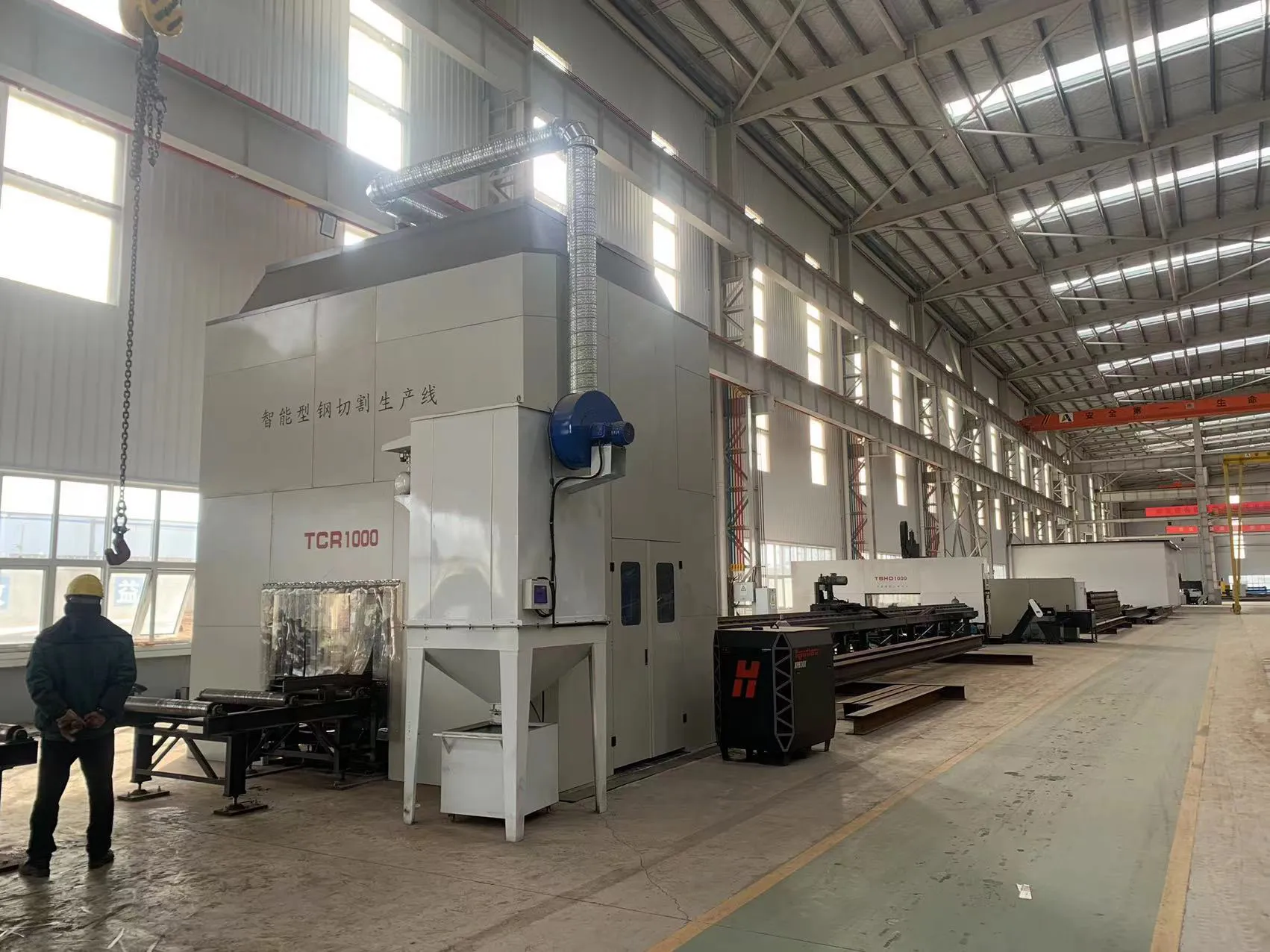
The Dawn of 30kW Power in Heavy Fabrication
In the realm of industrial laser technology, the leap from 10kW to 30kW is not merely a linear upgrade; it is a transformative shift in capability. For a shipbuilding yard, where structural integrity and material thickness are paramount, the 30kW fiber laser source provides the “thermal punch” necessary to slice through high-tensile marine-grade steel with the precision of a scalpel.
At 30kW, the energy density at the focal point is so intense that the transition from solid to plasma occurs almost instantaneously. This allows for feed rates on 20mm to 40mm steel plates and profiles that were previously unthinkable with plasma or oxy-fuel systems. In Edmonton—a city known for its robust fabrication sector and role as a gateway to northern infrastructure—the adoption of such high-power systems allows local yards to compete on a global scale, delivering modular ship components with tolerances measured in microns rather than millimeters.
Mastering Beams and Channels: The 3D Challenge
Standard laser cutters are designed for flat sheets, but shipbuilding requires the processing of complex structural profiles. A 30kW CNC Beam and Channel Laser Cutter utilizes a specialized 5-axis or 6-axis head capable of maneuvering around the flanges and webs of I-beams, H-beams, and U-channels.
The complexity of cutting a channel beam lies in the varying thickness of the material as the head moves from the web to the flange. A CNC system powered by 30kW can dynamically adjust its frequency and gas pressure in real-time, ensuring a clean, dross-free cut across the entire profile. This is critical for shipbuilding, where interlocking structural ribs and hull supports must fit perfectly to ensure weld integrity. The precision of the laser eliminates the need for secondary grinding or edge preparation, moving the part directly from the laser bed to the welding station.
The Efficiency of Automatic Unloading Systems
One of the greatest challenges in heavy-duty laser cutting is the sheer weight and awkwardness of the workpieces. A standard 12-meter I-beam is not easily moved by hand. This is where the “Automatic Unloading” component of the system becomes a force multiplier.
The automatic unloading system utilizes a synchronized series of conveyors and hydraulic lifters that sense when a cut cycle is complete. As the CNC head finishes the final bevel or bolt hole, the system gently transitions the finished profile onto an outfeed rack. For Edmonton-based yards, this reduces the reliance on overhead cranes and manual rigging, which are often the slowest links in the production chain. By automating the transition from “raw stock” to “finished part,” the 30kW system can maintain a duty cycle of over 90%, significantly lowering the cost-per-part and increasing the overall safety of the shop floor.
Precision Engineering for Shipbuilding Yards
Shipbuilding is an industry defined by its demand for “perfect fits.” When assembling a massive hull or an internal bulkhead, even a minor deviation in a structural beam can lead to cumulative errors that require expensive field corrections. The 30kW CNC laser solves this through superior beam quality and advanced software integration.
Modern shipbuilding software (CAD/CAM) can now feed nested designs directly into the laser’s CNC controller. The laser can execute complex “fish-mouth” cuts, cope joints, and precision bevels for weld preparation in a single pass. This level of integration ensures that when those beams arrive at the shipyard—whether they are being used for river barges on the North Saskatchewan or modular components for coastal vessels—they slot together with interlocking precision. This reduces the “gap” in welding, leading to stronger seams and less heat distortion in the final vessel.
The Edmonton Industrial Context: Why This Tech Matters Here
Edmonton might be inland, but its role in the global maritime supply chain is significant through modular construction and heavy industrial manufacturing. The city’s fabrication shops provide the backbone for energy-related maritime projects, including offshore drilling components and large-scale transport vessels.
The implementation of a 30kW laser in the Edmonton climate also requires specific engineering considerations. These machines are equipped with high-efficiency chiller units and climate-controlled enclosures to ensure the fiber source remains stable despite external temperature fluctuations. Furthermore, the local availability of skilled CNC operators and engineers makes Edmonton an ideal hub for high-tech laser integration. By investing in 30kW technology, Edmonton yards are positioning themselves as the premier providers of “Tier 1” structural components for the Canadian and international markets.
Safety and Environmental Benefits
Moving from traditional plasma cutting to 30kW fiber laser technology brings substantial environmental and safety benefits. Plasma cutting generates a significant amount of dust, noise, and hazardous fumes. While laser cutting still produces particulates, the systems are typically enclosed with high-volume dust collection and filtration units that capture 99% of emissions.
Furthermore, the 30kW fiber laser is incredibly energy-efficient compared to older CO2 lasers or multiple plasma stations. The high speed of the 30kW beam means the machine is “on” for less time per part, reducing the total carbon footprint of the fabrication process. In an era where “green shipbuilding” and sustainable manufacturing are becoming procurement requirements, the fiber laser provides a path toward cleaner industrial production without sacrificing power or speed.
The Role of AI and Intelligent Nesting
The CNC brain of a 30kW beam cutter is increasingly driven by artificial intelligence. “Intelligent Nesting” allows the machine to calculate the most efficient way to cut multiple parts from a single length of beam or channel, minimizing scrap material. In the shipbuilding world, where high-grade steel is a major cost driver, reducing waste by even 5% can result in hundreds of thousands of dollars in annual savings.
The AI also monitors the health of the 30kW laser source and the cutting nozzle. If it detects a slight deviation in the beam’s focal point or a build-up of dross on the nozzle, it can auto-calibrate or alert the operator before a part is ruined. This “predictive maintenance” is vital for the heavy-duty, high-stakes environment of a shipyard, where downtime can delay an entire project’s launch schedule.
Technical Maintenance and Longevity
A 30kW fiber laser is a significant capital investment, and its longevity is tied to the quality of its components. The fiber delivery system—where the laser light is guided through a flexible glass cable—is solid-state, meaning there are no mirrors to align or gas to refill within the laser source itself. This makes the 30kW system far more durable than previous generations of lasers.
For a yard in Edmonton, ensuring a steady supply of nitrogen or oxygen (the assist gases) and maintaining the chiller’s coolant levels are the primary daily tasks. The automatic unloading system also requires periodic lubrication of its tracks and sensors. However, compared to the maintenance-heavy nature of mechanical saws or older plasma torches, the 30kW fiber laser offers a much higher “Mean Time Between Failures” (MTBF), ensuring the yard stays productive through peak seasons.
Conclusion: Setting a New Standard
The 30kW Fiber Laser CNC Beam and Channel Laser Cutter with Automatic Unloading is more than just a machine; it is a complete fabrication ecosystem. For the shipbuilding industry in Edmonton, it represents the pinnacle of modern manufacturing. By marrying the raw power of 30,000 watts with the finesse of multi-axis CNC control and the efficiency of automated handling, yards can produce structural components that are more accurate, more cost-effective, and safer to build.
As global shipping continues to demand larger, more complex vessels, the tools used to build them must evolve. The 30kW fiber laser is that evolution, providing the speed to meet deadlines and the precision to ensure that every beam, channel, and rib is a perfect fit for the sea. In the heart of Alberta, the future of shipbuilding is being carved by light.