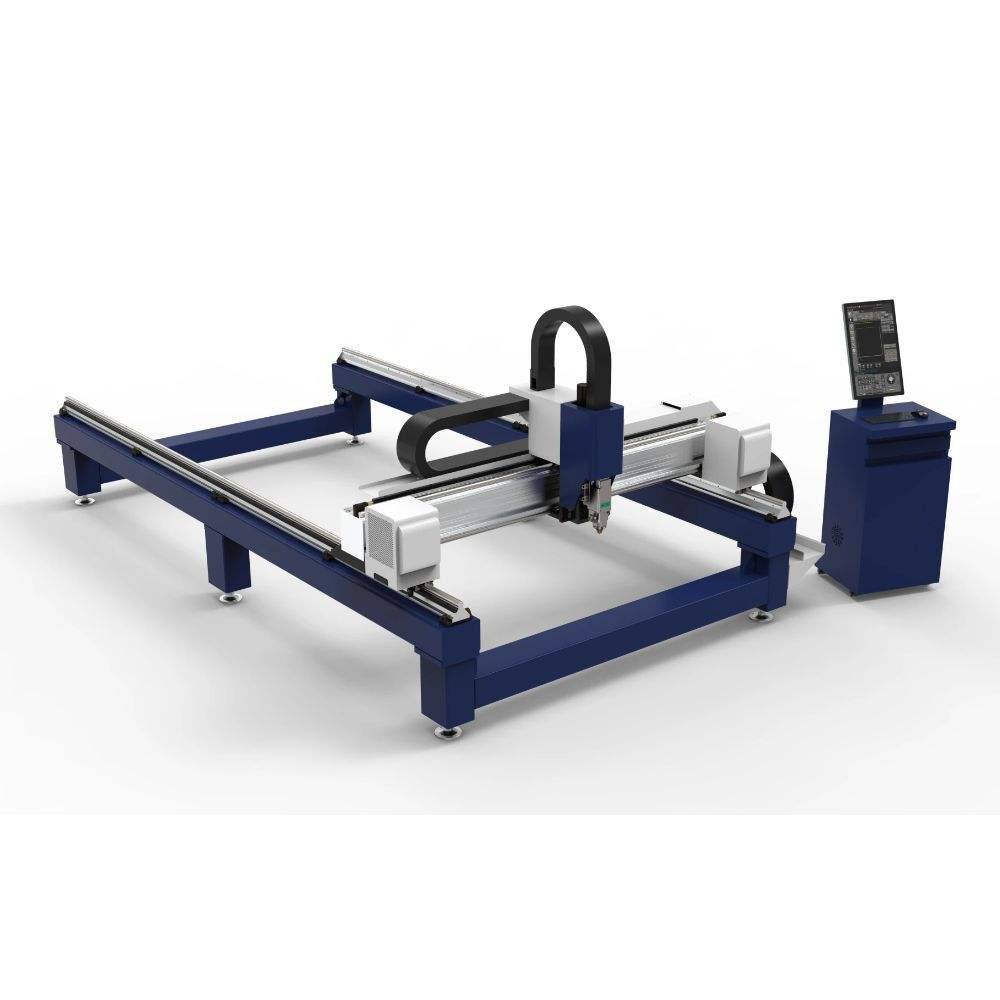
1. Technical Overview: 30kW High-Density Fiber Laser Integration
The deployment of 30kW fiber laser sources in the Istanbul maritime corridor—specifically within the heavy-duty fabrication zones of Tuzla and Yalova—marks a fundamental shift in offshore structural engineering. At this power level, the interaction between the beam and high-tensile structural steel (S355JR, S355ML) transcends the limitations of conventional plasma or lower-wattage laser systems.
The 30kW source provides a power density that allows for high-speed sublimation and melt-extraction even in thick-walled sections (up to 40mm-50mm depending on profile geometry). For Istanbul’s offshore platform manufacturers, this power is not merely about speed; it is about the reduction of the Heat Affected Zone (HAZ). In offshore environments, where fatigue resistance is paramount, a minimized HAZ ensures that the metallurgical integrity of the beam’s web and flange remains uncompromised, adhering to stringent ISO 19902 standards for fixed steel offshore structures.
2. Kinematics of CNC Beam and Channel Processing
Processing structural profiles such as IPE, HEA, and UPN channels requires a multi-axis kinematic chain. Unlike flat-bed lasers, the CNC Beam Cutter utilizes a rotating chuck system combined with a 5-axis or 7-axis cutting head.
2.1. 3D Beveling and Weld Preparation
The primary requirement for offshore platforms is the preparation of complex “V”, “Y”, and “K” type bevels for full-penetration welding. The 30kW system utilizes a B-axis tilting head capable of ±45° inclinations. The CNC controller must compute real-time compensations for the varying thickness encountered as the laser transitions from the web of a beam to the fillet and then the flange. This transition is historically where precision failures occur; however, the high-frequency sensors in the 30kW head maintain a constant standoff distance (capacitive height sensing) within ±0.1mm, ensuring the bevel angle remains consistent across the entire profile cross-section.
2.2. Compensating for Structural Torsional Stress
Large-scale beams used in Istanbul shipyards often exhibit “mill-scale” irregularities and internal stresses that result in slight bowing or twisting. The CNC system incorporates automated probing cycles. Before the first pierce, the system maps the actual geometry of the beam using a touch-probe or laser scanner, adjusting the cutting path to the “as-built” dimensions rather than the theoretical CAD model.
3. Automatic Unloading: Solving the Heavy Steel Bottleneck
The transition from 12kW to 30kW laser sources has rendered manual or semi-automated unloading obsolete. The throughput of a 30kW laser on a 15mm U-channel is so high that the mechanical handling of the finished parts becomes the primary bottleneck.
3.1. Servo-Synchronized Outfeed Mechanisms
The automatic unloading technology integrated into these units employs heavy-duty hydraulic lifting arms and servo-driven conveyor beds. As the CNC chuck releases the processed section, the unloading system must support the weight—often exceeding 200kg per meter—while preventing “tip-up” or surface scarring. This is critical for offshore components where surface pitting can become a focal point for localized corrosion.
3.2. Efficiency Metrics and Labor Reduction
In Istanbul’s competitive fabrication market, the integration of automatic unloading has demonstrated a 40% reduction in “beam-to-beam” cycle times. By eliminating the need for overhead cranes for every part extraction, the laser maintains a higher “beam-on” time percentage. The system utilizes a “buffer zone” logic where finished beams are indexed to a lateral storage rack, allowing the machine to immediately begin processing the next raw profile from the infeed magazine.
4. Application Specifics: Offshore Platforms in the Marmara Region
Offshore platforms—including jack-up rigs and FPSO (Floating Production Storage and Offloading) modules—require immense structural rigidity. The specific use case in Istanbul involves the fabrication of secondary and tertiary steel structures: walkways, deck gratings, and heli-deck supports.
4.1. Precision Bolt-Hole Cutting
A significant advantage of the 30kW fiber laser is its ability to cut bolt holes with a diameter-to-thickness ratio of 1:1 or even 0.8:1 with high circularity. Traditional plasma cutting often produces tapered holes, necessitating secondary reaming. The 30kW laser, with its high beam quality (BPP), produces near-zero taper, allowing for immediate assembly of bolted connections on-site in the Black Sea or Mediterranean offshore fields.
4.2. Complex Intersections and Bird-Mouth Cuts
For tubular and channel bracing, the “bird-mouth” cut (the intersection profile where one beam meets another at an angle) must be perfect to ensure weld volume is minimized and strength is maximized. The CNC Beam Cutter’s software performs 3D nesting to optimize these intersections, significantly reducing the amount of filler metal required in the subsequent robotic welding phase.
5. Synergy: 30kW Source and Automated Processing
The synergy between the high-power source and the automation suite is most evident in the management of the “dross” and “slag.” At 30kW, the melt is highly fluid. The automated system must manage the ejection of this slag, particularly when cutting thick flanges, to prevent it from fusing to the unloading rollers.
5.1. Gas Dynamics and Kerf Control
The report identifies that using Oxygen (O2) as a cutting gas for 30kW applications in Istanbul’s shipyards is being phased out in favor of High-Pressure Nitrogen (N2) or Compressed Air. Nitrogen cutting at 30kW provides an oxide-free surface, which is critical for offshore paint specifications (e.g., NORSOK M-501). If the laser leaves an oxide layer, the coating will fail prematurely in the saline environment. The automatic unloading system ensures these clean, nitrogen-cut parts are moved to a dry environment without manual handling contamination.
5.2. Digital Twin and IoT Integration
The CNC systems deployed in the region are increasingly linked to centralized ERP systems. The 30kW cutter reports real-time data on gas consumption, nozzle wear, and unloading cycle stability. For project managers in Istanbul, this allows for precise “cost-per-part” analysis on massive offshore tenders where margins are dictated by the efficiency of steel throughput.
6. Conclusion: Engineering Impact
The implementation of 30kW Fiber Laser CNC Beam and Channel cutters with automatic unloading represents the current pinnacle of structural steel processing. By solving the precision issues inherent in thick-section beveling and the logistical challenges of heavy material handling, this technology provides Istanbul-based fabricators with a decisive advantage in the global offshore energy sector. The reduction in secondary processing (grinding, reaming, straightening) justifies the high capital expenditure, ensuring that the structural integrity of offshore assets meets the 25-year-plus service life required in harsh maritime environments.













