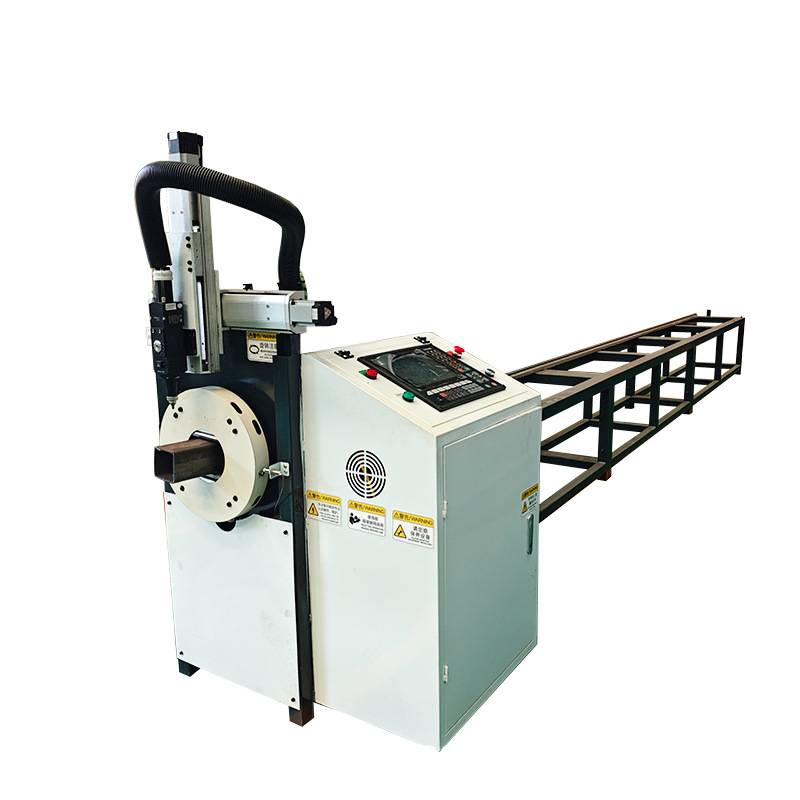
Field Report: High-Density 20kW Fiber Laser Integration in Casablanca Maritime Structural Operations
1. Technical Context and Site Overview
The industrial landscape of Casablanca, particularly the Atlantic-facing maritime and energy fabrication sectors, has seen a fundamental shift toward high-tensile structural steel requirements. As offshore platforms evolve to withstand deeper water pressures and harsher corrosive environments, the demand for precision-machined I-beams, H-beams, and C-channels has outpaced the capabilities of traditional oxy-fuel and plasma-arc systems. This report analyzes the deployment of 20kW CNC Beam and Channel Laser Cutters equipped with integrated automatic unloading systems, specifically optimized for S355 and S460 grade steels common in offshore modular assemblies.
2. The Synergy of 20kW Fiber Source and Heavy Structural Profiles
The transition to a 20kW fiber laser source represents a critical threshold in structural engineering. At 20kW, the photon flux density is sufficient to maintain a stable melt pool in thick-walled sections (up to 40mm) while significantly reducing the Heat Affected Zone (HAZ).
In the context of Casablanca’s offshore fabrication, where weld integrity is paramount to prevent fatigue failure in saline environments, minimizing the HAZ is essential. Traditional thermal cutting methods often result in carbon precipitation and localized hardening at the edge. The 20kW fiber source, coupled with high-pressure nitrogen or oxygen assist gases, achieves a surface roughness (Ra) that often eliminates the need for secondary grinding. This is particularly vital for the load-bearing channels of offshore jackets where micro-fissures can lead to catastrophic structural failure under cyclic loading.
3. CNC Kinematics for Complex Beam Geometry
The CNC systems utilized in these cutters operate on a multi-axis platform—typically 6 or 7 axes—to allow for 360-degree rotation and longitudinal movement of the workpiece. For offshore platforms, the “birdsmouth” cut and complex beveling for pipe-to-beam intersections are standard requirements.
The 20kW CNC system manages real-time compensation for material deviation. Heavy structural steel is rarely perfectly straight; it possesses inherent “bow” and “twist” from the rolling mill. The integration of laser sensing and touch-probe technology allows the CNC to map the actual profile of the channel or beam in Casablanca’s high-humidity environments, adjusting the cutting path dynamically. This ensures that the bolt holes and weld preps are geometrically accurate relative to the beam’s neutral axis, rather than its theoretical CAD position.
4. Automatic Unloading: Solving the Heavy Material Bottleneck
In heavy steel processing, the cutting speed of a 20kW laser is often negated by the logistical delays in material handling. For a 12-meter I-beam weighing several tons, manual unloading via overhead crane is a high-risk, low-efficiency operation.
The Automatic Unloading technology integrated into these units utilizes a synchronized hydraulic and pneumatic conveyor system. Once the cutting cycle is completed, the chucks release the workpiece onto a series of support rollers that move in tandem with the unloading arms.
Key Technical Advantages of Automatic Unloading:
- Geometric Stability: Large sections are prone to sagging or deformation if not supported correctly during the final cut. The automatic system provides continuous support, preventing the “snapping” of the last bridge of metal, which often causes burrs or misaligned edges.
- Surface Protection: In offshore applications, the integrity of the steel surface is vital for the adhesion of anti-corrosive coatings (e.g., zinc-rich epoxy). Automatic unloading prevents the mechanical scarring and dragging common in manual crane operations.
- Cycle-Time Optimization: By automating the discharge, the laser can begin the next loading cycle immediately. In high-output environments like the Casablanca shipyard, this increases the “beam-on” time from 40% to nearly 85%.
5. Precision Requirements in Casablanca’s Offshore Sector
Offshore platforms require modularity. Components fabricated in Casablanca must often interface perfectly with modules constructed in other global shipyards. The tolerance requirements are stringent: ±0.5mm over a 12-meter length for hole patterns and ±1 degree on bevel cuts.
The 20kW CNC cutter achieves this through high-torque servo motors and helical rack-and-pinion drives. When processing C-channels for cable tray supports or primary structural beams, the laser’s ability to execute “one-hit” processing—cutting the profile, the holes, and the bevel in a single setup—eliminates the cumulative error associated with moving a beam between a drill line, a saw, and a manual beveling station.
6. Thermal Management and Assist Gas Dynamics
In the 20kW range, gas dynamics become a primary engineering concern. The nozzle design must facilitate laminar flow to evacuate the molten steel from thick flanges without causing turbulence. For Casablanca’s offshore projects, oxygen is typically used for carbon steel to increase cutting speed via the exothermic reaction, but for stainless steel components or high-alloy pipes used in platform piping, nitrogen is used to maintain a clean, oxide-free edge.
The CNC controller manages gas pressure with millisecond responsiveness. As the laser rounds the radius of a channel (the “root”), the speed must decrease to maintain cut quality; the CNC simultaneously modulates the laser power and gas pressure to prevent over-burning in these critical corners.
7. Integration with BIM and CAD/CAM Workflows
The effectiveness of the 20kW CNC Beam Cutter is heavily dependent on the software stack. Modern offshore engineering utilizes Building Information Modeling (BIM) through platforms like Tekla Structures or AVEVA.
The cutter’s control system directly imports DSTV or STEP files, translating complex 3D geometry into G-code. This digital thread ensures that every notch, cope, and miter cut in the Casablanca facility matches the global engineering model. The automatic nesting algorithms further optimize the material, reducing scrap in expensive high-strength alloys—a significant cost factor in large-scale maritime projects.
8. Challenges: Environmental and Operational Factors in Casablanca
The coastal location of Casablanca introduces specific challenges for high-power laser optics. The saline air is highly conductive and corrosive.
- Filtration Systems: The 20kW machines are equipped with multi-stage HEPA filtration and positive-pressure cabinets to keep the beam path and optical components free from salt-laden humidity.
- Power Stability: Operating a 20kW fiber laser requires a massive and stable electrical draw. Localized power conditioning is often required to prevent voltage sags from affecting the laser’s beam quality (M2 factor).
9. Structural Impact: The Move Toward Bolted Connections
A significant trend observed in offshore platform design is the shift from field-welded to shop-bolted connections to speed up offshore installation. The 20kW laser’s precision allows for the “AISC Class A” bolt hole quality directly from the machine. By producing perfectly cylindrical, dross-free holes in thick-walled beams, the Casablanca fab-shops can deliver “Meccano-style” assemblies to the offshore site, drastically reducing the high-cost labor required for welding in open water.
10. Conclusion
The deployment of a 20kW CNC Beam and Channel Laser Cutter with Automatic Unloading represents the pinnacle of current structural steel processing. In the specific context of Casablanca’s offshore platform sector, this technology addresses the dual pressures of extreme precision and high-volume throughput. By integrating high-density photon flux with automated mechanical handling, the facility minimizes human error, optimizes material utilization, and ensures the structural integrity of components destined for the rigors of the Atlantic maritime environment. The synergy between the 20kW source and the automated kinematic chain is no longer an optional upgrade but a fundamental requirement for Tier-1 offshore fabrication.













