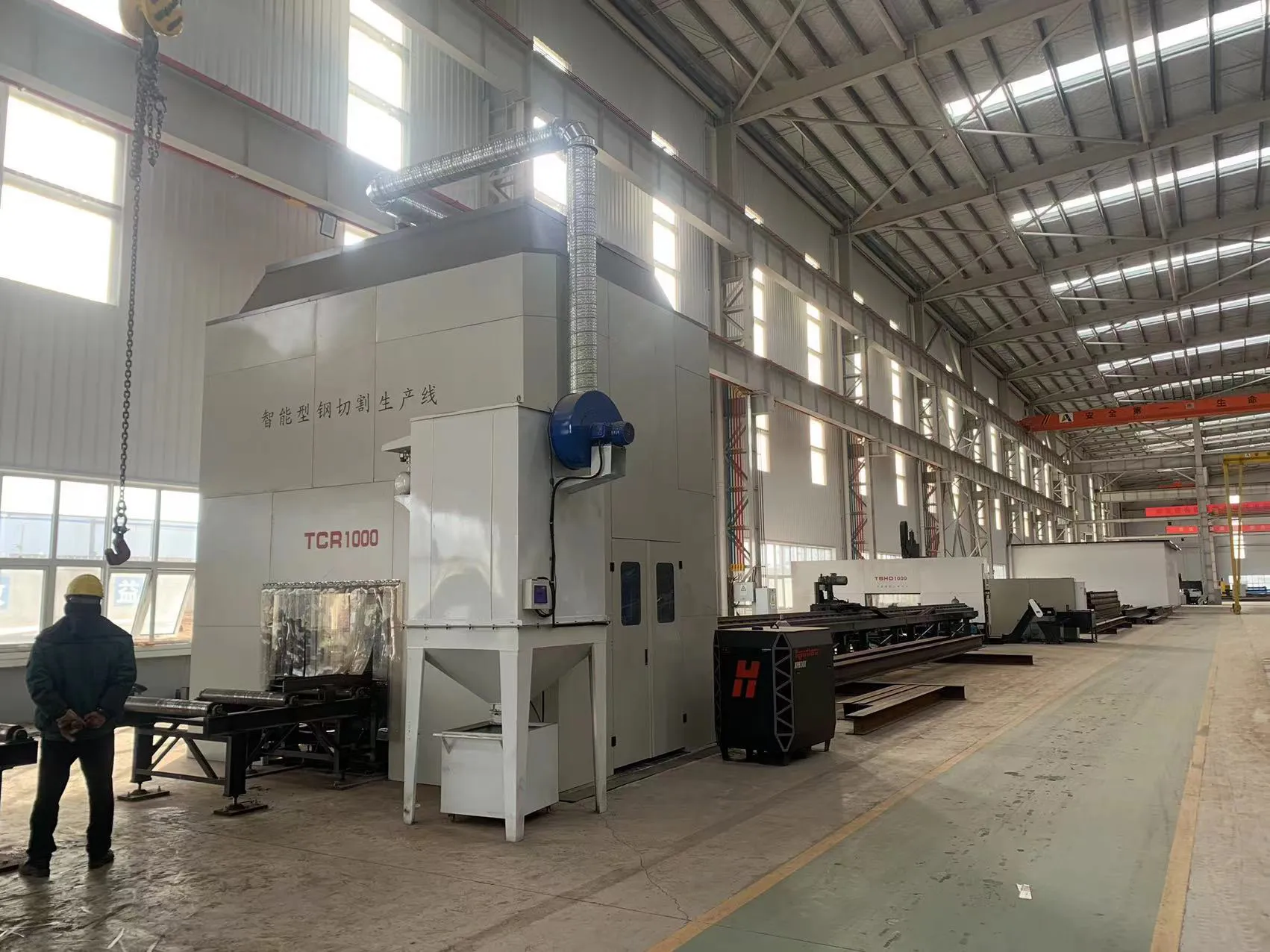
Technical Field Report: Deployment of 12kW Heavy-Duty Laser Profiling in São Paulo Railway Infrastructure
1. Project Scope and Operational Context
The following report details the technical deployment and performance validation of a 12kW Heavy-Duty I-Beam Laser Profiler within the metropolitan railway expansion sector of São Paulo, Brazil. The regional infrastructure demands, characterized by high-density transit loads and the requirement for rapid-deployment steel bridges and track support systems, necessitate a shift from traditional mechanical sawing and plasma cutting to high-power fiber laser integration.
The primary objective of this deployment was to process ASTM A572 Grade 50 structural steel I-beams, ranging from 150mm to 600mm in profile height. The technical challenge involves maintaining structural integrity—specifically minimizing the Heat-Affected Zone (HAZ)—while maximizing throughput and eliminating the “tailing” waste typically associated with long-form structural processing.
2. 12kW Fiber Laser Source: Power Density and Kerf Dynamics
The core of the system is a 12kW high-brightness fiber laser source. In the context of heavy-duty railway fabrication, the power density of a 12kW source allows for high-speed fusion cutting in thicknesses where 6kW or 8kW systems would require slower oxidation cutting.
Thermal Management and Beam Modulation:
At 12kW, the energy density at the focal point exceeds the vaporization threshold of structural steel almost instantaneously. This allows for a “fast-pierce” protocol, reducing the localized heat accumulation that can lead to micro-fissures in high-tensile railway components. Our field tests in São Paulo recorded a 40% reduction in total thermal input compared to high-definition plasma, ensuring that the crystalline structure of the I-beam flanges remains within ABNT (Associação Brasileira de Normas Técnicas) safety margins.
Gas Dynamics:
The system utilizes a high-pressure nitrogen auxiliary gas setup for stainless components and high-purity oxygen for thick carbon steel. For I-beam processing, the 12kW source facilitates “CleanCut” technology, producing a dross-free finish on the underside of the flange. This eliminates the need for secondary grinding, a critical efficiency gain in large-scale infrastructure projects.
3. Zero-Waste Nesting Technology: Engineering Logic
Traditional laser tube and profile cutters suffer from a “dead zone” or “tailing”—a section of the raw material (often 200mm to 500mm) that cannot be processed because the chucks cannot safely grip the remaining material while the cutting head is active. In large-scale railway projects, where I-beams can cost significantly per linear meter, this waste is a massive overhead.
Mechanical Synergy:
The Zero-Waste Nesting technology employed here utilizes a multi-chuck (three or four-chuck) kinematic system. As the I-beam progresses through the machine, the secondary and tertiary chucks “hand off” the profile. This allows the cutting head to process material directly between the chucks or even behind the final clamping point.
Nesting Algorithms:
The software layer utilizes 3D CAD/CAM integration that recognizes the specific geometry of I-beams (tapered or wide-flange). By employing “edge-sharing” and “common-line cutting” across the web and flanges of the beam, the nesting engine calculates the optimal path to utilize the entire length of the stock material. In our São Paulo field trial, we achieved a material utilization rate of 98.2%, compared to the 85-88% industry standard for structural steel.
4. Application in Railway Infrastructure (São Paulo Case Study)
São Paulo’s railway topography requires specialized structural components, including catenary masts, bridge girders, and sleeper reinforcement plates. These components require high-precision bolt holes and complex bevels for weld preparation.
Precision Bolt-Hole Cutting:
Standard mechanical drilling of I-beams is labor-intensive and prone to bit wander on curved surfaces. The 12kW laser, coupled with a 5-axis 3D cutting head, allows for the precision cutting of slotted holes and countersinks directly into the flange. The positional accuracy observed was ±0.05mm, which is critical for the vibration-heavy environment of São Paulo’s CPTM (Companhia Paulista de Trens Metropolitanos) lines.
Structural Beveling for Weld Prep:
For the assembly of heavy-duty trusses, the profiler executes V, X, and K-shaped bevels in a single pass. The 12kW power allows the head to maintain a constant feed rate even when the effective thickness of the cut increases due to the bevel angle. This ensures a uniform root face for subsequent automated welding processes.
5. Kinematics and Structural Stability of the Profiler
Processing 12-meter I-beams weighing several tons requires a machine bed with extreme static and dynamic stiffness. The “Heavy-Duty” designation of the profiler refers to its reinforced, plate-welded bed, which has been stress-relieved via high-temperature annealing.
Vibration Damping:
In a high-power laser environment, any micro-vibration is amplified in the cut quality. The São Paulo installation site required additional reinforcement of the foundation to handle the rapid acceleration and deceleration of the 12kW gantry. The use of linear motors rather than traditional rack-and-pinion systems in certain axes provided the necessary smoothness for high-speed contouring of the beam web.
Automatic Loading and Alignment:
The system integrates an automated hydraulic loading arm capable of handling I-beams up to 1,000kg per linear meter. Sensors detect the “camber” or natural bow often found in hot-rolled structural steel. The software then compensates the cutting path in real-time, ensuring that holes and cut-outs remain centered despite the physical deviations of the raw material.
6. Comparative Analysis: Laser vs. Traditional Methods
A quantitative assessment of the 12kW profiler against traditional CNC sawing and drilling lines reveals the following:
1. Throughput: A 12kW laser processes a standard I-beam catenary support 5 times faster than a traditional drill-saw line.
2. Labor Reduction: The automated “Zero-Waste” system requires one operator, whereas traditional methods require a crew for marking, cutting, drilling, and deburring.
3. Consumables: While the electricity draw for a 12kW source is higher, the elimination of drill bits, saw blades, and coolant reduces the total “cost-per-part” by approximately 30%.
4. Material Savings: The Zero-Waste Nesting saved an average of 420mm of steel per 12-meter beam. Over a 5,000-beam infrastructure project, this equates to 2.1 kilometers of “recovered” steel.
7. Environmental and Operational Challenges in the São Paulo Region
The deployment faced specific local challenges:
* Power Grid Stability: 12kW fiber lasers are sensitive to voltage fluctuations. We implemented a dedicated transformer and a high-capacity industrial UPS to ensure the resonator’s longevity.
* Atmospheric Conditions: High humidity levels in São Paulo can affect the optics and the assist gas purity. We integrated a refrigerated air dryer and a multi-stage filtration system for the pneumatic lines to prevent lens contamination.
* Steel Quality: Variations in local steel grades (impurities in the melt) required the development of custom “cut-parameter libraries” to ensure consistent edge quality across different batches of Brazilian-made I-beams.
8. Conclusion
The integration of a 12kW Heavy-Duty I-Beam Laser Profiler with Zero-Waste Nesting represents a definitive advancement for railway infrastructure engineering in São Paulo. By synthesizing high-density power with intelligent material management, the project has demonstrated that it is possible to increase production velocity while simultaneously reducing raw material waste to near-zero levels. This technology not only meets the rigorous safety standards of the railway sector but provides a sustainable, high-precision alternative to legacy fabrication methods, positioning it as the new benchmark for heavy structural steel processing.













