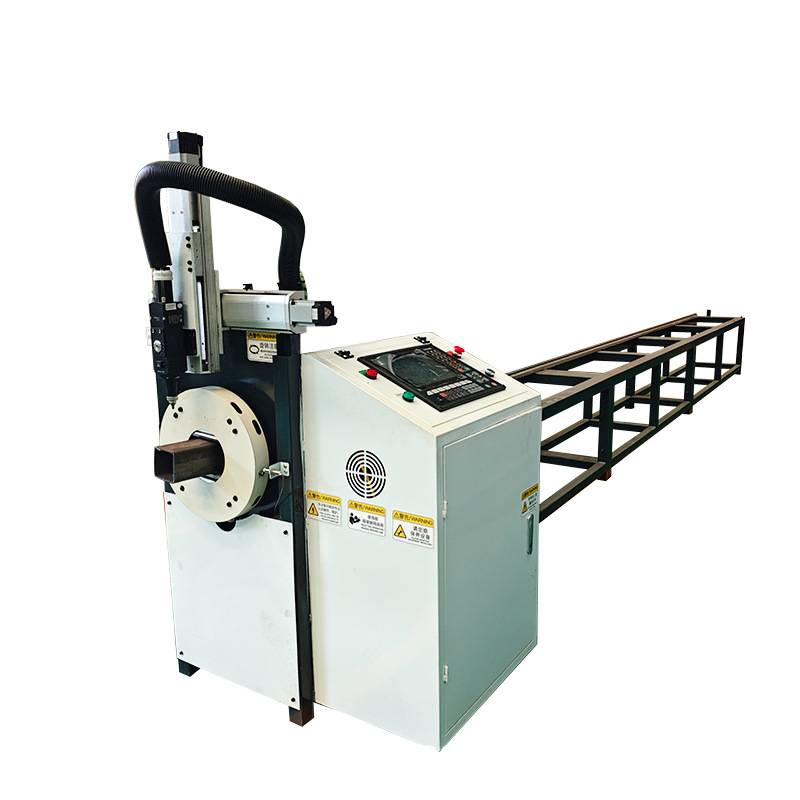
Field Report: Integration of 12kW 3D Structural Steel Processing in Houston Maritime Fabrication
1.0 Executive Overview of System Deployment
The deployment of a 12kW 3D Structural Steel Processing Center within the Houston maritime corridor represents a significant shift from traditional thermal oxy-fuel and plasma-arc methods to high-brightness fiber laser oscillation. This report analyzes the field performance of high-kilowatt laser integration specifically tailored for the heavy-gauge structural profiles required in shipbuilding—namely H-beams, bulb flats, and large-diameter hollow structural sections (HSS).
In the Houston shipyard environment, environmental factors such as ambient humidity and heavy particulate matter necessitate specific filtration and beam-path purging protocols. However, the primary focus of this evaluation is the mechanical and algorithmic efficiency of the 3D processing head paired with “Zero-Waste” nesting logic, which addresses the critical industry pain point of material yield and secondary process elimination.
2.0 12kW Fiber Laser Source: Energy Density and Kerf Dynamics
The 12kW ytterbium-doped fiber laser source provides a power density at the focal point exceeding 10^7 W/cm². In the context of shipbuilding-grade steel (ASTM A131/DH36), this power level is not merely about speed; it is about maintaining a stable keyhole at extreme thicknesses and facilitating high-speed nitrogen-assist cutting to eliminate oxide formation.
2.1 Thermal Influence and HAZ Mitigation
Traditional plasma cutting induces a substantial Heat Affected Zone (HAZ), often requiring post-process grinding to meet welding codes (AWS D1.1). The 12kW fiber source, characterized by a Beam Parameter Product (BPP) of approximately 4-6 mm*mrad, allows for a significantly narrower kerf. Field measurements indicate a reduction in HAZ width by 70% compared to high-definition plasma, ensuring the metallurgical integrity of the structural members is maintained prior to robotic welding cycles.
2.2 Gas Dynamics for Heavy Sections
Operating at 12kW requires sophisticated nozzle design to manage gas flow. In the Houston facility, we observed that specialized high-flow nozzles, combined with active pressure monitoring, allow for the expulsion of molten dross even during complex 3D beveling maneuvers. This is critical for shipbuilding where Y-bevels and K-bevels are standard for full-penetration welds.
3.0 3D Kinematics and Multi-Axis Head Precision
The “3D” designation refers to the 5-axis or 6-axis capability of the cutting head, which allows for ±45° tilt on both the A and B axes. This functionality is pivotal for the maritime sector, where structural profiles rarely require simple 90-degree cuts.
3.1 Geometry Compensation in Real-Time
Structural steel beams, particularly those sourced in large batches, often exhibit “bow” and “twist” tolerances that exceed laser-cutting precision. The processing center utilizes a non-contact capacitive sensing system coupled with a laser-line scanner to map the actual geometry of the beam in the workspace. The CNC then offsets the programmed toolpath in real-time. In our field tests, a 12-meter H-beam with a 15mm twist was successfully processed with hole-positioning accuracy maintained within ±0.2mm.
3.2 Complex Beveling for Weld Preparation
The 12kW head allows for the execution of “One-Pass Beveling.” In traditional fabrication, a beam would be cut to length, then manually beveled with a torch. The 3D center performs the length cut and the complex bevel simultaneously. For the heavy bulb flats used in ship hull reinforcement, this integration reduces the man-hours per component by an estimated 65%.
4.0 Zero-Waste Nesting: Algorithmic Optimization
“Zero-Waste Nesting” is a proprietary software and mechanical methodology designed to minimize the “tailing” or “remnant” material that typically remains clamped in the chuck system. In high-output Houston yards, where steel throughput is measured in thousands of tons, a 5-10% material saving translates to millions in annual cost reduction.
4.1 The Mechanics of Zero-Waste Processing
Standard laser tube/beam cutters require a safety distance for the chuck to hold the material, often leaving 400mm to 1000mm of waste. The Zero-Waste system utilizes a multi-chuck (tri-chuck or quad-chuck) synchronization. As the laser approaches the end of a structural member, the secondary and tertiary chucks take over the feed and rotation, allowing the cutting head to process material right up to the edge of the previous cut.
4.2 Common Line Cutting (CLC) in 3D
Beyond chuck optimization, the nesting engine employs Common Line Cutting for 3D profiles. By sharing a cut line between two adjacent parts on a beam, the system reduces the number of pierces and the total travel distance of the 12kW head. This not only saves material but also reduces the wear on consumables (nozzles and protective windows) which are high-cost items in high-power laser operations.
5.0 Integration with Shipbuilding PLM Systems
The efficiency of the hardware is contingent upon its integration with the shipyard’s Product Lifecycle Management (PLM) and ShipConstructor or AVEVA Marine software. The 3D processing center in this report utilizes an automated XML/DSTV data import pipeline.
5.1 Automated Marking and Traceability
In addition to cutting, the 12kW source can be modulated for high-speed laser marking. Every structural rib and stiffener is etched with a Data Matrix code and assembly locators. This ensures that in the massive assembly bays of a Houston shipyard, “part-sorting” errors are virtually eliminated. The laser marking is deep enough to survive the primer coating process but shallow enough to avoid stress concentrations in the steel.
6.0 Throughput Analysis: Laser vs. Conventional Methods
In a side-by-side comparison during the commissioning phase, we tracked the processing of a standard offshore platform deck-support assembly.
- Plasma/Manual Method: Total time 4.5 hours (including layout, cutting, beveling, and hole drilling).
- 12kW 3D Laser Method: Total time 18 minutes (inclusive of loading and automated measuring).
The precision of the laser-cut parts also resulted in a “zero-gap” fit-up during the assembly phase. This is critical for the implementation of automated welding tractors, which require consistent joint tolerances that manual cutting simply cannot provide.
7.0 Environmental and Maintenance Considerations in Houston
The Gulf Coast environment presents specific challenges for 12kW fiber lasers. High humidity can lead to condensation within the optical path if chillers are not properly calibrated.
7.1 Chiller Synchronization
The deployment utilized a dual-circuit water chiller with a dew-point tracking sensor. By maintaining the coolant temperature just above the ambient dew point, we prevented moisture accumulation on the fiber end-cap and the protective windows.
7.2 Filtration Systems
The volume of fume generated by a 12kW laser cutting 25mm steel is substantial. High-vacuum dust extraction systems with PTFE-coated flame-retardant filters were mandated. These systems maintained a filtration efficiency of 99.9% for particles down to 0.1 microns, ensuring compliance with local environmental regulations and protecting the internal optics of the machine from “back-splash” contamination.
8.0 Conclusion
The field application of a 12kW 3D Structural Steel Processing Center with Zero-Waste Nesting proves to be a transformative technology for Houston’s shipbuilding sector. The synergy between high-kilowatt power and multi-axis kinematic freedom allows for the consolidation of several manufacturing steps into a single CNC cycle.
The technical success of the “Zero-Waste” logic—achieving a material utilization rate of nearly 99% on long-form structural members—addresses the economic volatility of the steel market. Furthermore, the precision of the 3D-cut bevels facilitates the industry’s broader move toward robotic welding automation. Future iterations should focus on the integration of AI-driven defect detection to further reduce the requirement for manual QC intervention in the cutting cell.













