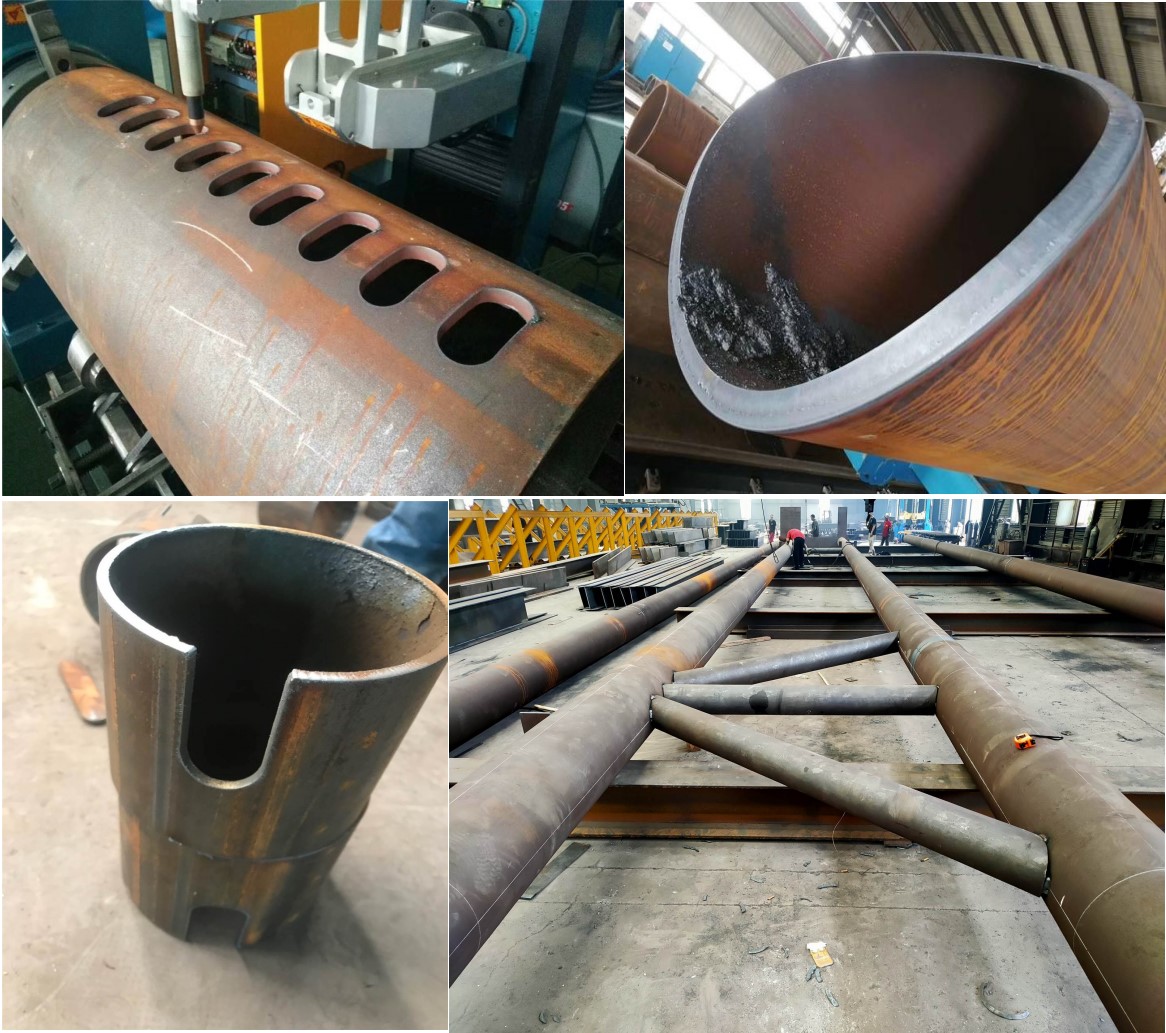
Wear Resistant Steel Tube Laser Cutting Parameter Optimization: A Field Engineering Perspective on After-Sales Troubleshooting, Consumables Lifecycle, and Preventive Maintenance
When a fiber laser tube cutter starts producing dross on Hardox 450 or Raex 400 wall sections, the operator rarely blames the alloy. They blame the machine. In practice, the root cause is almost always a parameter set that was tuned for mild steel and never re-validated for abrasion-resistant (AR) grades. Wear resistant steel tube laser cutting parameter optimization is not a one-time commissioning task — it is a living maintenance discipline that determines whether your consumables last 400 hours or fail at 90. Shops running mixed batches of S355JR, SUS304, and AR400 on the same 3kW–6kW tube platform should treat parameter libraries as a controlled document, not a tribal knowledge asset. For teams standardizing this workflow across cutting and welding cells, the reference architecture published at wear resistant steel tube laser cutting parameter optimization provides a practical baseline for machine-integrated process control.
Why AR Steel Behaves Differently at the Kerf
Wear resistant plate and tube grades typically sit in the 360–500 HBW hardness band. Alloying elements — chromium, molybdenum, boron, and in some grades titanium — raise the thermal conductivity barrier and shift the melt viscosity upward. The practical consequences on a tube laser are measurable:
- Molten pool viscosity increases 15–25% versus S355JR, requiring higher assist gas momentum to eject cleanly.
- Oxidation kinetics accelerate above 1,400°C, so oxygen cutting on AR grades produces a wider heat-affected zone (HAZ) and edge hardness loss of 40–80 HV in a 0.15–0.25 mm band.
- Reflectivity at 1,070 nm is lower than aluminum but higher than carbon steel, which destabilizes pierce detection on older capacitive height sensors.
Nitrogen cutting at 1.2–1.5 MPa with a 1.4–2.0 mm nozzle on 3–6 mm AR tube is the standard recommendation. Below 1.0 MPa, dross adhesion on the bottom kerf edge becomes chronic, and the operator compensates by slowing feed rate — which then over-couples heat input and degrades the cut face.
Parameter Windows That Actually Hold on the Shop Floor
For a 4 kW single-mode fiber source cutting 4 mm AR400 tube at 1.4 MPa N₂:
- Feed rate: 2.8–3.2 m/min (drop to 2.4 m/min if wall tolerance exceeds ±0.15 mm)
- Frequency: 1,200–1,800 Hz with 60–70% duty cycle
- Focus position: −0.5 to −1.0 mm below surface for N₂; +0.5 mm for O₂ on 6 mm+
- Pierce: 3-stage ramp, 0.8 s total, 80% power first stage
- Chuck pneumatic pressure: 0.6–0.8 MPa on the clamping jaws; below 0.5 MPa, tube slip during high-speed contouring generates edge nicks that mimic laser defects
These numbers are starting points, not gospel. The optimization loop is: cut a 200 mm test section, measure dross height with a caliper (target <0.05 mm), inspect kerf taper (target <0.08 mm per side), then adjust frequency before feed rate. Changing feed rate first masks the real problem — usually gas dynamics or focus drift.
Comparative Process Data: Legacy Methods vs. Optimized Fiber Laser
| Parameter | Plasma Cutting | Mechanical Sawing | Optimized Fiber Laser (AR Tube) |
|---|---|---|---|
| Typical cut speed (4 mm AR400) | 1.8–2.2 m/min | 0.3–0.5 m/min | 2.8–3.2 m/min |
| HAZ width | 0.6–1.2 mm | None (mechanical) | 0.15–0.25 mm |
| Edge hardness loss | 80–150 HV | 0 | 40–80 HV |
| Consumable cost per 1,000 m | $180–$260 (electrodes, nozzles) | $90–$140 (blade wear) | $45–$75 (nozzle + lens amortized) |
| Dimensional tolerance | ±0.5 mm | ±0.3 mm | ±0.1 mm |
| Post-process deburring | Required | Required | Minimal |
After-Sales Troubleshooting: Reading the Failure Signature
Field service calls on AR tube lasers cluster into four signatures. Each maps to a specific subsystem:
- Vertical striations on the kerf wall: focus drift exceeding 0.3 mm, usually from thermal lensing after 4+ hours of continuous duty. Check lens holder O-rings and cooling water ΔT (target <2°C).
- Intermittent dross on one quadrant of the tube: chuck runout or jaw wear. Measure radial runout at 300 mm from the chuck — anything above 0.15 mm TIR will cause gas flow asymmetry.
- Pierce failure on 6 mm+ AR: nozzle contamination. AR grades spatter more aggressively; a 1.5 mm nozzle may need replacement every 60–80 pierces versus 200+ on mild steel.
- Loss of cut through on curved sections: capacitive height sensor calibration drift. Recalibrate against a known AR coupon, not a mild steel reference.
Consumables Lifecycle Management
Nozzle life on AR tube is the single largest consumable cost driver. Track it in hours, not shifts. A 2.0 mm double-layer nozzle running 1.4 MPa N₂ on 4 mm AR400 should deliver 180–220 hours. When life drops below 140 hours, inspect three things: gas purity (N₂ ≥99.999%), nozzle concentricity (≤0.05 mm), and pierce parameter aggressiveness. Over-aggressive pierce is the silent killer — it erodes the nozzle bore from the inside, and the operator never sees it until cut quality collapses.
Protective lens life follows a similar curve. On AR grades, plan for 1,200–1,500 hours versus 2,000+ on stainless. Log every lens change with a timestamp and the corresponding cut hours; the data will reveal whether your gas delivery or your pierce routine is the actual problem.
Preventive Maintenance Cadence
Shift-level: wipe nozzle tip, verify gas pressure at the cutting head (not at the regulator), check chuck jaw torque. Weekly: inspect lens for spatter, verify focus calibration with a test cut, log chuck pneumatic pressure. Monthly: replace nozzle proactively regardless of condition, clean the cutting head interior, verify height sensor accuracy on an AR reference coupon. Quarterly: full optical chain inspection, chuck disassembly and re-greasing, gas line leak test at 1.5 MPa.
Shops that follow this cadence report 30–40% reduction in unplanned downtime on AR tube runs. The parameter library and the maintenance log are the same document — one without the other is incomplete.
Frequently Asked Questions
What nitrogen pressure is required to cut 6 mm AR400 tube without dross?
Target 1.4–1.5 MPa at the cutting head, not at the regulator. Below 1.2 MPa, dross adhesion becomes chronic on the bottom kerf edge. Verify pressure with an inline gauge at the head, since a 0.2 MPa drop across a contaminated filter is common and easily missed.
How often should nozzles be replaced when cutting wear resistant steel tube?
Plan for replacement every 180–220 hours on 4 mm AR400 with 1.4 MPa N₂. If life drops below 140 hours, inspect gas purity, nozzle concentricity, and pierce aggressiveness. Proactive monthly replacement is cheaper than reactive replacement after a cut-quality failure.
Why does my fiber laser lose cut-through on AR tube curves but not on straight sections?
This is almost always capacitive height sensor drift or chuck runout. Recalibrate the height sensor against an AR reference coupon, and measure radial runout at 300 mm from the chuck. Anything above 0.15 mm TIR will cause gas flow asymmetry that only manifests on curved trajectories.













