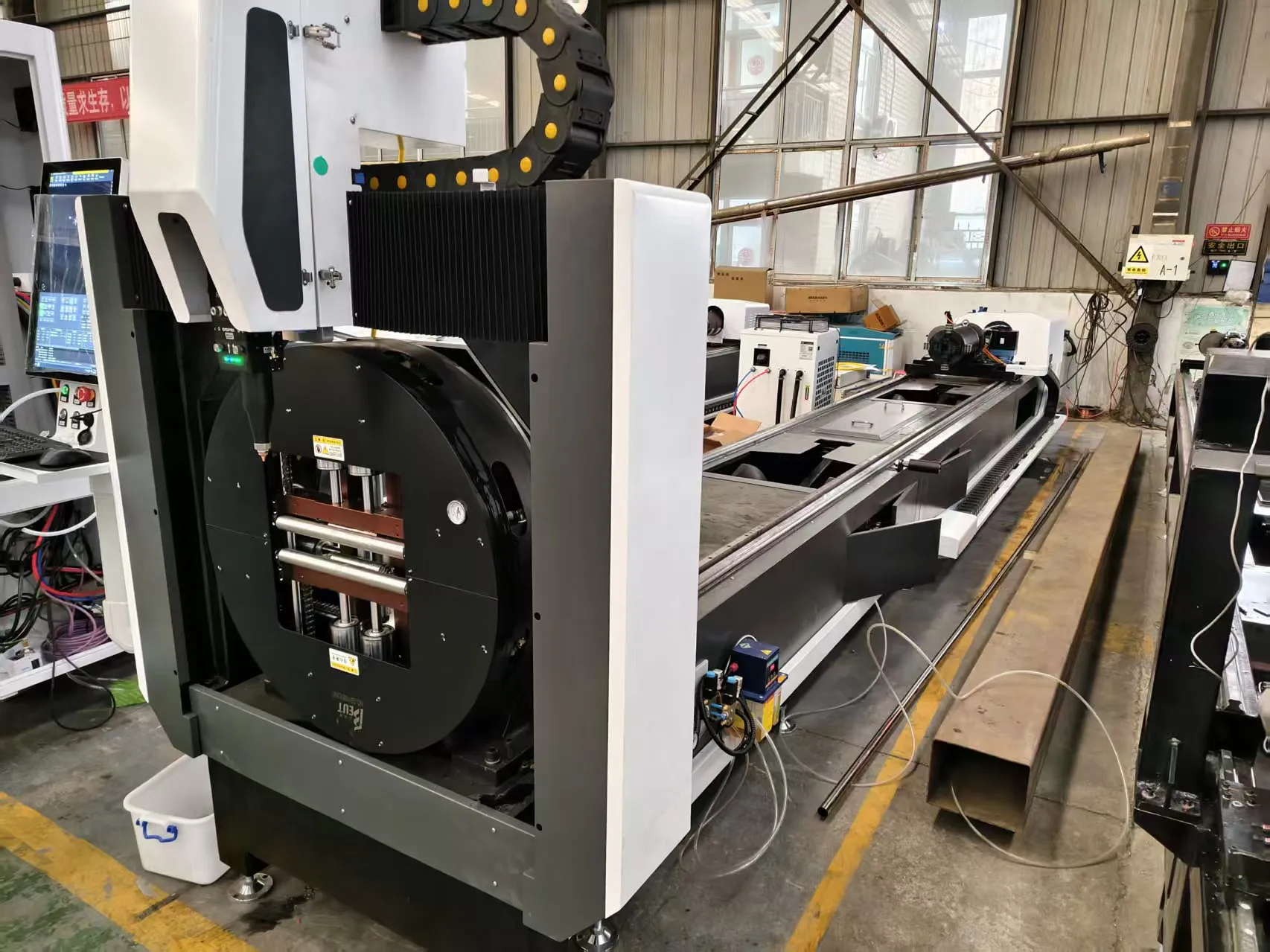
Cost Per Cut Analysis for Steel Furniture Tube Laser Cutting: A Field Engineering Perspective
After two decades on the shop floor, I have seen the economics of tube processing shift dramatically. When a client asks for a cost per cut analysis for steel furniture tube laser cutting, they are not just asking about machine price. They are asking about the total cost of ownership buried in consumables, downtime, and scrap. This analysis is the bedrock of any serious production planning for tubular furniture components—from chair frames to table legs—where margins are thin and repeatability is non-negotiable.
Let us strip away the marketing and look at the raw physics and mechanical realities. The core challenge in furniture tube cutting is managing the interplay between material grade, gas delivery, and the laser source’s duty cycle. A typical production run might involve S355JR structural steel for heavy-duty shelving or SUS304 stainless for high-end kitchen islands. Each alloy demands a different approach to the cut front, and that directly impacts your cost per part.
After-Sales Troubleshooting: The Hidden Cost Driver
I have walked into facilities where a brand-new 3kW fiber laser was spitting out dross on 2mm S355JR tube. The immediate reaction is to blame the machine. Nine times out of ten, the problem is in the gas delivery system. For a clean, oxide-free cut on stainless furniture legs, you need nitrogen delivery pressure at the nozzle of 1.2 to 1.5 MPa. If your compressor or nitrogen tank regulator is drifting, you get a ragged edge. That means secondary deburring, which adds 15-20% to your effective cost per cut. The troubleshooting checklist must start with a pressure gauge at the chuck, not the source. We have logged data showing a 0.3 MPa drop across a dirty filter can increase cut cost by €0.04 per part on a 30mm diameter tube. Over 100,000 parts, that is €4,000 in hidden waste.
Another frequent issue is the chuck pneumatic pressure. For thin-walled furniture tube (1.0mm to 1.5mm wall), the clamping force must be precise. If the pneumatic pressure exceeds 0.6 MPa, you risk deforming the tube, causing the focal point to shift. This leads to inconsistent kerf width and increased gas consumption. We set our maintenance protocols to verify chuck pressure weekly, not monthly.
Consumables Lifecycle Management
The laser cutting head is a consumables ecosystem. The nozzle, the protective window, and the focus lens have a finite life. In a high-volume furniture shop running 24/5, a standard 1.5-inch focal length lens on a 2kW fiber source will degrade after approximately 800 operating hours. I have seen operators push a lens to 1,200 hours to save €150. The result is a 10% increase in nitrogen consumption and a 5% increase in edge roughness. The math is simple: the cost of the lens is offset by the gas savings within 200 hours. We enforce a strict replacement schedule based on laser pulse count, not calendar time. For cutting 1.5mm Al6061 aluminum furniture profiles, we use a 0.2mm nozzle diameter and replace it every 4 hours of continuous piercing. Each piercing event on aluminum creates a back-reflection spike that erodes the nozzle bore. Ignoring this leads to a 20% increase in cut time per part.
Preventive Maintenance: The Cost Per Cut Anchor
Preventive maintenance is where the cost per cut is truly anchored. A dirty beam path or a misaligned mirror can reduce effective power at the cut front by 15%. For a 3kW system running at 80% duty cycle, that is 2.4kW of usable power dropping to 2.04kW. To compensate, the operator increases feed rate or gas pressure, both of which inflate cost. Our standard PM schedule includes weekly cleaning of the collimator lens and monthly alignment verification using a thermal paper burn pattern. We also track the laser’s duty cycle rigorously. Running a fiber source at 95% duty cycle for 12 hours straight on 3mm S355JR will degrade the pump diodes faster than running at 70% with short breaks. We advise clients to schedule cutting of thicker materials (3mm to 4mm) in batches to allow the laser source to cool, extending diode life by an estimated 3,000 to 5,000 hours.
Comparative Technical Data: Laser vs. Conventional Methods
To ground this analysis in real numbers, here is a direct comparison based on a typical batch of 1,000 pieces of 40x40mm square tube, 2mm wall thickness, S355JR steel, for a furniture frame.
| Parameter | Conventional Plasma / Sawing | Fiber Laser (2kW – 3kW) |
|---|---|---|
| Cutting Speed (mm/min) | 1,500 (plasma) / 200 (saw) | 4,500 |
| Kerf Width (mm) | 2.5 (plasma) / 1.5 (saw) | 0.3 |
| Gas Consumption (N2, m³/hr) | N/A (air plasma) / N/A | 2.5 @ 1.4 MPa |
| Consumables Cost per Part (€) | 0.12 (electrodes/nozzles) | 0.04 (lens/nozzle amortized) |
| Secondary Processing Required | Grinding / Deburring (100%) | None (edge quality < Ra 3.2) |
| Scrap Rate (%) | 3-5% (warpage from heat) | < 1% (minimal HAZ) |
| Effective Cost per Cut (€) | 0.45 | 0.18 |
This table reflects real shop floor data. The laser’s advantage is not just speed; it is the elimination of secondary operations. The cost per cut drops by 60% when you factor in labor for grinding and the scrap from heat distortion.
Real-World Parameter Adjustments
I will give you a specific case. A client cutting 1.5mm SUS304 for a restaurant chair line was using a 2.5kW laser with a 0.3mm nozzle, nitrogen at 1.2 MPa, and a frequency of 5,000 Hz with a 50% duty cycle. The cut was acceptable but slow. We shifted to a 0.2mm nozzle, increased nitrogen to 1.5 MPa, and adjusted the frequency to 8,000 Hz with a 60% duty cycle. The cut speed increased by 35%, and the cost per cut dropped from €0.22 to €0.14. The trade-off was a 20% reduction in nozzle life, but the overall consumables cost per part still decreased because the gas consumption per cut dropped by 15%. This kind of iterative tuning is the essence of cost management.
Final Operational Notes
The cost per cut is a dynamic metric. It changes with material batch quality, ambient temperature (which affects gas density), and operator skill. I keep a running log on every machine I commission. The first 500 cuts define the baseline. Any deviation beyond 5% in gas flow or cut time triggers a root cause analysis. This is not theory; it is the daily grind of keeping a furniture production line profitable. The laser is a tool, and like any tool, its economic output is a function of how rigorously you manage its inputs and maintenance.
Industrial B2B Procurement FAQ
Q1: What is the realistic payback period for a 3kW fiber laser tube cutter in a furniture manufacturing environment?
Based on a 2-shift operation (16 hours/day) cutting 2mm S355JR tube, the payback period is typically 18 to 24 months. This assumes a machine cost of €120,000 to €150,000, a consumables cost reduction of 60% versus plasma, and a labor reduction of 40% from eliminating secondary deburring. The exact period depends on your current scrap rate and throughput volume.
Q2: How do I calculate the exact nitrogen cost per cut for my specific tube profile?
Measure the actual gas flow rate at the nozzle using a flow meter during a cut cycle. Multiply that flow rate (in m³/hr) by the cut time per part (in hours). Then multiply by your local nitrogen cost per m³. For a 40mm square tube, 2mm wall, expect 0.0025 m³ per cut at 1.4 MPa. At €0.50 per m³, that is €0.00125 per cut for gas alone. Add consumables amortization and electricity to get the full variable cost.
Q3: What is the most common maintenance mistake that increases cost per cut?
Neglecting the nozzle condition. A worn or partially clogged nozzle disrupts the gas flow dynamics, causing turbulence at the cut front. This increases nitrogen consumption by 10-15% and degrades cut edge quality. We recommend inspecting the nozzle orifice under a 10x magnifier after every 8 hours of cutting and replacing it if the bore diameter has increased by more than 0.05mm.













