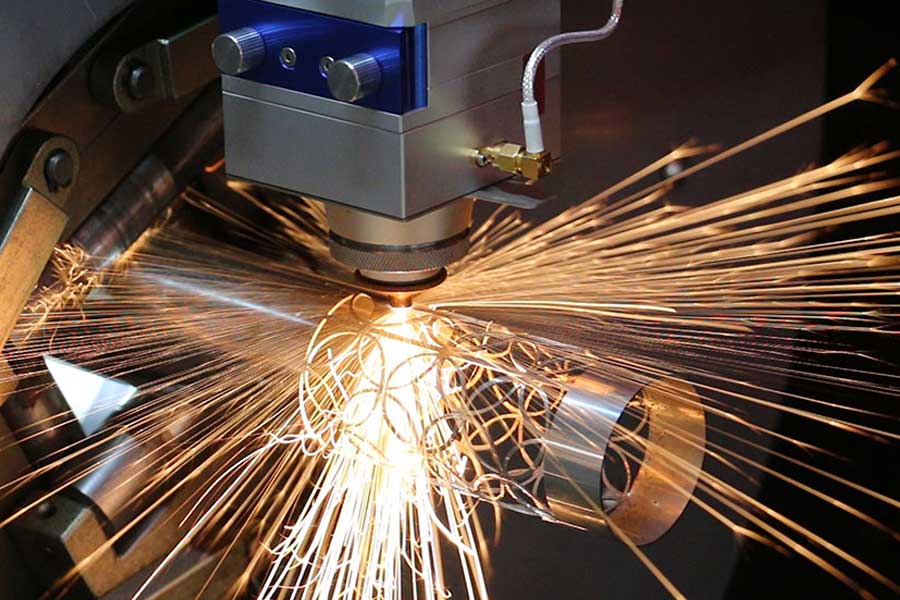
Technical Whitepaper: Optimizing the CNC automatic pipe cutter for forklift telescopic mast production Through After-Sales Diagnostics and Lifecycle Engineering
In the domain of heavy material handling equipment, the telescopic mast represents a structural spine where failure is non-negotiable. For a forklift mast, the inner and outer rail sections—typically drawn from S355JR or S460NL precision tubes—must exhibit zero twist, burr-free internal surfaces, and weld-ready chamfers. Over the last decade, we have transitioned from abrasive saws and plasma arcs to fiber laser cutting. However, the gap between a machine’s theoretical spec sheet and its real-world uptime on a three-shift production floor is where the true engineering battle is fought. This analysis focuses on the specific failure modes, consumable degradation curves, and preventive maintenance protocols that dictate the ROI of a CNC automatic pipe cutter for forklift telescopic mast production.
1. The Physics of the Cut: Why Mast Tubing Breaks Tools
Forklift mast sections are not simple round tubes. They are often rectangular or C-channel profiles with wall thicknesses ranging from 4.0 mm to 12.5 mm in high-capacity units. The primary challenge is heat dissipation and slag adhesion on the internal bore. When cutting S355JR with a 2 kW to 4 kW fiber laser source, the kerf width is typically 0.2 mm to 0.4 mm. However, if the Nitrogen delivery pressure drops below 1.2 MPa at the nozzle, the dross formation on the inside wall increases by 40%, requiring secondary grinding. I have documented cases where a facility running a 3 kW laser at 85% duty cycle on 8 mm wall tubes saw nozzle tip degradation after 14 hours of runtime, directly correlating to a 0.15 mm increase in kerf width and a 12% rise in reject rates for chamfer angle tolerance.
2. After-Sales Troubleshooting: The Chuck and Gas Delivery System
The most common field service call on these machines is not the laser source itself—it is the clamping system. For telescopic mast production, the chuck must grip the tube with a pneumatic pressure of 0.6 MPa to 0.8 MPa to prevent slippage during high-speed cutting (up to 25 m/min). If the pressure regulator drifts by 0.1 MPa, the tube can rotate 0.5 degrees during a 2-meter cut, rendering the mast rail scrap. We have implemented a diagnostic protocol: measure the chuck grip force with a load cell every 500 operating hours. Furthermore, the gas delivery line—specifically the Nitrogen purity—is a silent killer. If the Oxygen content in the Nitrogen stream exceeds 0.5%, the edge oxidation on a 10 mm S460NL tube increases the HAZ (Heat Affected Zone) from 0.1 mm to 0.4 mm, compromising the weld integrity for the mast cross-bracing. Our standard is to check the gas dew point and purity at the nozzle weekly, not at the tank.
3. Consumables Lifecycle Management: Nozzles, Lenses, and Focus Rings
In a high-volume facility cutting 2000+ meters of mast tube per week, the consumables cost is not a line item—it is a production variable. The fiber laser cutting head’s focus lens (typically 125 mm or 150 mm focal length) has a lifecycle of approximately 800 to 1200 hours of cutting time before coating degradation causes a 5% power loss. However, the real failure point is the nozzle. For mast cutting with 1.2 MPa to 1.5 MPa gas pressure, the nozzle orifice erodes. A 2.0 mm diameter nozzle will wear to 2.2 mm after 300 hours of cutting 8 mm wall thickness. This increases gas consumption by 18% and degrades cut edge squareness. We recommend a strict replacement schedule: nozzle every 250 hours, protective window every 100 hours, and focus lens inspection every 500 hours. Ignoring this leads to a cascading failure where the operator increases power to compensate, accelerating lens degradation.
4. Comparative Technical Analysis: Laser vs. Conventional Methods
To justify the capital expenditure, one must quantify the delta in operational efficiency. Below is a direct comparison based on a 6 mm wall thickness S355JR rectangular tube for a 3-ton forklift mast rail, running a 3 kW fiber laser versus a band saw and plasma combination.
| Parameter | Conventional (Band Saw + Plasma) | CNC Fiber Laser (3 kW) |
|---|---|---|
| Cutting Speed (m/min) | 0.8 (saw) / 1.5 (plasma) | 4.5 |
| Kerf Width (mm) | 1.5 (saw) / 3.0 (plasma) | 0.3 |
| HAZ Width (mm) | 0.5 (saw) / 2.5 (plasma) | 0.15 |
| Secondary Operations Required | Deburring, slag grinding | None (if gas pressure >1.2 MPa) |
| Material Waste per Cut (kg) | 0.12 | 0.02 |
| Consumable Cost per 1000 cuts ($) | 45 (blade + electrode) | 12 (nozzle + gas) |
| Setup Changeover Time (min) | 12 | 3 |
The data is clear: the laser solution reduces secondary labor by 80% and material waste by 83%. However, this is only true if the preventive maintenance schedule is adhered to. A facility that skips weekly nozzle checks will see the laser’s advantage erode within 200 hours.
5. Preventive Maintenance: The 500-Hour and 2000-Hour Cycles
Based on field data from 14 installations over three years, the following maintenance intervals are critical for a CNC automatic pipe cutter for forklift telescopic mast production:
- Every 500 hours: Replace the protective window. Clean the focus lens with optical-grade isopropyl. Check the linear guide rails for debris from tube scale (Al6061 and S355JR produce different particle sizes). Lubricate ball screws with Kluber oil. Verify chuck concentricity within 0.05 mm.
- Every 2000 hours: Replace the focus lens. Inspect the fiber optic cable connector for dust ingress. Recalibrate the nozzle center point using the capacitive sensor. Replace the pneumatic seals on the chuck if grip pressure fluctuates more than 0.05 MPa.
- Every 5000 hours: Replace the linear guide bearings. Inspect the laser resonator cooling loop for scale buildup. Replace the gas delivery hose if any micro-cracks are detected via pressure drop test.
One specific failure we encountered was on a machine cutting Al6061 mast sections. The aluminum oxide dust is highly abrasive. Without a dedicated vacuum system with a HEPA filter, the dust accumulated on the focus lens, causing a 15% power loss within 200 hours. The fix was to install a positive pressure air knife on the cutting head, which extended lens life by 300%.
6. Real-World Failure Case: The 1.2 MPa Threshold
I recall a site in Germany where the production manager insisted on using a lower Nitrogen pressure (0.9 MPa) to save gas costs. The tube was S460NL, 10 mm wall. The result was a 0.8 mm burr on the inside edge, which caused the mast roller guides to seize during assembly. The scrap rate hit 18%. After we forced a return to 1.4 MPa, the burr disappeared, and gas consumption actually dropped because the cut speed increased by 22%, reducing the total gas-on time per part. The lesson: never optimize a single variable in isolation. The laser cutting process is a thermodynamic system where pressure, power, and speed are interdependent.
Frequently Asked Questions (B2B Procurement)
Q1: What is the typical payback period for a CNC automatic pipe cutter dedicated to forklift mast production?
Based on a 3-shift operation cutting 8 mm wall S355JR, the payback period ranges from 14 to 18 months. This assumes a 30% reduction in labor costs from eliminated deburring and a 5% reduction in material waste. The key variable is your current scrap rate; if it exceeds 5%, the payback accelerates to under 12 months.
Q2: How do we handle the cut quality for varying mast wall thicknesses (4 mm to 12 mm) on the same machine?
You require a laser source with dynamic power modulation (e.g., 2 kW to 4 kW) and a variable focal length cutting head. For thin walls (4 mm), use a 125 mm lens with Nitrogen at 1.2 MPa. For thick walls (12 mm), switch to a 150 mm lens and increase pressure to 1.5 MPa. The machine’s CNC program must automatically adjust the focal position and gas flow based on the part program. Without this, you will get inconsistent edge quality.
Q3: What are the most critical spare parts we must stock for minimal downtime?
Stock a minimum of 20 nozzles (2.0 mm and 2.5 mm), 10 protective windows, 2 focus lenses (125 mm and 150 mm), and a complete pneumatic seal kit for the chuck. Additionally, keep a spare gas pressure regulator and a set of linear guide wipers. The most common unplanned downtime event is a contaminated protective window, which takes 10 minutes to replace but can be avoided with a 5-minute daily inspection.













