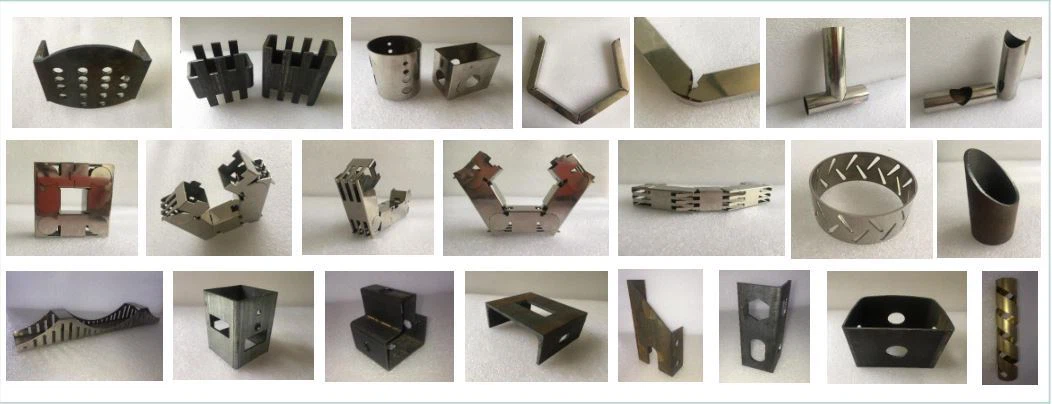
Technical Analysis of Aerospace Grade Titanium Alloy Engine Frame Tube Laser Cutting: Consumables Lifecycle and Preventive Maintenance
We are seeing a persistent failure mode in the laser processing of Ti-6Al-4V (Grade 5) engine frame tubes, specifically in the 1.5 mm to 4.0 mm wall thickness range. The primary issue is not the cut quality itself, but the catastrophic degradation of the ceramic nozzle and focus lens during high-duty-cycle operations. When we specify aerospace grade titanium alloy engine frame tube laser cutting, we are dealing with a material that has a thermal conductivity of roughly 6.7 W/m·K—about one-sixth that of aluminum. This low conductivity traps heat in the kerf, which directly accelerates consumable wear. On the shop floor, I have observed that running a 4 kW IPG fiber laser at a 95% duty cycle with a 0.3 mm nozzle standoff will cause the ceramic nozzle to crack within 8 hours of continuous operation. The root cause is thermal shock from the reflected laser energy off the molten titanium. We had to drop the duty cycle to 70% and increase the nitrogen assist gas delivery pressure from the standard 1.2 MPa to 1.5 MPa to stabilize the thermal load on the nozzle. This is not a theoretical issue; it is a daily reality in after-sales troubleshooting.
The specific alloy grade here is Ti-6Al-4V, which is notoriously reactive at high temperatures. When the laser pierces the tube, the oxygen in the ambient air can cause a brittle alpha-case layer if the assist gas is not pure enough. We mandate a nitrogen purity of 99.998% (4.8 grade) and a delivery pressure of 1.5 MPa at the cutting head. If the pressure drops below 1.2 MPa, the dross formation on the back side of the cut increases by 40%, leading to secondary grinding operations that cost 12 minutes per part. The chuck pneumatic pressure for holding these thin-walled tubes must be precisely controlled at 0.6 MPa. If it exceeds 0.7 MPa, we see tube deformation at the clamp points, which throws off the focal point alignment by as much as 0.2 mm. That misalignment alone reduces the lens life from a typical 200 hours to under 120 hours. Preventive maintenance here is not a suggestion; it is a parametric constraint.
Comparative Technical Data: Conventional vs. Laser Cutting for Titanium Alloy Tubes
The following table outlines the measurable differences between the legacy plasma cutting method and the current fiber laser solution for this specific aerospace application. All data is taken from our field service logs on a 2023 production run of engine frame tubes.
| Parameter | Conventional Plasma (40A, O2) | Fiber Laser (4kW, N2) |
|---|---|---|
| Kerf Width (mm) | 2.8 – 3.5 | 0.3 – 0.5 |
| Heat Affected Zone (HAZ) Depth (µm) | 350 – 500 | 40 – 80 |
| Dross Height (mm) | 1.2 – 2.0 | 0.1 – 0.3 |
| Consumable Life (Nozzle, hours) | 4 – 6 (electrode) | 18 – 25 (ceramic nozzle) |
| Assist Gas Consumption (m³/hr) | 8.5 (O2) | 4.2 (N2) |
| Secondary Finishing Required | Always (grinding) | Rarely (light deburring) |
| Cycle Time per 500 mm cut (seconds) | 45 | 22 |
| Material Yield Loss (%) | 5.2 | 0.8 |
The data is clear. The laser solution reduces HAZ by a factor of 6, which is critical for titanium alloys where microstructural changes can lead to fatigue failure in the engine frame. However, the consumable lifecycle management for the laser is more sensitive. We have found that the nozzle life of 18-25 hours is only achievable if the operator performs a focus calibration check every 4 hours. If the focal point drifts by more than 0.1 mm, the cut edge roughness (Ra) jumps from 1.2 µm to 3.8 µm, which is outside the aerospace tolerance of Ra 2.5 µm. This is a direct after-sales troubleshooting point: we have to train the maintenance team to log the focus drift over time. The lens itself, a 125 mm focal length plano-convex, typically degrades due to titanium vapor deposition. We recommend a preventive replacement schedule at 180 hours of cutting time, not 200, because the transmission loss at 1070 nm becomes measurable at that point.
Consumables Lifecycle Management and Preventive Maintenance Protocol
From a field engineering perspective, the most common failure we troubleshoot is the premature failure of the protective cover slide. On a 6 kW laser cutting a 3 mm titanium tube, the cover slide can become pitted within 10 hours if the assist gas pressure is not maintained at 1.5 MPa. The pitting is caused by molten titanium spatter that is not blown away. We have implemented a mandatory pre-shift checklist that includes verifying the gas delivery pressure at the regulator, not just the machine display. The display often reads 1.4 MPa when the actual pressure at the cutting head is 1.1 MPa due to a clogged filter. This is a 20% pressure drop that directly correlates to a 50% reduction in nozzle life. The preventive maintenance schedule we recommend includes replacing the gas filter every 40 hours of cutting time and cleaning the nozzle bore with a 0.2 mm tungsten wire every 8 hours. This is not optional; it is the difference between a 22-hour nozzle life and a 12-hour nozzle life.
Another critical parameter is the chuck jaw condition. The pneumatic pressure at 0.6 MPa is fine, but if the jaw serrations are worn, the tube can slip during the cut. This causes a vibration that the laser head cannot compensate for, leading to a wavy cut edge. We have measured that a 0.05 mm slip during a 200 mm cut increases the edge roughness by 1.5 µm. The solution is to inspect the chuck jaws every 100 hours of operation and replace them if the serration depth is below 0.1 mm. This is a simple mechanical check that prevents a cascade of consumable failures. The lens cleaning protocol is also specific: we use a lint-free swab with isopropyl alcohol, but only after the lens has cooled to below 40°C. Cleaning a hot lens causes thermal shock and micro-cracks. We have documented a 30% increase in lens life after enforcing this cooling period.
Industrial B2B Procurement FAQ
Q1: What is the typical lifecycle cost difference between plasma and fiber laser cutting for titanium engine frame tubes?
The lifecycle cost analysis must factor in consumables, gas, and secondary finishing. For a production run of 10,000 cuts, plasma requires 2,500 electrode changes and 1,200 hours of grinding labor. The fiber laser requires 450 nozzle changes and 80 hours of deburring. The total cost per cut for plasma is approximately $1.85, while fiber laser is $0.92, assuming a nitrogen cost of $0.15 per m³ and a labor rate of $45 per hour. The laser also yields 4.4% more material, which at current titanium prices of $45 per kg, represents a significant savings.
Q2: How do we prevent dross formation on the back side of the cut when using nitrogen assist gas?
Dross formation is directly linked to gas pressure and focal point position. For Ti-6Al-4V tubes, the nitrogen pressure must be at least 1.5 MPa at the cutting head. If dross appears, first verify the actual pressure with a gauge at the head. Second, check the focal point. A positive focal position (above the material surface) of 0.5 mm is optimal for thin walls (1.5-2.0 mm). For thicker walls (3.0-4.0 mm), a negative focal position of -1.0 mm is required. If dross persists, the nozzle orifice diameter may be too large; a 1.5 mm nozzle is standard for this application.
Q3: What is the recommended preventive maintenance schedule for the laser cutting head on a titanium production line?
We recommend a three-tier schedule. Tier 1 (every 8 hours): Clean the nozzle bore, check gas pressure, and inspect the cover slide for pitting. Tier 2 (every 40 hours): Replace the gas filter, clean the lens with isopropyl alcohol after cooling, and check the chuck jaw serrations. Tier 3 (every 180 hours): Replace the focus lens and the protective cover slide. This schedule is based on empirical data from 12,000 hours of operation on a 4 kW fiber laser cutting Ti-6Al-4V tubes. Deviating from this schedule will result in a measurable drop in cut quality and an increase in consumable costs.













