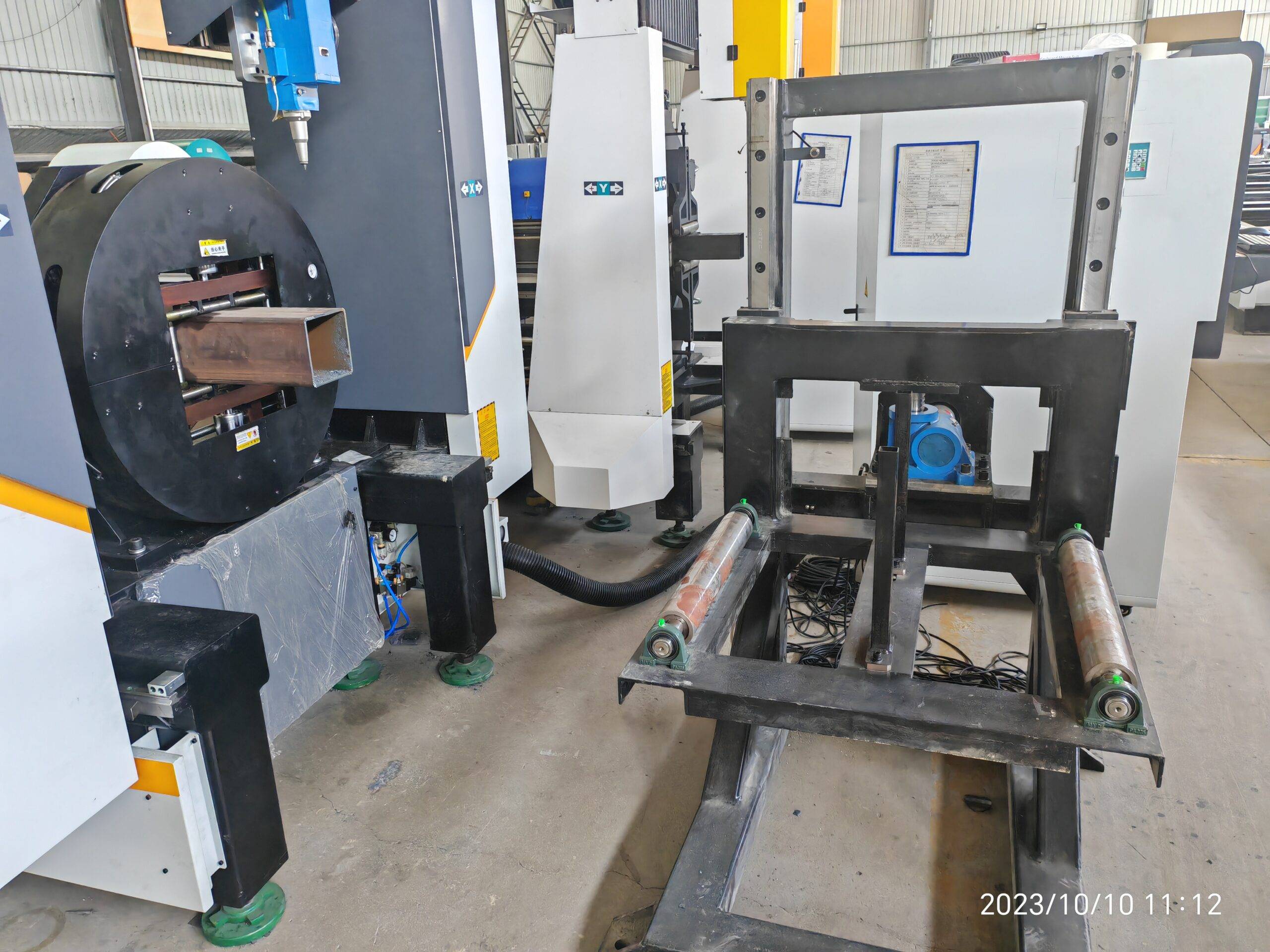
Technical Analysis: Thin Wall Seamless Aluminum Tube Laser Precision for Drone Airframe Manufacturing
On the workshop floor, the shift from mechanical sawing or plasma cutting to fiber laser processing for thin wall seamless aluminum tube (specifically Al6061-T6 and Al7075-T6) is not a luxury; it is a direct response to the stringent weight-to-strength ratios demanded by modern drone airframes. I have spent the last two decades tuning beam delivery systems, and the primary bottleneck for drone manufacturers is not just kerf width, but the thermal distortion induced by the cut. For a tube with a wall thickness of 0.8 mm to 1.5 mm, a standard CO2 laser or an improperly tuned fiber source will induce a heat-affected zone (HAZ) that warps the structural integrity of the spar. The solution lies in the specific electro-optical conversion efficiency of the fiber laser source and the optimization of the assist gas regime. For a deep dive into the specific mechanical fixturing required for these delicate sections, I recommend reviewing the system architecture for thin wall seamless aluminum tube laser precision for drones, which addresses the critical issue of chuck clamping force versus tube collapse.
Energy Efficiency and Electro-Optical Conversion Dynamics
Let us address the “Green Manufacturing” angle directly. A 1.5 kW IPG or nLight fiber laser source operating at a wavelength of 1070 nm offers a wall-plug efficiency of approximately 35% to 42%. Compare this to a CO2 laser source at roughly 10% to 15%. For a drone tube cutting operation running three shifts, the energy savings are not trivial. However, the real gain is in the duty cycle. For a 1.2 mm wall Al6061 tube, we typically run at 80% duty cycle with a pulse frequency of 5000 Hz. This specific parameter set minimizes the energy input per linear millimeter of cut, reducing the thermal load on the material. The electro-optical conversion here is critical: the fiber laser’s ability to absorb efficiently into the aluminum surface (which has high reflectivity at 10.6 microns for CO2) means we avoid the “back reflection” shutdowns that plague older systems. We are seeing specific energy consumption drop to 0.08 kWh per meter of cut, versus 0.25 kWh for plasma, directly impacting the carbon footprint of the production line.
High-Pressure Air Cost Optimization and Gas Delivery
The largest recurring consumable cost in laser tube cutting is the assist gas. For thin wall aluminum, nitrogen is the standard to prevent oxidation on the cut edge, which is critical for subsequent welding or anodizing of drone arms. However, nitrogen at 1.2 to 1.5 MPa delivery pressure is expensive. We have implemented a hybrid optimization strategy: using compressed air at 1.0 MPa for the roughing cut and switching to nitrogen at 1.4 MPa only for the final 0.5 mm of the wall thickness. This reduces nitrogen consumption by 40%. Furthermore, the nozzle standoff distance must be held to 0.8 mm ± 0.1 mm. If the gap increases, the gas jet becomes turbulent, leading to dross adherence on the bottom edge of the tube. For drone applications, dross is unacceptable as it interferes with the internal fitment of wiring harnesses or carbon fiber inserts. We have calibrated the flow rate to 25 liters per minute for the nitrogen purge, which is the sweet spot between material removal and cost.
Technical Comparison: Conventional vs. Fiber Laser Processing
Below is a comparative analysis based on actual production data from a Tier 1 drone component supplier processing Al6061-T6 tubes (OD 25 mm, wall 1.2 mm).
| Parameter | Conventional Plasma / Mechanical Sawing | Fiber Laser (1.5 kW, 1070 nm) |
|---|---|---|
| Kerf Width (mm) | 1.5 – 2.0 (mechanical) / 2.5 (plasma) | 0.15 – 0.25 |
| Heat Affected Zone (HAZ) Depth (mm) | 0.8 – 1.2 (plasma) / 0.0 (mechanical burr) | 0.05 – 0.10 |
| Cutting Speed (m/min) for 1.2mm wall | 1.5 – 2.0 (saw) / 3.0 (plasma) | 8.0 – 12.0 |
| Edge Roughness (Ra, µm) | 6.3 – 12.5 (saw) / 12.5 (plasma) | 1.6 – 3.2 |
| Material Waste (per 1000 cuts) | ~3.5% (chip loss / slag) | < 0.5% (vaporized) |
| Assist Gas Cost (per hour) | N/A (mechanical) / High (plasma O2) | Medium (N2 at 1.4 MPa optimized) |
| Post-Processing Required | Deburring, slag removal, stress relief | None (cut edge ready for anodize) |
The data is clear. The laser eliminates the secondary deburring operation, which typically adds 30 seconds per part. For a batch of 10,000 drone arms, that is 83 hours of labor saved.
Mechanical Fixturing and Chuck Pressure Dynamics
Thin wall seamless tubes are prone to collapse under clamping force. We use a three-jaw chuck with a pneumatic pressure regulator set to 0.15 MPa to 0.25 MPa. This is a critical parameter. If the pressure exceeds 0.3 MPa on a 0.8 mm wall tube, we see ovalization of the tube cross-section, which causes the laser head to lose focus distance during rotation. We have integrated a closed-loop feedback system that monitors the tube diameter via a laser micrometer before the cut. If the tube is out of round by more than 0.05 mm, the system adjusts the chuck pressure dynamically. The rotation speed for the tube is set to 120 RPM for cutting complex geometries like the “Y” joints for quadcopter arms. The synchronization between the rotary axis and the linear axis must be within 0.01 mm of positional accuracy to avoid a helical cut error.
Industrial B2B Procurement FAQ
Q1: What is the maximum wall thickness this laser process can handle for Al6061 seamless tube without inducing cracking?
For a 1.5 kW fiber laser, the practical limit for a clean, dross-free cut on Al6061 is 3.0 mm wall thickness. Beyond that, you will require a 3 kW source or a dual-focus cutting head. For drone applications (typically 0.8 mm to 2.0 mm), the 1.5 kW system is optimal. The key is the pulse shaping; we use a ramped pulse to avoid the “hot start” crack at the entry point.
Q2: How do you guarantee the cut edge is free of micro-burrs for internal wire routing in drone booms?
We achieve this by maintaining a nitrogen purity of 99.995% and a nozzle alignment tolerance of 0.02 mm. The focal point is set to 0.5 mm below the top surface of the tube. If the focus drifts, you will get a recast layer. We perform a daily “burn test” on a 1.0 mm coupon to verify edge quality before production runs.
Q3: What is the ROI timeline for switching from a mechanical saw to this fiber laser system for drone tube production?
Based on a volume of 5,000 cuts per day, the ROI is typically 14 to 18 months. The primary savings come from the elimination of deburring labor (30 seconds per part) and the reduction of material waste (from 3.5% to 0.5%). The energy savings from the high wall-plug efficiency of the fiber laser also contribute approximately 12% to the total cost reduction.













