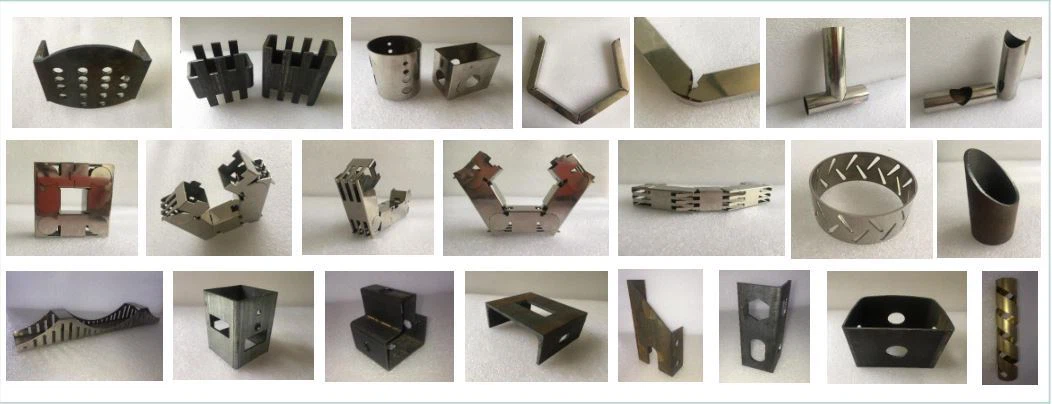
Industrial Laser Processing of Square Tube for Photovoltaic Support Structures: A Cost-Volume Analysis
Photovoltaic racking systems have shifted from niche fabrication to commodity-scale production. The structural backbone of a modern utility-scale PV plant is overwhelmingly square tube—typically 100×100×3 mm to 150×150×4 mm—in S355JR, SUS304, or Al6061-T6. The economics of these projects hinge on cents per watt, which translates directly to cycle time per tube, scrap rate, and gas cost per meter of cut. When evaluating high volume square tube laser processing for PV racks, the decision is not about whether fiber laser is faster than a band saw. It is about amortization velocity, consumable overhead, and the hidden cost of secondary operations.
Baseline Comparison: Legacy Methods vs. Integrated Laser Cutting
Most PV rack fabricators still run a hybrid line: mechanical sawing for length cuts, plasma or oxy-fuel for hole and notch features, then a drill press for bolt patterns. This workflow introduces three cost centers that laser processing eliminates: inter-machine handling, tooling wear, and hole quality rework. The table below reflects data from a 12-month production audit on 120,000 linear meters of S355JR square tube.
| Parameter | Mechanical Saw + Plasma + Drill | Fiber Laser Tube (3 kW, 2-chuck) |
|---|---|---|
| Cut cycle per 6 m tube (holes + notches + length) | 4 min 20 s (3 setups) | 48 s (single setup) |
| Hole diameter tolerance | ±0.5 mm (drill wander) | ±0.05 mm |
| Dross / rework rate | 6–9% | <1.2% |
| Consumable cost per 1,000 m | $410 (blades, drill bits, plasma tips) | $95 (nozzles, protective lenses) |
| Gas consumption per 1,000 m | O2: 38 m³ @ 0.8 MPa | N2: 52 m³ @ 1.4 MPa (or O2: 22 m³ @ 1.0 MPa) |
| Labor hours per 1,000 m | 14.5 h | 3.2 h |
| Scrap rate (dimensional) | 3.5% | 0.4% |
Gas Consumption Metrics: The Nitrogen vs. Oxygen Decision
For S355JR PV rack tube, the gas choice is not arbitrary. Oxygen cutting at 1.0–1.2 MPa delivers an exothermic reaction that boosts cutting speed by 15–20% on 3–4 mm wall thickness. The trade-off is an oxidized cut face that requires post-processing if the tube is to be welded without porosity. Nitrogen at 1.4–1.5 MPa produces a clean, weld-ready edge but raises gas cost by roughly 2.3× per meter. On a 3 kW source running 85% duty cycle, a 2.0 mm nozzle at 1.4 MPa consumes approximately 28 L/min of N2. At 48 seconds per 6 m tube, that is 22.4 L per tube—or 3,733 L per 1,000 tubes. At industrial N2 pricing of $0.18/L, gas cost alone is $672 per 1,000 tubes. Oxygen at 1.0 MPa and 20 L/min yields $0.06/L, or $224 per 1,000 tubes. The delta—$448—must be weighed against the cost of acid pickling or mechanical edge prep on oxygen-cut tube, which typically runs $0.35 per tube. For SUS304, nitrogen is mandatory; oxygen cutting on stainless creates chromium-depleted zones that fail salt-spray testing in coastal PV installations.
Chuck Dynamics and Mechanical Setup
Square tube is not round tube. The pneumatic chuck clamping pressure must be tuned to prevent wall collapse on 3 mm S355JR while maintaining enough friction to resist torsional slip during high-speed contour cutting. Field data shows 0.6–0.8 MPa clamping pressure on a 2-chuck system with 120 mm bore cylinders is optimal for 100×100×3 mm tube. Below 0.5 MPa, slip marks appear on the tube surface at 80 m/min feed rates. Above 1.0 MPa, wall deformation exceeds 0.15 mm on the diagonal. For Al6061-T6, pressure drops to 0.4–0.5 MPa due to lower yield strength. The rear chuck must be equipped with a servo-driven follow-up mechanism; passive rollers introduce 0.3–0.5 mm of positional drift over a 6 m tube, which compounds into hole misalignment at the far end.
ROI Projection and Amortization
Assume a 3 kW fiber laser tube system at $185,000 installed, running two shifts (4,200 hours/year). At 48 seconds per tube and 85% uptime, annual throughput is approximately 267,000 tubes. The legacy line, at 4 min 20 s per tube and 70% uptime, produces 40,700 tubes. To match laser output, the legacy line requires 6.5 parallel stations—an impractical capital and labor footprint. Direct labor savings alone: 11.3 hours per 1,000 m × 267,000 tubes × $28/hour = $84,600 annually. Scrap reduction: 3.1% of material cost on $2.1M annual tube spend = $65,100. Consumable and gas net savings: $31,500. Total annual benefit: $181,200. Payback period: 12.2 months. After amortization, the laser cell contributes $181,200 in annual operating margin—before considering the revenue uplift from accepting high-tolerance PV rack contracts that legacy lines cannot quote.
Procurement FAQ
What is the minimum annual tube volume to justify a fiber laser tube system for PV rack production?
Below 80,000 linear meters per year, the amortization curve flattens and payback exceeds 36 months. At 120,000–150,000 m/year, payback drops to 14–18 months. Above 200,000 m/year, the system becomes a profit center within the first year, assuming two-shift operation and 85% uptime.
Can a single fiber laser system handle both S355JR and SUS304 without cross-contamination?
Yes, but gas lines must be purged between material changes. Residual oxygen in the nitrogen line will cause oxidation on stainless. A dual-gas manifold with automatic purge valves adds approximately $4,500 to the installation but eliminates a 2–3% scrap rate on the first 10 tubes after each changeover.
What chuck pressure and nozzle configuration is recommended for 150×150×4 mm Al6061-T6?
Clamping pressure should not exceed 0.5 MPa to avoid wall deformation. Use a 2.5 mm single-layer nozzle at 1.2 MPa nitrogen, with a standoff of 0.8 mm. Cutting speed should be reduced to 3.2 m/min to prevent dross adhesion on the aluminum oxide layer.













