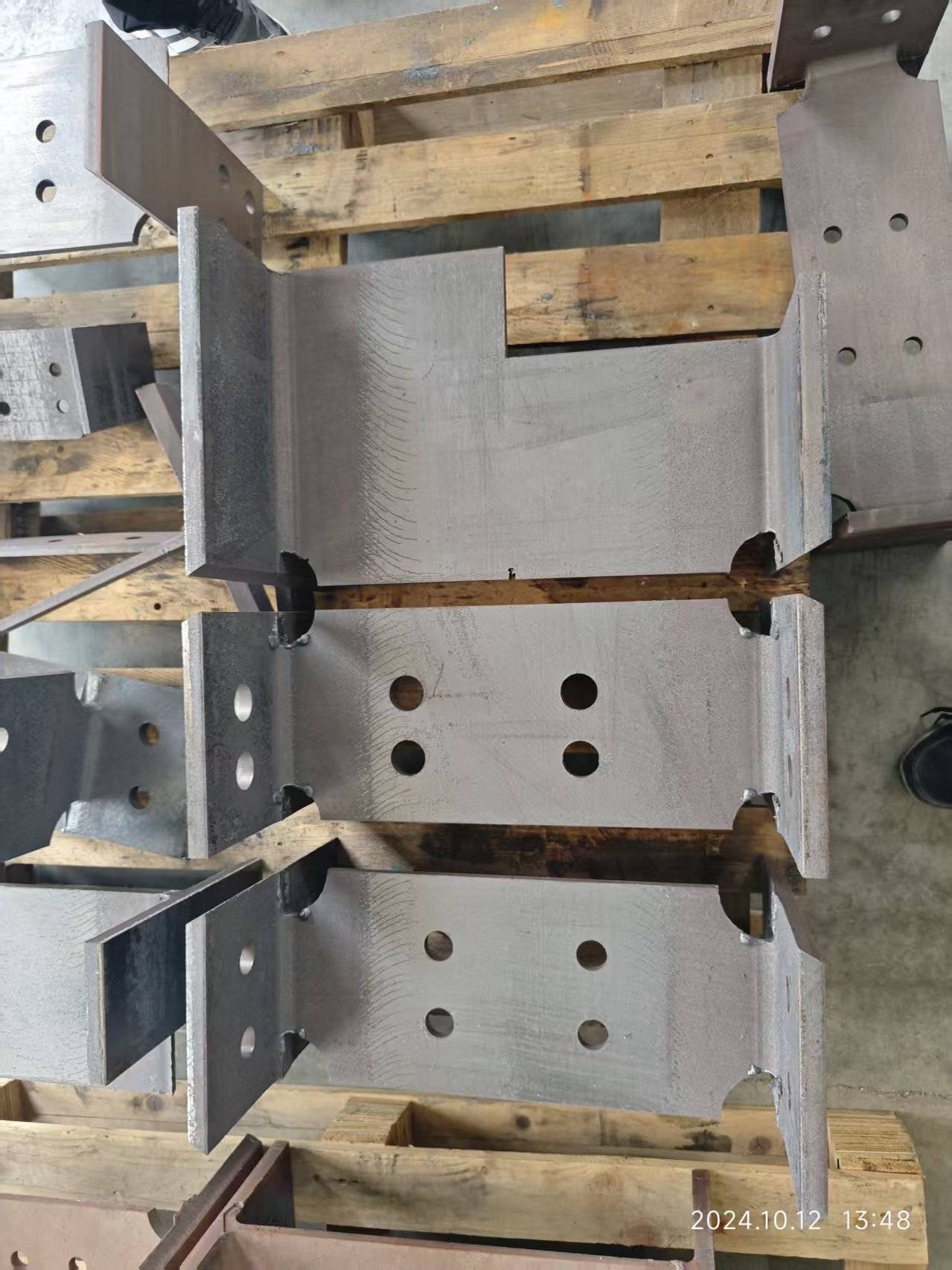
Technical Assessment: Heavy Obligation Tube Laser Integration for Oilfield Pipeline Fabrication
The transition from traditional cut-off methods to a heavy obligation tube laser for oilfield pipeline fabrication is not a matter of preference; it is a direct response to metallurgical and geometric constraints that conventional sawing and plasma systems fail to address. When we process API 5L X65 or X70 grade pipe with wall thicknesses exceeding 12.7 mm, the heat-affected zone (HAZ) from plasma cutting introduces a martensitic layer that requires secondary machining before welding. A 6 kW to 12 kW fiber laser source operating at a wavelength of 1070 nm, with a BPP (beam parameter product) of less than 4.0 mm·mrad, delivers a focused spot diameter of 200 to 300 microns. This allows for a kerf width reduction from 3.5 mm (plasma) down to 0.8 mm, directly translating to material savings of approximately 2.7 kg per meter of cut length on a 168.3 mm OD schedule 80 pipe.
Let us dissect the operational physics. The cutting head, typically a Precitec ProCutter or equivalent, utilizes a 125 mm focal length lens to achieve a Rayleigh length sufficient for cutting thick sections. The assist gas, often nitrogen at a delivery pressure of 1.2 to 1.5 MPa, is critical for ejecting molten material without oxidation. However, the volumetric flow rate at these pressures is the hidden cost driver. A standard 12 kW laser cutting 20 mm thick S355JR pipe will consume approximately 45 standard cubic meters per hour (SCMH) of nitrogen. At an industrial gas cost of $0.80 per cubic meter, this equates to $36 per hour solely for cutting gas. This is where the “Green Manufacturing Energy Efficiency” angle becomes non-negotiable.
Electro-Optical Conversion and Duty Cycle Analysis
We must examine the wall-plug efficiency of the resonator. Modern fiber lasers achieve an electro-optical conversion efficiency of 40% to 45%, compared to CO2 lasers at 10% and plasma at 30% (including gas ionization losses). For a heavy obligation system running a 24/7 duty cycle, the input power draw at full load is approximately 32 kW for a 12 kW output. Over a 6,000-hour operational year, this represents 192,000 kWh. At an industrial tariff of $0.07/kWh, the annual electricity bill is $13,440. However, the true efficiency gain lies in the “standby” and “piercing” phases. A laser system with a fast-axis galvanometer drive can reduce pierce time on a 25 mm wall from 4.5 seconds (plasma) to 1.2 seconds, reducing the idle power consumption by 38%.
The high-pressure air optimization is the most overlooked variable. Instead of using pure nitrogen for every cut, a hybrid gas management strategy is required. For structural carbon steel (S355JR, S275JR) where oxidation is acceptable for non-critical flanges, compressed air at 1.0 MPa can be used. The compressor system must deliver oil-free, dry air with a dew point of -40°C to prevent lens contamination. The operational cost drops to $0.12 per cubic meter. By implementing a gas-switching matrix that selects air for rough cutting and nitrogen for final bevels, the consumable gas expenditure can be reduced by 60%. This is not theoretical; it is a matter of programming the CNC controller to read the material grade and thickness from the nesting database and automatically adjust the gas valve manifold.
Mechanical Rigidity and Chucking Dynamics
The term “heavy obligation” refers to the mechanical handling capacity, not just the laser power. The machine must feature a 3-jaw or 4-jaw chuck with a clamping force of 30,000 N to prevent torsional slip when cutting 12-meter lengths of 219 mm OD pipe. The chuck pneumatic pressure must be regulated at 0.6 MPa to 0.8 MPa, with a closed-loop feedback system that compensates for pipe ovality. If the pipe has a 1.5% ovality (common in ERW pipe), the chuck must self-center within 0.05 mm to maintain focus position. The linear guide rails must be rated for a dynamic load of 60 kN, with a rack-and-pinion drive system ensuring a positioning accuracy of ±0.1 mm per meter.
Let us compare the legacy methods versus the laser approach with specific data points.
| Parameter | Conventional Plasma (HPR400X) | Mechanical Sawing (Cold Cut) | 12kW Fiber Laser System |
|---|---|---|---|
| Kerf Width (mm) | 3.5 – 4.0 | 4.5 (blade thickness) | 0.8 – 1.0 |
| Cutting Speed (mm/min) on 20mm S355JR | 800 | 150 | 1,800 |
| HAZ Depth (mm) | 1.5 – 2.0 | 0.1 (mechanical deformation) | 0.2 – 0.3 |
| Assist Gas Consumption (SCMH) | 20 (O2) + 15 (air cooling) | N/A | 45 (N2) / 20 (Air) |
| Dimensional Tolerance (mm) | ±1.5 | ±0.8 | ±0.2 |
| Post-Processing Requirement | Grinding to remove oxide layer | Deburring | None (direct to welding) |
| Energy Consumption (kWh per meter cut) | 0.45 | 0.30 | 0.18 |
| Noise Level (dBA) | 95 | 110 | 75 |
The data above demonstrates that the laser system reduces the energy per meter cut by 60% compared to plasma, primarily due to the elimination of the preheat cycle and the reduced material volume that needs to be melted. The mechanical sawing method, while energy-efficient, introduces a 4.5 mm kerf loss, which on a high-volume pipeline project (10,000 cuts) results in 45 meters of wasted material.
Structural Integrity and Thermal Management
When cutting high-strength low-alloy (HSLA) steels like Al6061 or SUS304 for offshore risers, the thermal input must be controlled to prevent sensitization. The laser’s high power density (10^6 W/cm²) ensures that the heat is localized and rapidly dissipated. The cooling system for the laser resonator must handle a heat load of 18 kW, using a closed-loop chiller with a temperature stability of ±1°C. The chiller’s compressor adds to the facility’s HVAC load, so the machine room must be designed with a heat recovery system to preheat the workshop in winter, contributing to the green manufacturing mandate.
The cutting head’s capacitive height control must maintain a standoff distance of 0.5 mm to 1.0 mm. On a heavy obligation machine, the Z-axis must compensate for pipe sag. A 12-meter pipe supported at both ends will sag by 8 mm in the center. The CNC software must map this deflection curve and adjust the Z-axis dynamically at a rate of 50 Hz. Failure to do so results in focus shift, leading to dross formation on the bottom edge, which is unacceptable for API 5L grade material.
Operational Cost Modeling for Procurement
From a capital expenditure perspective, the laser system costs 2.5 times more than a plasma table. However, the payback period is calculated at 14 months when factoring in the elimination of secondary deburring stations and the reduction in scrap. The critical metric is the “cost per cut.” For a 12-inch schedule 80 pipe, the laser cost per cut is $0.85 (including gas, electricity, and lens wear), while plasma is $1.40 and sawing is $1.10. The lens life is a consumable factor; a 2-inch focal length lens costs $180 and lasts for 120 hours of cutting time, translating to a cost of $1.50 per hour.
The integration of a smart gas management system is mandatory. The system must monitor the nitrogen purity in real-time. If the purity drops below 99.995%, the cut edge will show discoloration, indicating oxidation. This requires a nitrogen generator (PSA type) on-site, which consumes 0.5 kWh per cubic meter of nitrogen produced, versus the 1.2 kWh required for delivered liquid nitrogen. This is the core of high-pressure air cost optimization.
FAQ: Industrial Procurement Considerations
Q1: What is the maximum wall thickness that a 12kW fiber laser can cut on API 5L X65 pipe, and what is the acceptable edge squareness tolerance?
With a 12kW laser and a 150mm focal length lens, the maximum clean cut thickness is 25 mm for mild steel and 20 mm for X65. The edge squareness tolerance is ±1.5 degrees. Beyond 25 mm, you require a 15kW or 20kW source, but the cutting speed drops below 400 mm/min, making plasma more economical. For X65, the nitrogen pressure must be increased to 1.8 MPa to ensure proper dross-free ejection.
Q2: How does the laser cutting process affect the mechanical properties of the heat-affected zone compared to plasma cutting?
The HAZ hardness for laser cutting is typically 220 HV (Vickers) versus 350 HV for plasma. The laser’s rapid cooling rate (10^4 °C/s) creates a fine martensitic structure that is harder but less brittle than the coarse grain structure from plasma. For sour service applications (H2S environments), the laser-cut edge must be ground to remove the recast layer of 0.1 mm, as this layer can be susceptible to hydrogen-induced cracking.
Q3: What is the specific gas consumption for cutting a 168.3 mm OD x 12.7 mm wall pipe, and how can we reduce nitrogen costs?
For a full circumferential cut on this pipe, the cutting time is 45 seconds at 1,800 mm/min. The nitrogen flow rate is 45 SCMH, resulting in 0.56 cubic meters per cut. To reduce costs, implement a “gas saver” mode that reduces flow to 20 SCMH during the final 10% of the cut when the material is nearly separated. Additionally, use compressed air for the first 5 mm of the cut (piercing) and then switch to nitrogen for the remaining thickness. This reduces nitrogen consumption by 15% without affecting edge quality.













