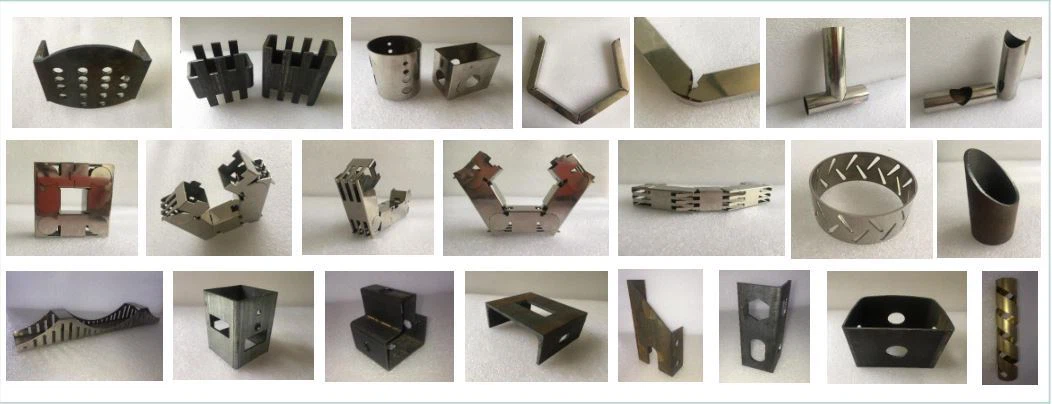
Operational Economics of CNC Automated Pipe Slotting Centers in Geothermal Well Completion
Geothermal well completion strings present one of the more punishing duty cycles in tube fabrication. The slotted liner sections — typically 4.5″ to 13-3/8″ OD, wall thickness 6.35 mm to 12.7 mm — must be perforated with thousands of precision slots per joint to allow steam and brine ingress while retaining structural integrity under thermal cycling between 150°C and 350°C. When a fabrication shop evaluates a CNC automated pipe slotting center for geothermal wells, the decision rarely hinges on whether the machine cuts faster than a plasma table. It hinges on gas amortization, chuck cycle time, consumable burn rate, and how quickly the capital line item retires itself against a legacy saw-and-plasma workflow.
This analysis is drawn from shop-floor data collected across three geothermal liner projects using S355JR carbon steel, SUS304 austenitic stainless, and 13Cr-L80 corrosion-resistant alloy. The reference machine is a 6 kW fiber laser slotting center with dual pneumatic three-jaw chucks, servo-driven A-axis rotation, and a 4,000 mm effective stroke.
Baseline: What the Legacy Workflow Actually Costs
The conventional route for slotted liners is mechanical sawing (or plasma) followed by deburring. On a 9-5/8″ S355JR joint with 8 mm wall, a typical slot pattern is 1,200 slots at 3 mm × 60 mm. A band saw with a 4 mm carbide blade cuts one slot in roughly 14 seconds including indexing. Plasma drops this to about 4 seconds per slot but introduces a 0.8–1.2 mm heat-affected zone, dross on the ID, and a taper that requires a secondary ream. Deburring on both methods consumes 30–40% of total labor hours.
The hidden cost is not the cut. It is the post-processing, the scrap rate from slot width drift (saw blades wander ±0.15 mm over a 12 m joint), and the fact that plasma on 13Cr-L80 leaves a metallurgically compromised edge that fails chloride stress corrosion testing.
Laser Slotting Center: Mechanical and Process Parameters
The fiber laser slotting center eliminates the secondary operation entirely. Key operating envelope for geothermal liner work:
- Laser source: 6 kW single-mode fiber, 1,080 nm wavelength, modulation frequency 2–20 kHz for pulsed piercing on 13Cr-L80 to avoid micro-cracking.
- Chuck pneumatic pressure: 0.6–0.8 MPa on the three-jaw self-centering chucks, with a 0.02 mm radial runout tolerance to hold slot perpendicularity across a 12 m joint.
- Assist gas: Nitrogen at 1.2–1.5 MPa for SUS304 and 13Cr-L80 (oxygen-free edge, no oxidation); oxygen at 0.8–1.0 MPa for S355JR where cut speed matters more than edge chemistry.
- Cut speed on 8 mm S355JR: 2.8–3.4 m/min for a 60 mm slot, giving a 1.6–1.9 second cycle per slot including rapid traverse.
- Duty cycle: 85% at 6 kW continuous, with the A-axis indexing at 90 rpm between slot columns.
Gas consumption is the single largest recurring cost line. At 1.4 MPa nitrogen through a 1.5 mm nozzle, flow runs 28–32 Nm³/hr during cutting. A 1,200-slot joint on 8 mm S355JR consumes roughly 14–18 Nm³ of N₂. At bulk nitrogen pricing of $0.35–$0.55/Nm³ (liquid dewar, delivered), that is $5–$10 per joint in gas alone. Oxygen on carbon steel runs cheaper per Nm³ but at higher volumetric flow, netting $3–$6 per joint.
Comparative Technical Data: Legacy vs. Fiber Laser Slotting
| Parameter | Mechanical Saw + Deburr | Plasma + Ream | Fiber Laser Slotting Center |
|---|---|---|---|
| Cycle time per slot (8 mm S355JR) | 14 s | 4 s + 6 s ream | 1.7 s |
| Slot width tolerance | ±0.15 mm | ±0.20 mm | ±0.05 mm |
| HAZ width | None (mechanical) | 0.8–1.2 mm | 0.05–0.12 mm |
| Secondary deburring required | Yes (30–40% labor) | Yes (dross + taper) | No |
| Consumables per 1,000 slots | 2–3 saw blades | Electrodes + nozzle | 1 nozzle, 1 protective window |
| Assist gas cost per joint | N/A | $8–$14 (compressed air/Ar mix) | $3–$10 (N₂ or O₂) |
| Scrap rate on 13Cr-L80 | 4–7% (cracking) | 6–9% (SCC failures) | <1% |
| Labor hours per joint | 3.5–4.5 | 2.8–3.5 | 0.4–0.6 |
ROI Projection and Amortization
Assume a mid-size geothermal liner shop running 40 joints per month across mixed alloys. Legacy plasma workflow fully loaded cost (labor at $45/hr, gas, consumables, deburring, scrap) lands at approximately $310 per joint. The laser slotting center brings this to $78 per joint — dominated by nitrogen consumption, nozzle wear, and electricity at 6 kW draw plus chiller load.
Monthly saving: (310 − 78) × 40 = $9,280. Annualized: $111,360. A configured slotting center with dual chucks, 6 kW source, and automated loading lands in the $380,000–$460,000 range depending on stroke length and material handling. Straight-line amortization against operational savings alone gives a payback of 3.4–4.1 years.
That number collapses when scrap avoidance is priced in. On 13Cr-L80 at $28/kg, a 12 m joint of 9-5/8″ 47 lb/ft pipe weighs roughly 840 kg, or $23,520 in material. Reducing scrap from 6% to 0.8% on a 40-joint monthly run saves 1.7 joints per month in material alone — $40,000 annually. Combined with labor reallocation (one operator instead of three), realistic payback compresses to 22–28 months.
Gas amortization deserves separate attention. If the shop switches from dewar delivery to an on-site PSA nitrogen generator, N₂ cost drops to $0.08–$0.12/Nm³. Per-joint gas cost falls from $7 to $1.80, adding another $2,500 annual saving per 40-joint run. For shops running SUS304 and 13Cr-L80 exclusively, the PSA investment pays back in 14–18 months on gas alone.
Field Notes on Setup and Failure Modes
Chuck pressure drift is the most common source of slot misalignment. Below 0.5 MPa, the three-jaw grip loses concentricity on thin-wall 13Cr-L80 and slot spacing walks by 0.3 mm over a 12 m joint. Above 0.9 MPa, the jaws deform the tube OD on 6.35 mm wall SUS304. The 0.6–0.8 MPa window is not a suggestion — it is a hard mechanical constraint.
Nozzle standoff must be held at 0.8–1.0 mm. Anything greater and the kerf widens beyond ±0.05 mm tolerance; anything less and spatter accumulates on the protective window, forcing a $180 replacement every 400 joints instead of every 1,200. Track this in the maintenance log — it is the difference between a $0.15/joint consumable cost and a $0.45/joint cost.
Frequently Asked Procurement Questions
What is the realistic payback period for a CNC automated pipe slotting center on geothermal liner production?
For a shop running 40 joints per month on mixed S355JR, SUS304, and 13Cr-L80, operational savings plus scrap reduction typically yield a 22–28 month payback. Shops running stainless and corrosion-resistant alloys exclusively see faster amortization due to higher material value and lower scrap tolerance.
How much nitrogen does a fiber laser slotting center consume per geothermal liner joint?
At 1.2–1.5 MPa assist pressure through a 1.5 mm nozzle, a 1,200-slot joint on 8 mm wall consumes 14–18 Nm³ of nitrogen. Bulk dewar pricing puts this at $5–$10 per joint; on-site PSA generation reduces it to $1.50–$2.50 per joint.
Can a laser slotting center handle 13Cr-L80 without stress corrosion cracking at the slot edge?
Yes, provided the laser operates in pulsed mode at 2–20 kHz with nitrogen assist and the HAZ is held below 0.12 mm. Continuous-wave cutting on 13Cr-L80 risks micro-cracking and chloride SCC failures during downhole thermal cycling.













