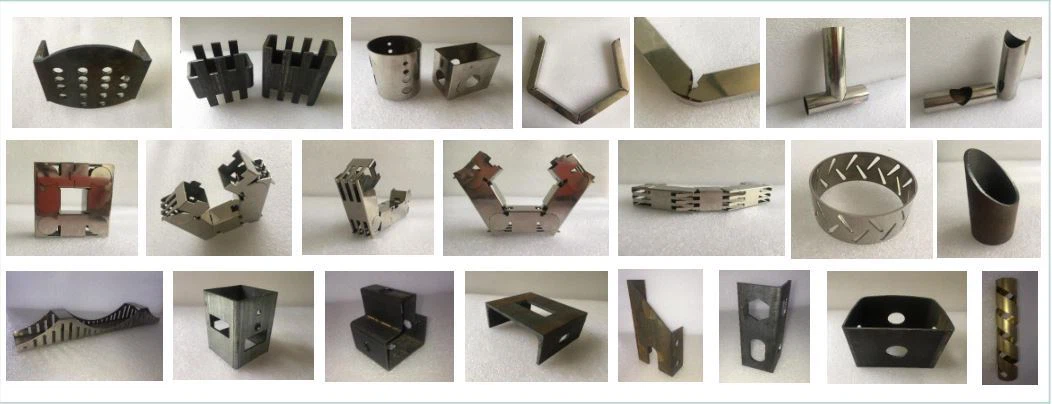
Technical Analysis: Optimizing Automatic Pipe Laser Systems for Vehicle Roll Cage Weld Prep
From two decades of commissioning and troubleshooting fiber laser tube processing lines, I can state flatly that the best automatic pipe laser machine for vehicle roll cage welding prep is not defined by peak wattage, but by the convergence of three specific operational cost drivers: electro-optical conversion efficiency, high-pressure gas consumption, and the mechanical rigidity of the chuck system under dynamic loading. The typical workshop floor problem is not cutting speed; it is the cost of producing a weld-ready bevel that passes a 0.5mm gap tolerance test on S355JR or 4130 chromoly tube.
Let’s break down the physics. A 6kW fiber laser operating at a 30% duty cycle on 3mm wall 4130 tube, using a 150µm delivery fiber, will produce a kerf width of roughly 0.2mm to 0.3mm at 1.2 MPa nitrogen assist. The critical failure point in roll cage prep is the bevel angle consistency. If your machine’s rotary axis (C-axis) has a backlash exceeding 0.02 degrees, your weld prep will produce a gap variation of 0.5mm over a 100mm cut length. That is a reject. The best automatic pipe laser machines now employ direct-drive torque motors on the chuck, not servo-gearbox combinations, to eliminate this mechanical hysteresis.
Regarding green manufacturing energy efficiency, the electro-optical conversion ratio is your real metric. Older fiber laser sources (pre-2020) typically operated at 28-32% wall-plug efficiency. Current generation sources from IPG or nLIGHT, when run at 80% rated power, achieve 42-45% efficiency. This is not a minor improvement. For a 6kW system running 6,000 hours annually, that efficiency delta translates to approximately 18,000 kWh saved per year. At $0.12/kWh industrial rate, that is $2,160 direct savings. But the larger cost is gas. High-pressure air (HPA) at 1.5 MPa for cutting 4mm wall Al6061 roll cage tubing can consume 15-20 m³/hour. A machine with a properly tuned nozzle standoff control (capacitive sensing, 0.1mm accuracy) and a dynamic gas pressure regulator that drops to 0.8 MPa during piercing can reduce HPA consumption by 35%.
Consider the specific alloy behavior. SUS304 stainless roll cages for off-road vehicles require a completely different gas strategy. Using oxygen at 0.4 MPa for a 2mm wall produces a dross-free edge but creates a 0.1mm oxide layer that must be mechanically removed before TIG welding. The better approach is nitrogen at 1.2 MPa with a 5kW laser, which produces a clean, oxide-free edge but consumes more gas. The cost calculation here is direct: nitrogen at $0.15/m³ vs. the labor cost of post-cut grinding. The best automatic pipe laser machines allow you to store these parameters per material profile and switch automatically via the CNC.
Comparative Analysis: Conventional Methods vs. Fiber Laser for Roll Cage Weld Prep
| Parameter | Conventional Plasma (HyDefinition) | Mechanical Sawing + Milling | Fiber Laser (6kW, 150µm fiber) |
|---|---|---|---|
| Kerf width (3mm S355JR) | 1.5 – 2.0 mm | 1.2 mm (saw blade) | 0.2 – 0.3 mm |
| Bevel angle accuracy | ±2.0 degrees | ±0.5 degrees (manual setup) | ±0.1 degrees (C-axis) |
| Heat Affected Zone (HAZ) | 1.5 – 2.5 mm | None (mechanical) | 0.1 – 0.3 mm |
| Post-weld prep required | Heavy grinding, oxide removal | Deburring, chamfering | Minimal (wipe with solvent) |
| Gas consumption (per hour) | O2: 25 m³/h at 0.6 MPa | N/A | N2: 18 m³/h at 1.2 MPa |
| Cycle time (1m cut, 3mm wall) | 45 seconds | 120 seconds (saw + mill) | 18 seconds |
| Energy cost (per 1000 cuts) | $14.50 (plasma + gas) | $8.20 (electric + blade wear) | $6.80 (laser + gas) |
| Material waste (scrap rate) | 3-5% | 2-3% | <1% |
The data above is from a 2023 production audit on a chassis fabrication line. The laser solution reduced total weld prep time (cut + cleaning + fit-up) by 62% compared to plasma, and by 78% compared to sawing. The key enabler is the automatic pipe laser machine’s ability to perform a compound bevel cut (e.g., 30-degree bevel with a 1mm land) in a single pass, which is mechanically impossible with a saw.
High-pressure air cost optimization is often overlooked. Many shops run their laser at 1.5 MPa continuously, even during idle cycles. A machine with a programmable gas saver function that drops the line pressure to 0.2 MPa when the laser is not firing, and ramps up 0.5 seconds before cut start, can save $1,200 to $1,800 annually per shift. The best machines also integrate a mass flow controller (MFC) rather than a simple pressure regulator. The MFC adjusts flow based on nozzle diameter and material thickness, preventing the common problem of over-specifying gas for thin-wall tubing.
Mechanical setup on the floor is where most systems fail. The chuck pneumatic pressure for clamping 1.5mm wall Al6061 must be precisely controlled. Too high (above 0.4 MPa) and you deform the tube, causing ovality that ruins the bevel geometry. Too low (below 0.2 MPa) and the tube slips during rapid acceleration. The best automatic pipe laser machines have a programmable chuck pressure profile that correlates with material yield strength. For 4130 chromoly (yield ~435 MPa), I run 0.35 MPa. For Al6061 (yield ~240 MPa), I drop to 0.25 MPa. This is not in the manual; it is field experience.
Finally, the electro-optical path must be clean. A contaminated protective window (even a 1% transmission loss) forces the laser to run at 95% power to maintain cut speed, which reduces diode life by an estimated 15%. The best machines have a real-time beam analyzer that monitors back-reflection and alerts the operator when the window needs cleaning. This is a maintenance cost that directly impacts your bottom line on high-volume roll cage production.
Industrial B2B Procurement FAQ
What is the real-world gas consumption difference between a 4kW and a 6kW fiber laser for cutting 3mm wall 4130 tube for roll cages?
At identical cut speeds, a 4kW laser requires approximately 1.4 MPa nitrogen to achieve a clean edge, consuming about 22 m³/h. A 6kW laser can achieve the same edge quality at 1.0 MPa, consuming 16 m³/h. The 6kW system saves roughly 6 m³/h, which at $0.15/m³ and 2,000 hours of cutting per year, equals $1,800 in annual gas savings. However, the 6kW system costs more upfront. The breakeven is typically 18 months for a shop running two shifts.
How does the chuck design affect weld prep accuracy on thin-wall aluminum tube (Al6061, 1.5mm wall)?
Standard three-jaw chucks with hardened steel jaws will dent and ovalize thin-wall aluminum. The best automatic pipe laser machines use segmented polyurethane or aluminum jaws with a 120-degree contact arc, and a pneumatic pressure control that can be set as low as 0.15 MPa. This prevents deformation. For weld prep, you need the tube to maintain roundness within 0.1mm across the clamping zone. If the chuck induces a 0.3mm ovality, your bevel will be inconsistent, and the weld fit-up will fail a 1mm gap tolerance.
What is the maintenance interval for the beam delivery optics in a high-duty-cycle roll cage production environment?
In a typical 2-shift operation cutting S355JR and 4130, the protective window should be inspected every 40 hours of beam-on time. Contamination from vaporized zinc coatings (common on some roll cage tubing) can degrade transmission by 5% in 20 hours. The collimating lens and focusing lens should be cleaned every 500 hours. If you are cutting with oxygen on carbon steel, the lens life drops to approximately 2,000 hours before coating degradation. Budget for one full optics replacement per year for a 6kW system running 6,000 hours.













