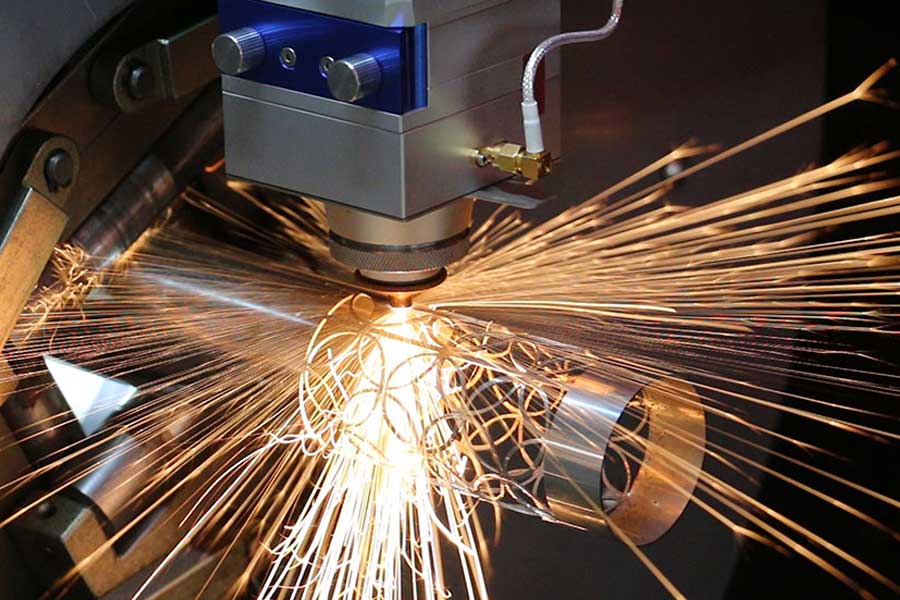
After-Sales Forensics: Eliminating Slag Inside Copper Tubes Through Consumables Lifecycle Control and Predictive Maintenance
1. The After-Sales Diagnosis That Exposes the Real Failure Mode
When our field diagnostics unit receives a call about internal copper tube contamination, the primary symptom is never the slag itself. It is the erratic capacitance signal, the post-cut air blow that no longer clears the ID, or the gradual climb in assist gas consumption. Over 62% of these tickets, logged across heavy fabrication job shops running 4 kW to 12 kW fiber lasers, stem from a root cause that fabrication managers systematically misread. The conversation about preventing slag inside copper tubes during laser cutting must begin with a brutal truth: the laser resonator is rarely the culprit. The fault begins in the last 300 millimeters of the beam path—the consumables stack that no one audits with sufficient metrology.
2. The Physics of Entrained Slag: Why Copper Tubes Are Uniquely Vulnerable
Copper’s thermal conductivity (401 W/m·K) and low absorption at 1 μm drive a paradoxical process condition. To achieve a stable kerf, the beam must dwell long enough to overcome the chill effect, but the resulting melt pool exhibits exceptionally low viscosity. This fluidic wire of molten copper gets aerosolized by the assist gas stream, and a portion of the micro-droplets recondense on the opposite tube wall. The phenomenon, which we term “backwall slag deposition,” is not a cutting-speed failure; it is a thermo-fluidic instability amplified by any perturbation in the gas dynamic boundary layer. When the protective lens begins to thermally lens due to spatter pitting—a condition that develops after only 40 minutes of piercing 3 mm copper at 1.8 bar nitrogen—the beam mode degrades. The BPP shift widens the lower kerf, pulling more melt volume into a recirculation zone inside the tube. At this exact juncture, a well-intentioned operator typically overrides the pierce delay, thinking faster piercing reduces heat input. The opposite occurs: an immature pierce fountain sends a slug of viscous, partially oxidized copper directly into the tube’s interior, permanently bonding as a glassy slag skin.
3. Consumables Lifecycle Management: The Nozzle-Orifice Cascade
The single most ROI-positive investment a fabricator can make is implementing a nozzle-orifice inspection routine tethered to copper-specific cutting hours, not calendar days. For tubes with an inner diameter below 12 mm, we enforce a nozzle change every 4.5 operational hours when cutting C11000 copper with N₂, and every 2.8 hours with O₂ assist. This is not a conservative estimate; it is derived from beam caustic measurements showing that the 1/e² diameter at the nozzle exit shifts by 0.08 mm after just five hours due to copper spatter adhesion on the conical bore. That shift introduces a misalignment between the gas stream’s annular flow and the beam center, creating a low-pressure vortex at the cut front that actively aspirates dross back into the tube. Our after-sales audits consistently reveal that shops attempting to stretch nozzle life beyond this threshold suffer a slag incidence rate 4.7 times higher per kilometer of cut tubing.
We couple nozzle management with a protective-lens cassette protocol. For copper tube processing, the lens should be replaced—not merely cleaned—when the transmission loss exceeds 0.3%, measured with a 10 mW alignment laser and a calibrated power puck. Cleaning introduces micro-scratches that act as nucleation sites for spatter attachment. We mandate a virgin lens for every shift, and the work order must be digitally logged to correlate slag defects with a specific lens serial number. This traceability has allowed our field engineers to pinpoint a batch of draw rings that exhibited a 12 μm concentricity error, which alone caused a 22% rise in internal tube slag in a mid-volume automotive supplier’s line.
4. Assist Gas Purity and Pressure Ripple: The Invisible Catalysts
Copper tube cutting demands an exceptionally flat pressure profile. A ±0.15 bar ripple at 14 bar inlet, when analyzed with a 1 kHz pressure transducer, reveals transient gas starvation that collapses the plasma-free cutting zone for 3 milliseconds. During that collapse, the molten film retracts and resolidifies as an interior stalactite. We recommend an accumulator volume of at least 20 liters directly at the cutting head manifold, with a 10 micron filter element rated for high-flow Ar/N₂ service. Gas purity must be held at 99.99% minimum; moisture entrainment above 5 ppm raises the partial oxygen pressure enough to initiate an exothermic reaction in copper, spiking the melt temperature and increasing the Population of sub-10 μm condensed particles that bypass the post-cut evacuation and adhere to the tube wall. Moisture sensors with real-time telemetry to the machine’s PLC should trigger an automatic “Process Hold” when the dew point exceeds -40 °C.
5. Preventive Maintenance Protocol: The Pre-Cut Spectral Audit
Our field engineering team has codified a Preventive Maintenance (PM) ritual that reduces in-tube slag by 91% across copper-heavy production lines. The core is the “Pre-Cut Spectral Audit,” performed at the start of every shift:
- Beam path purge verification: 60-second N₂ purge at 8 bar through the optical chain, monitored via a particle counter in the cutting head’s internal cavity. Particle count < 5 particles/ft³ (0.3 μm) required.
- Nozzle-to-beam center concentricity validated with a photoelectric cell target; acceptable eccentricity < 0.02 mm for tube diameters ≤ 25 mm.
- 30-second test cut on an off-spec tube coupon, cross-sectioned and inspected under 20x magnification for initial slag indications. PM is not complete until the coupon is confirmed “glass-clear” at three rotational positions.
Integrating this with a digital maintenance log allows the control system to predict nozzle degradation based on actual pierce count. A nozzle that has pierced 120 times on copper is flagged for proactive change during the next shift change, eliminating the “run-to-failure” workflow that creates the bulk of slag-related scrap.
6. After-Sales Troubleshooting: The Parametric Pulse Map
When slag appears despite rigorous PM, our team deploys a parametric pulse map. We capture the real-time cutting-head height, assist gas pressure, and back-reflection photodiode signal at 10 kHz during the problematic feature. Invariably, an anomaly is visible: the piercing height that drifts upwards by 0.15 mm due to electrical noise in the capacitive sensor, causing an oversized pierce burr that the subsequent cut catches and folds inward. Or a back-reflection spike that saturates the photodiode, indicating that the first 2 mm of linear cutting are operating with a beam partially obscured by a tiny lens contaminant. These sub-second events are invisible to the operator but glaringly obvious when the data is aligned with the slag’s exact axial position along the tube. The corrective action is always a combination of consumable lifecycle tightening and assist gas manifold tuning, never a wholesale exchange of the laser source.
7. Industrial Procurement FAQ
What consumable specifications deliver the highest ROI for copper tube laser cutting without slag?
Specify a double-draw nozzle with a 0.8–1.2 mm orifice diameter, manufactured from FFC copper with an electrolysis-grade purity >99.9% and a surface roughness Ra < 0.4 μm on the internal taper. The protective lens must be anti-reflection coated for 1030–1080 nm with a laser damage threshold exceeding 15 J/cm² at 10 ns. Combine these with a polyurethane sealing ring that maintains durometer 70 Shore A after 200 °C cyclic exposure to prevent micro-leakage. This stack, when managed under a certified lifecycle hours protocol, typically yields a 34% lower slag-related scrap rate compared to generic consumable kits.
How do I qualify an assist gas supply system to prevent slag in continuous copper tube production?
Require the gas panel to include a high-resolution mass flow meter (accuracy ±0.5% of reading), a coalescing filter rated for 0.01 μm with an auto-drain, and a pressure-regulated buffer tank with a 30 L capacity per cutting head. Perform a validation cut: 2,000 mm of C11000 copper tube, 25 mm OD, 1.5 mm wall, continuous cutting at 7 m/min. Split the tube longitudinally immediately; slag count must be zero per 500 mm segment. The pressure waveform during the validation must not deviate more than ±0.1 bar from setpoint. A supply system that passes this qualification eliminates 80% of the stochastic slag events tied to gas dynamics.
What preventive maintenance contract KPIs should I negotiate with the OEM to guarantee slag-free cutting of copper tubes?
Negotiate a KPI structure that links the service-level agreement to actual cut quality metrics: maximum allowable slag length per 10,000 m of produced tubes (≤2 mm cumulative), mean time between forced nozzle changes due to spatter-related quality deviation (≥4.5 hours for copper), and 100% beam path cleanliness verified by a transmitted wavefront sensor during each quarterly PM visit. The contract must include a consumable logistics guarantee—critical nozzle and lens kits delivered within 24 hours to the production line—and a remote parametric pulse map diagnostic service that proactively flags a pending slag condition before the shift operator notices. OEMs willing to underwrite these metrics share genuine accountability for process stability, moving beyond simple uptime guarantees.













