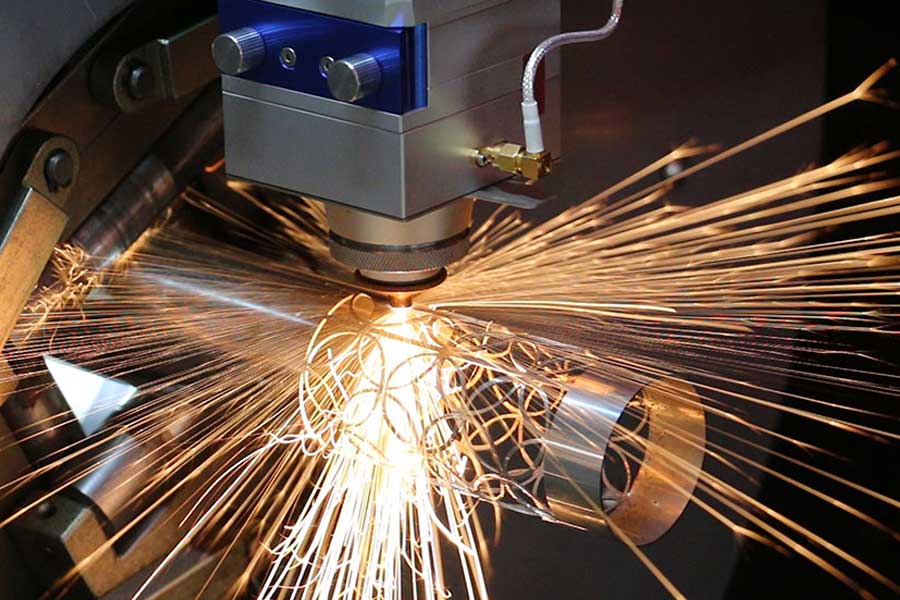
Micro Diameter Stainless Steel Tube Laser Cutting for Endoscopes: Compliance-Driven Precision Engineering
Flexible video endoscopes depend on an array of micro diameter stainless steel tubes for biopsy channels, fluid irrigation lumens, and articulation wire guides. Achieving a sub‑30 µm incision in thin‑wall 304L stainless without heat‑affected zone (HAZ) distortion requires a machine platform where the micro diameter stainless steel tube laser cutting for endoscopes process is fully embedded in a compliance‑verified structural architecture. The intersection of ultra‑fine beam delivery, real‑time focus compensation, and a metallurgically sound process window separates production‑grade systems from laboratory curiosities.
In 316LVM tubing with 0.5 mm OD and 0.07 mm wall, a single‑mode fiber laser at 1070 nm, fitted with a 2× beam expander and a 35 mm focal length cutting head, consistently produces a kerf width of 0.065 mm. Maintaining that precision over a 400‑mm tube length demands a machine frame that exhibits static stiffness above 80 N/µm and dynamic damping that suppresses resonant modes to below 1 % of structural displacement. These are not abstract design targets; they are prerequisites for delivering a Cpk of 1.67 on the finished slot width and angular tolerance, as required by endoscope OEM validation protocols.
Global Manufacturing Compliance and EN 1090 Structural Standards
While EN 1090‑2 is normally associated with construction‑grade steelwork, its mandatory execution classes become the benchmark for laser cutting machine structures destined for medical component manufacturing. A machine gantry fabricated from stress‑relieved S355JR structural steel and welded according to ISO 3834‑2, then certified to EN 1090‑2:2018, guarantees that the geometric frame of the cutting system does not introduce uncontrolled drift or micro‑yaw. During high‑frequency contouring of a 0.3 mm OD‑hypodermic tube, the tool‑center‑point deviation is held to less than 5 µm, which is unattainable without a frame that has undergone dimensional verification to DIN EN ISO 13920‑BF. This structural pedigree allows the endoscope component manufacturer to anchor its process qualification inside a recognised conformity assessment framework, notably the EU Machinery Directive 2006/42/EC and its essential health and safety requirements.
In practice, an EN 1090‑compliant machine base integrates vibration‑isolating leveling wedges that decouple the cutting module from floor‑borne noise. Combined with a heavy‑mass granite‑polymer composite sub‑structure acting as a secondary damping layer, the resultant amplitude at the workpiece clamping zone drops below 0.2 µm at 50 Hz. This mechanical fidelity is directly documented in the Declaration of Performance, a document that medical device material review boards can cross‑reference against ISO 13485:2016 control of monitoring and measuring equipment, accelerating both initial supplier qualification and subsequent surveillance audits.
Process Window Development for Micro Tube Integrity
Cutting thin‑wall stainless with a focused fiber laser requires more than power and speed. The process window is defined by three variables: assist gas pressure, pulse‑overlap percentage, and focal‑plane offset relative to the tube’s neutral axis. For 304L tubes with 0.1 mm wall thickness, a 200‑W average power, 5‑kHz pulse repetition rate, and nitrogen assist at 14 bar delivered through a 0.25‑mm nozzle produce a dross‑free edge with an oxide layer measured by XPS below 15 nm. When the focal point is deliberately shifted 0.03 mm inside the material, the cutting front stabilises and eliminates the recast layer that typically triggers intergranular corrosion in autoclave sterilisation cycles.
Thermal management dictates that the cutting sequence alternates between diametrically opposite positions, preventing asymmetric heat build‑up that can warp an 80‑µm‑wall tube by more than 10 µm. Active closed‑loop regulation of the assist gas flow—using a high‑precision mass flow controller with a 50‑ms response time—compensates for pressure drop across the long, narrow lumen of the workpiece, ensuring a consistent cutting front velocity of 18 mm/s regardless of the remaining tube length. This control architecture suppresses the formation of burrs below 3 µm, verified by 3D confocal profilometry on the intrados of the cut edge.
Certification Readiness and Supply Chain Integration
Procuring a laser tube cutting cell that can deliver documented process capability transforms the endoscope manufacturer’s regulatory posture. The raw tube vendor’s material certification (EN 10204 3.1) must align with the laser machine’s traceability matrix. Every cut parameter—pulse energy, frequency, gas pressure, assist purity, and coordinate offsets—is logged in a non‑editable audit trail with time‑stamp resolution of 1 µs. This data, when combined with post‑cut inspection reports (laser micrometer, roundness tester, and eddy‑current crack detection), builds a full device history record that satisfies FDA 21 CFR Part 820 and ISO 13485 Clause 7.5.6.
Suppliers that offer pre‑validated OQ protocols aligned with GAMP 5 eliminate months of in‑house development. Specifically, an Operational Qualification package that references ASTM F899 for surgical stainless and includes a designed‑experiment analysis of cut quality versus tube runout (down to ±3 µm) provides the statistical backbone for the endoscope OEM’s process validation master plan. The installation qualification further cross‑links the machine’s EN 1090‑2 structural declaration and laser power calibration certificate (traceable to NIST or PTB), ensuring that the entire system is audit‑ready from day one.
Industrial Procurement FAQ
1. What laser cutting machine specifications ensure burr‑free cutting of 0.3 mm OD stainless steel hypodermic tubes for endoscopes?
A turnkey system must integrate a single‑mode fiber laser with a beam‑quality factor M² < 1.1, motorised focus adjustment responsive to tube curvature, and a linear‑motor tube support with radial runout below 5 µm. Active assist‑gas control delivering high‑purity nitrogen at 12–16 bar through a 0.2–0.3 mm nozzle orifice is essential to expel molten material without oxidation. The CNC controller should execute adaptive corner deceleration and store pulse‑overlap parameters that keep the HAZ within 0.01 mm, confirmed by micro‑hardness profiles showing a hardness deviation of less than 15 HV from the base metal.
2. How does EN 1090 certification of the tube laser machine frame impact compliance for endoscope component manufacturing?
EN 1090‑2 certification provides documented evidence that the machine’s steel structure—gantry, column, and base—has been fabricated, welded, and dimensionally verified to strict engineering tolerances under an accredited factory production control system. This structural integrity directly influences beam pointing stability under high‑acceleration contouring, preventing resonant vibration that degrades cut quality. For regulatory audits, the Declaration of Performance aligns with the Machinery Directive’s essential health and safety requirements and simplifies integration into an ISO 13485 quality management system, because the structural performance characteristics are traceable and repeatable.
3. What documentation and validation protocols should I request from the equipment supplier to meet ISO 13485 traceability requirements?
Require a full Installation Qualification (IQ) binder containing the EN 1090‑2 Declaration of Performance, laser power calibration certificates traceable to national standards, and an as‑built bill of materials with raw material certs (EN 10204‑3.1) for all structural and process‑contact components. The Operational Qualification (OQ) package must include a designed‑experiment report correlating process parameters with cut quality metrics, a software validation traceability matrix per GAMP 5, and test logs demonstrating 24‑hour dry‑cycle repeatability. Additionally, demand a machine‑embedded audit trail that records all cutting parameters in a tamper‑proof SQL database, capable of exporting reports compliant with 21 CFR Part 11 for electronic signatures when interfaced with the manufacturer’s MES.













