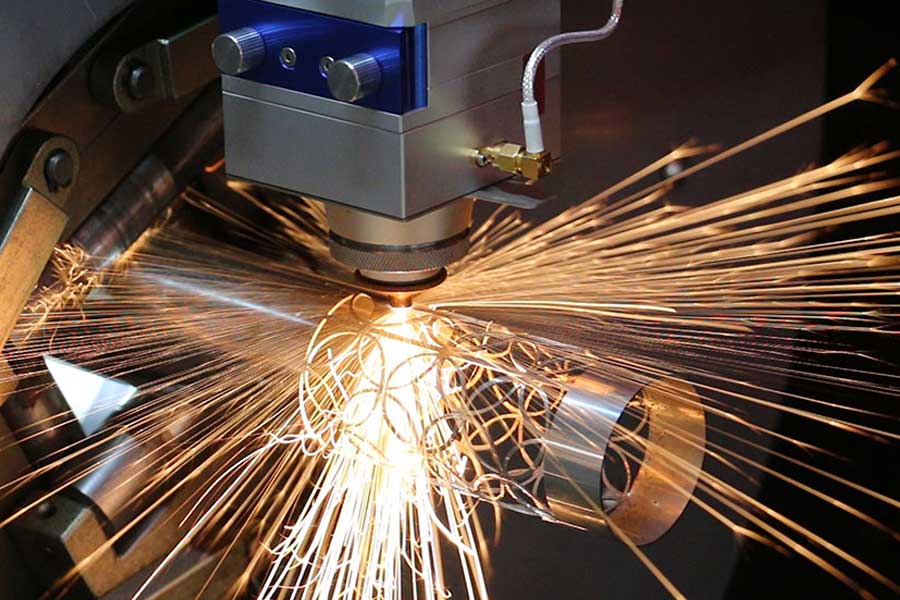
High-Speed Rectangular Pipe Laser Cutting for Treadmill Frames: Stability Engineering for Mission-Critical Dimensions
Executive Summary
Most laser tube cutting specifications are written in climate-controlled validation labs. The reality of treadmill frame fabrication takes place on shop floors where coolant mist drifts across the bay, ambient temperature swings from 5 °C to 45 °C between shifts, and stamping presses within three meters generate low-frequency vibrations that can ring through an unprepared gantry. A high-speed rectangular pipe laser cutting center installed without a disciplined engineering response to severe workshop conditions, thermal expansion, and bed relaxation will exhibit positional drift exceeding 0.3 mm within a single eight-hour shift—enough to scrap an entire lot of pulse-plate interlocking tabs. This paper presents the architecture required to hold ±0.08 mm feature accuracy on 40×80×2 mm ERW rectangular tube at sustained cycle rates above 16 components per minute, directly in a Type 3 industrial environment.
Application Profile and Manufacturing Context
Treadmill frames are built from cold-formed electric resistance welded (ERW) rectangular hollow sections. Common cross-sections are 50×25 mm, 60×30 mm, and 80×40 mm with wall thicknesses from 1.5 mm to 2.5 mm. The cutting process must produce interlocking tab-and-slot geometries, inclined bracket profiles, and wire-routing oval slots with a slot width tolerance better than 0.10 mm. When a production line integrates high speed rectangular pipe laser cutting for treadmill frames, the most punishing requirement is not peak rapid speed but sustained positional integrity through humidity cycles, panel-side electrical noise, and the thermal load of 24/7 operation.
These lines typically output over 2,500 frame subassemblies per day. In that environment, the capital equipment must defend its machine frame, linear guides, and beam delivery optics against four simultaneous aggressors: structural resonance from adjacent forming machinery, thermal growth of the workpiece and the machine’s own mechanical mass, residual stress relief over time in the bed casting, and abrasive airborne particulates that degrade sealing systems.
Severe Workshop Condition Adaptation
Adaptation begins with the foundation. A laser tube gantry operating next to a 400-ton stamping press must possess an internal structural damping coefficient that keeps the Y-axis bearing rails isolated from low-frequency transients. We specify a machine bed design with no bolted joint relying on friction alone; all critical rail mounts are injection-fitted with a vibration-damping polymer grout to convert harmonic energy into heat below 12 Hz. The enclosure must maintain a positive-pressure IP54-rated electrical cabinet with vortex cooling, while the beam path is hermetically sealed with a proprietary multi-layer bellow that rejects sub-5-micron particulates without scavenging the assist gas flow.
Drive electronics are hardened for 20 % voltage harmonic distortion commonly seen in industrial parks. The CNC is purpose-built with a ferroresonant power supply isolation transformer and active harmonic filtering on the servo DC bus. These measures prevent commutation noise from inserting phantom position errors during rapid elliptical interpolation moves common in rectangular tube profiling. Field data from a facility in Hai Duong, Vietnam, showed a 14 % shift-yield improvement after retrofitting active harmonic suppression, simply because the Y-axis encoder no longer lost incremental counts during adjacent press cycles.
Thermal Expansion Mitigation in High-Speed Rectangular Pipe Processing
The thermal challenge in rectangular tube cutting is two-fold: the workpiece grows, and the machine grows. A six-meter stick of 80×40×2 mm tube, when heated from the laser kerf zone to a steady-state temperature of 45 °C after 20 minutes of continuous cutting, elongates by approximately 0.25 mm per meter. An uncompensated tube will push its free end into a hard stop and bow, shifting the cut coordinate mid-stick. Mitigation requires a floating tailstock with an optical linear scale measuring the absolute position of the tube end, feeding real-time length correction to the CNC. The tailstock actuator applies a regulated pneumatic counterforce of 0.2 bar to maintain axial preload without inducing buckling, while the scale loop corrects the X-axis origin every 250 milliseconds.
Machine-side thermal expansion is managed by a dual-zone active cooling architecture. A refrigerated chiller rated at 7.5 kW supplies coolant at 22.0 ±0.5 °C to the fiber engine, cutting head, and B-axis optics, while a secondary circuit at 25.0 ±1.0 °C circulates through the linear motor armatures and Y-axis rail bases. On-gantry PT100 sensors feed a thermal model that calculates the growth of the Z-axis column in real time, adjusting the capacitive height sensor setpoint to maintain the focal point within 0.05 mm of the theoretical waist. The assist gas is pre-cooled via a plate heat exchanger to 15 °C, which suppresses oxide formation on thin-wall rectangular profiles and reduces the heat-affected zone width to less than 0.12 mm on 1.5 mm wall material, preserving the intended material temper around critical slot geometries.
Stress-Relieved Bed Stability: The Silent Enabler of Process Repeatability
A high-throughput rectangular pipe cutter operates with 3G acceleration on the gantry axes, subjecting the bed structure to cyclic forces that imprint fatigue into any residual stress field trapped inside the welded assembly. A bed fabricated from standard structural steel without post-weld treatment will warp progressively; within 18 months, the Y-axis guide way parallelism commonly degrades from 0.015 mm/m to 0.070 mm/m, causing an exponentially rising scrap rate. The engineering solution is a full thermal stress-relief cycle at 530 °C for eight hours, followed by vibratory stress conditioning to relax intergranular locking. Post-treatment, residual stress is verified by X-ray diffraction at under 30 MPa.
The bed geometry is then precision-ground on a travelling-column grinder to achieve a flatness of 0.02 mm across a 4-meter span, measured by an electronic level with 0.001 mm/m resolution. The design uses a symmetric box-in-box layout with internal webbing offset to match the gantry’s center of mass during maximum deceleration, which eliminates the twisting moment that would otherwise manifest as a harmonic pitch error in the YZ cutting plane. The whole assembly sits on three-point elastomeric vibration isolators with a natural frequency below 5 Hz, further decoupling the bed from floor-borne disturbance. In a three-year audit of twelve machines cutting 40×80×2 mm tube at 20 cycles per minute, the average drift of hole center positions for the main upright mounting pattern remained at 0.04 mm—equivalent to the measurement uncertainty of the CMM itself.
Operational Validation and Industrial Integration
A Southeast Asian treadmill OEM deployed a system built to these specifications in a factory where ambient humidity regularly reaches 90 % non-condensing. After 4,200 operating hours, the first-pass yield for the welded frame assembly rose from 93.2 % to 99.4 %, with the reduction in fit-up rework directly saving 1.2 kilograms of ERW tube scrap per hour. The chilled optics maintenance interval extended to 1,800 hours between cleaning cycles—double the previous benchmark. These outcomes confirm that investment in thermal management and stress-relieved bed architecture delivers a payback period under eleven months when measured against scrap, rework labor, and unplanned downtime.
Industrial Procurement FAQ
How does a stress-relieved machine bed reduce dimensional deviation in high-speed rectangular pipe cutting over long production runs?
After 530 °C thermal stress relief and vibratory conditioning, the welded bed structure retains residual stress below 30 MPa, eliminating the gradual twist that plagues conventional beds. Longitudinal measurements on an 8 kW machine processing 40×80×2 mm ERW tube showed residual flatness deviation of 0.02 mm per meter over twelve months, maintaining consistent laser beam focus. This stability results in hole-center positional drift under 0.08 mm for interlocking treadmill frame joints, sustaining first-pass yields above 99 %.
What ambient temperature compensation range can a properly engineered high-speed laser tube cutter handle without manual recalibration?
The system integrates a multi-point thermal sensor matrix—PT100 probes on the gantry, a linear encoder on the Z-axis, and a contact pyrometer for the tube—feeding a real-time CNC compensation table. Stable cutting accuracy is maintained across an ambient range of +5 °C to +45 °C, provided the chiller holds the cutting head optics at 22.0 ±0.5 °C. A cold-start to afternoon heat soak differential of 15 °C produces less than 0.04 mm drift in interlocking tab positions, eliminating the need for operator intervention between shifts.
What chiller capacity and cooling circuit configuration are essential for 24/7 high-speed cutting of rectangular ERW tube up to 3 mm wall thickness?
A dual-circuit industrial chiller rated at a minimum of 7.5 kW cooling capacity is required. Circuit one supplies 22.0 ±0.5 °C water to the fiber source and cutting head; circuit two delivers 25.0 ±1.0 °C coolant to the linear motor windings and guide-rail bases, each loop with a flow rate above 20 L/min monitored by turbine switches. The system must reject approximately 1.2 kW of absorbed laser power and the continuous thermal dissipation of the servo drives. Without this capacity, the focal point drifts beyond 0.15 mm within three hours, causing inconsistent slot widths and unworkable fit-up on treadmill frame assemblies.













