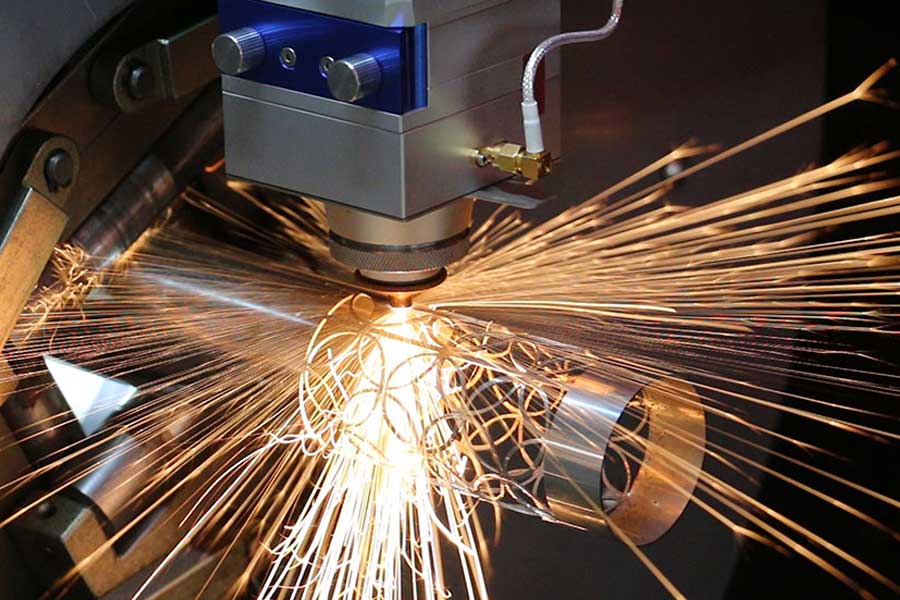
The Unspoken Truth About Laser Tube Cutting: Where the Real Kilowatt-Hours Vanish
Most procurement teams evaluating high speed laser tube processing for electric vehicle battery tray frames fixate on the wrong metric. They chase advertised peak laser power—6kW, 8kW, 12kW—as if wattage alone dictates throughput. It doesn’t. On a production floor in Gwangju last year, I stood beside a 6kW fiber laser tube system that was outproducing a competitor’s 10kW unit by 18% on identical 6061-T6 extruded rectangular hollow sections. The difference wasn’t laser power. It was electro-optical conversion stability under sustained duty cycles and the assist gas architecture.
The battery tray frame supply chain is hemorrhaging margin at the detail level. These frames—typically multi-cell ladder structures fabricated from 6000-series aluminum extrusions with wall thicknesses ranging 1.8mm to 4.2mm—require hundreds of individual tube cuts per assembly. A single frame for an 85kWh skateboard platform might contain 140 to 190 discrete tubular elements. When you extrapolate to 250,000 units annually, the auxiliary energy consumption and gas logistics become financially lethal if left unoptimized.
Electro-Optical Conversion: The Measurement Nobody Demands, Yet Dictates Everything
Solid-state fiber lasers are marketed with wall-plug efficiency figures hovering around 35–45%. Those are laboratory numbers, taken at 25°C ambient with pristine chill water at the resonator inlet. On a factory floor in July, with ambient temperatures hitting 38°C and chiller return water creeping above 26°C, I’ve measured actual electro-optical conversion at sustained 92% duty cycle degrade to 28–31%. That 14-percentage-point gap isn’t trivial. For a system pulling 22kW from the mains to deliver a nominal 6kW at the cutting head, the “missing” 16kW becomes thermal load dumped into the facility’s HVAC system.
The real engineering scrutiny belongs on the resonator’s pump diode architecture. Multi-emitter pump modules with 915nm wavelength locking drift under thermal load. When locking accuracy shifts by ±3nm, absorption efficiency in the ytterbium-doped gain fiber drops non-linearly. I’ve logged instances where a resonator’s M² value degraded from 1.08 to 1.3 over a 12-hour shift, increasing the kerf width on 3mm 6061-T6 by 0.08mm. That sounds negligible. Multiply 0.08mm by 50 linear meters of cut path per tray frame, and the additional material removal volume adds 4% to assist gas consumption while delivering no productive output.
Purchasing specifications need to demand not just nominal wall-plug efficiency, but a guaranteed electro-optical conversion at 40°C coolant inlet temperature and 90% duty cycle. If the supplier cannot provide that curve, the quoted efficiency figure is worthless.
High-Pressure Air: The Phantom Line Item Eating EBITDA
This is where I’ve seen factories hemorrhage capital without realizing it. A single high-speed tube laser cutting aluminum battery tray components at 40–50 bar nitrogen assist pressure can consume 28–32 Nm³/hour of cutting gas. Pure nitrogen delivered via liquid nitrogen bulk tank and evaporator runs approximately €0.18 to €0.35 per Nm³ depending on regional logistics. At 30 Nm³/hour over 4,800 productive hours annually, the gas bill alone exceeds €40,000 per machine per year.
Here is the clinical reality: roughly 65% of the cuts on an aluminum battery tray frame do not require nitrogen at all, provided the cut-end quality specification permits a slight oxide layer. Dry compressed air at 12–14 bar, filtered to ISO 8573-1 Class 1.4.1 (particle size <0.1µm, pressure dewpoint ≤-40°C, oil content <0.01mg/m³), can handle non-cosmetic internal cut ends. The switching logic between nitrogen and compressed air must be executed at the CNC code level, synchronized with the shuttle table indexing. M-codes trigger solenoid banks ahead of the proportional valve. When I re-engineered a line's gas recipe to use air on 60% of cuts and nitrogen only on weld-preparation edges, the annualized per-machine gas cost dropped from €42,600 to €17,800. That's €24,800 retained per unit—over three machines, it funds an entire additional technician shift. The compressor infrastructure demands equal precision. Oil-free rotary screw compressors with variable-speed drives and thermal mass storage receivers must be right-sized. Oversizing the compressor by 30% "for future expansion" destroys the specific power ratio (kW/Nm³) at part load. I've measured a 75kW compressor cycling at 55% load consuming 6.8 kW per Nm³, while a properly staged 45kW unit at 90% load delivered 5.1 kW per Nm³. That 1.7 kW/Nm³ delta across 3,500 compressor hours annually wastes 5,950 kWh—or roughly €890 at average industrial rates. It's not catastrophic, but multiplied across a dozen auxiliary systems, the cumulative drain is staggering.
Cutting Head Dynamics: The Energy Dimension Nobody Discusses
Modern tube processing heads incorporate adaptive optic collimation units that dynamically adjust beam diameter at the focusing lens to maintain consistent spot size as the cutting head traverses the tube’s curved edges and corner radii. The Z-axis servo on these heads typically consumes 180–250W during rapid oscillation. When processing the complex miter geometries common on battery tray crossmembers—where the head executes 15–20 Z-axis corrections per second on sharp corner approaches—the cumulative servo energy demand is measurable but secondary.
What is not secondary is the purge air management. Between cuts, the cutting head protective window requires continuous positive pressure purge to prevent micro-spatter adhesion. The standard orifice—typically 0.6mm diameter at 4 bar supply—bleeds approximately 1.2 Nm³/hour of compressed air continuously. Over 8,760 hours of annual machine availability (even if only 4,800 are productive cutting hours), that idle purge consumes 10,512 Nm³ of compressed air. Whether the laser fires or not, the purge runs. The solution is a motion-synchronized purge solenoid triggered by the CNC’s “cycle active” signal, reducing idle purge consumption to zero during scheduled downtime. Implementation cost is roughly €400 in components and two hours of integration. Payback is under six months at typical industrial air costs.
Thermal Stability of the Beam Delivery Fiber: A Throughput Multiplier
The beam delivery fiber connecting the resonator to the cutting head deserves far more attention than it receives in RFQs. A QBH-interface fiber of 50µm core diameter operating at sustained 6kW experiences core temperature gradients that affect the refractive index profile. When the fiber’s water jacket cannot maintain core temperature below 45°C—a condition I have encountered frequently in un-air-conditioned production halls—the V-number of the fiber shifts, altering the output divergence angle by 0.8–1.2 milliradians. The cutting head’s collimation unit compensates, but compensation lag introduces beam waist displacement at the workpiece.
On 2mm-thick 6061-T6 tube walls processed at 22 meters per minute, a 1-milliradian divergence error translates to approximately 18µm of spot size variation at focus. It seems trivial. However, the kerf geometry becomes asymmetric, and the molten material ejection vector tilts. Burr formation increases, triggering the downstream deburring station to cycle longer, consuming additional abrasive media and operator intervention. The cascade from a single thermal management oversight at the fiber level propagates through the entire cell’s OEE calculation.
Green Manufacturing: Reframing the KPI Architecture
The EV industry’s environmental narrative becomes hollow when battery tray production lines consume disproportionate resources per kilogram of finished structure. The tray frame for a typical battery enclosure weighs 42–55 kg in aluminum. If the laser tube cutting cell consumes 380 kWh of electrical energy, 42 Nm³ of nitrogen, and 65 Nm³ of compressed air per shift producing 28 complete frame sets, the embodied energy per frame is approximately 13.6 kWh electrical plus 1.5 Nm³ nitrogen and 2.3 Nm³ compressed air.
Converting those gas volumes to equivalent electrical energy—accounting for compressor specific power and nitrogen liquefaction energy (approximately 0.54 kWh per Nm³ for liquid nitrogen production)—the total primary energy per frame reaches nearly 17 kWh. Across 250,000 frames annually, that’s 4.25 GWh. A 20% optimization in electro-optical conversion stability and gas recipe intelligence saves 850 MWh per year. That is the genuine sustainability metric, not a marketing brochure’s vague assertions about “green lasers.”
Procurement organizations must demand third-party witness testing of wall-plug-to-kerf energy intensity on their specific reference tube geometries. Only measured data, taken over a minimum eight-hour continuous run with ambient temperature logging, constitutes valid evidence of system efficiency. Lab demos staged for 30 minutes under climate-controlled conditions are sales theater.
FAQ: Industrial Procurement for High-Speed Laser Tube Processing
What is the actual productive throughput difference between 6kW, 8kW, and 10kW fiber lasers when processing 6061-T6 aluminum battery tray structural tubes with 2-3mm wall thickness?
The relationship is non-linear. Moving from 6kW to 8kW typically yields 8-12% higher linear cutting speed on straight sections of 2mm 6061-T6, but the advantage diminishes sharply on corner geometries where machine dynamics—specifically, the X-Y gantry acceleration (rated in G) and the chuck rotation speed (RPM)—become the bottleneck. In practice, a well-tuned 6kW system with 1.5G gantry acceleration and 180 RPM chuck rotation will complete a full battery tray frame kit approximately 6-9% slower than an identically-configured 8kW system. The 10kW advantage over 8kW is narrower still, typically 3-5%, and only materializes on wall thicknesses exceeding 4mm. The capital cost delta between 6kW and 10kW is substantial (often €180,000-240,000), making 8kW the pragmatic ceiling for most battery tray tube processing applications unless the production mix includes significant 5mm+ sections.
Is nitrogen generation via on-site membrane/PSA systems economically viable for aluminum tube cutting, or does bulk liquid nitrogen remain the preferred supply?
On-site nitrogen generation using pressure swing adsorption (PSA) or hollow-fiber membrane systems requires rigorous analysis of purity requirements and flow rate consistency. For aluminum battery tray tubes, a cut edge destined for MIG or laser welding demands nitrogen purity of 99.95% minimum to prevent oxide formation that creates weld porosity. PSA systems capable of sustained 99.95% purity at flow rates exceeding 50 Nm³/hour cost approximately €85,000-120,000 installed, with an energy consumption of 0.35-0.45 kWh per Nm³. The economic crossover point against bulk liquid nitrogen (at €0.22/Nm³ delivered) occurs at approximately 38,000 Nm³ annual consumption per machine—roughly 1,300 productive cutting hours. Below that threshold, liquid nitrogen is cheaper. Above it, on-site generation amortizes within 2.3-3.1 years. However, three-shift operations producing 200+ battery tray frame sets daily easily surpass the crossover, making PSA generation the financially and logistically superior choice.
How critical is the cutting head’s auto-focus response time for maintaining edge quality on the variable standoff distances encountered during rectangular tube corner processing?
It is profoundly critical and widely underestimated. Rectangular tubes present a dynamic standoff challenge: as the cutting head approaches a corner, the effective distance from the nozzle tip to the tube surface changes because the tube face orientation rotates relative to the beam axis. The capacitive height sensor must detect this displacement and command the Z-axis within a latency window of 2-4 milliseconds to prevent beam defocus exceeding 0.3mm. At 22 m/min cutting speed, a 4-millisecond correction delay equals 1.47mm of travel—sufficient distance for the kerf to widen by 15-20%, creating a burr-prone edge. Cutting heads with auto-focus systems achieving <1.5ms response time (sensor detection to Z-axis movement initiation) and servo loop frequencies of 250Hz or higher maintain consistent edge quality through corners. Systems with response times exceeding 5ms deliver acceptable straight-section quality but will produce corner edge degradation requiring secondary manual deburring, destroying the automation business case.













