In the highly competitive landscape of modern heavy structural fabrication and industrial infrastructure development, engineering firms are under immense pressure to accelerate throughput while maintaining absolute geometric precision. Traditional processing methodologies—relying heavily on manual layout, mechanical band saws, and standalone drilling blocks—frequently introduce critical execution bottlenecks. To fundamentally scale a workshop’s capacity and satisfy stringent international standards such as EN 1090-2 (EXC3/EXC4) and AISC specifications, migrating to fully automated laser profiling setups is no longer a luxury; it is an absolute operational necessity. Investing in advanced systems like the LT220 6kw Ultra High Power Tube Laser Machine allows fabricators to entirely eliminate secondary preparation phases, directly injecting high-margin capabilities back into the production floor.
The Hidden Operational Deficits of Manual Structural Preparation
Manual thermal cutting and mechanical drilling introduce significant micro-fissures and material stress concentrations around joint geometries. When thick-walled structural steel tubes or heavy C-channels are cut mechanically, the tooling interfaces generate localized friction heat and mechanical displacement, occasionally leading to structural deformation or microscopic stress cracking. Furthermore, human error variances in manual layout mean that during on-site structural erection, structural components frequently exhibit deviations of 2mm to 5mm. These slight inaccuracies culminate in severe installation delays, requiring expensive on-site grinding, modification, and re-welding, which rapidly erode project profitability. By implementing a high-precision LT360B 6kw 3D Multi Axis Beveling Tube Laser Machine, workshops can seamlessly execute intricate three-dimensional beveling and weld prep configurations in a single continuous automated CNC pass, locking down absolute component uniformity.

Figure 1: High-power automated CNC H-beam processing station in continuous structural deployment.
📺 Deep Engineering Application: Heavy Structural H-Beam Processing
To fully grasp the disruptive efficiency of modern profile processing, witness the synchronized coordination of advanced gantry mechanics and heavy-duty chuck systems executing multidimensional profiles. Below is the live industrial demonstration of high-yield beam preparation:
Overcoming Material Tailing Waste and Optimizing Nesting Logistics
Raw material procurement represents the largest ongoing expense for commercial structural steel contractors. When processing heavy square hollow sections (SHS) and large-diameter structural pipes, standard manual or semi-automated sawing techniques generate significant tailing scrap waste, often ranging between 8% to 12% per raw commercial stock length. Advanced profile processing centers utilize specialized multi-chuck configurations—such as pneumatic self-centering clamping arrays integrated into the LT360 3kw Heavy Duty Industrial Tube Cutter—to minimize un-cut tailing segments down to a negligible minimum. Coupled with proprietary multi-axis nesting software platforms, engineering teams can intelligently map out complex cutting schedules across disparate part lengths, maximizing raw steel utilization metrics and achieving superior raw-material ROI.
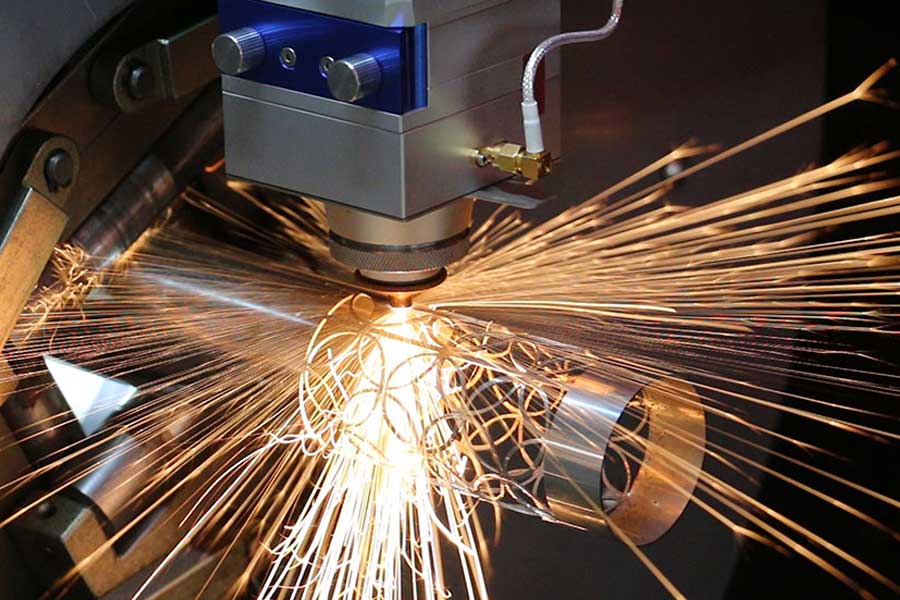
Figure 2: Automatic heavy-duty tube laser center stabilizing thick-walled hollow profiles.
📺 Live Machinery Action: High-Speed Tube Profile Calibration
Observe the physical application of continuous-wave fiber laser optics performing complex slotting, round-hole arrays, and precision end-reductions on heavy mechanical structural pipes:
Thermal Deflection Control and Dynamic Mechanical Load Integrity
A critical engineering challenge in high-power thermal cutting of structural elements is the Management of the Heat Affected Zone (HAZ). Excessive heat inputs alter the metallurgical properties of high-tensile carbon steel alloys, reducing localized yield strength and inducing unwanted thermal deformation along the cutting edge. Modern CNC fiber laser processing systems counteract this phenomenon by leveraging ultra-high-speed gas dynamics and short-pulse continuous wave energy delivery. This sophisticated thermal management approach ensures zero structural resonance distortion, preserving the baseline load-bearing capacity of the processed sections. This makes it the ideal technology path for critical applications such as maritime hull framing, industrial crane booms, and complex space truss configurations.
📺 Application Live Performance: Advanced Multi-Axis Beveling Dynamics
For large-scale infrastructure and Pre-Engineered Building (PEB) truss processing, view how multi-axis articulation achieves zero-clearance joint assembly preps:
Strategic Summary on Zero Taper Laser Tube Drilling Specifications Optimization Guidelines
Conclusively, addressing the deep complexities inherent in zero taper laser tube drilling specifications requires a holistic integration of hardware rigidity and computing foresight. Project estimators and site planning engineers must recognize that precision parameters achieved at the raw material processing phase dictate whole-site assembly safety. Implementing modern automated profiling stations not only minimizes structural field errors but comprehensively safeguards structural integrity under high fatigue stress profiles. By transitioning from analog mechanical methodologies to robust fiber optic systems like the LT360 6kw Intelligent Profile Laser Processing Center or LT220 3kw CNC Automatic Pipe Laser Cutter, manufacturing plants guarantee steady factory margins and establish an unassailable commercial footprint in global engineering sectors.
Industry Whitepaper Reference Code: PCL-HEAVY-STEEL-2026. This comprehensive guide has been formatted to support structural engineers, operations directors, and commercial cap-ex estimators. For tailored production time estimations or customized CAD/CAM workflow layout integration blueprints, please route your query through our specialized engineering desk.













