The Evolution of High-Power laser cutting in Baja California
The manufacturing landscape in Tijuana, Mexico, has undergone a radical transformation over the last decade. As a primary hub for the aerospace, medical device, and automotive industries, the demand for high-precision components has never been higher. At the center of this industrial revolution is the 6kW precision laser system, a powerhouse of technology designed to handle the rigorous demands of stainless steel fabrication. For engineers and plant managers in the region, understanding the nuances of this technology is essential for maintaining a competitive edge in the global supply chain.
A 6kW fiber laser represents a significant leap in capability from the previous generation of 2kW and 4kW systems. While lower-power lasers are sufficient for thin-gauge materials, the 6kW threshold introduces the ability to maintain high processing speeds across a much broader range of thicknesses. In the context of laser cutting, power is not merely about the ability to “burn through” metal; it is about the control of thermal energy to produce a clean, dross-free edge that requires zero post-processing. This is particularly critical for the high-grade stainless steel often utilized in Tijuana’s medical and food-processing sectors.
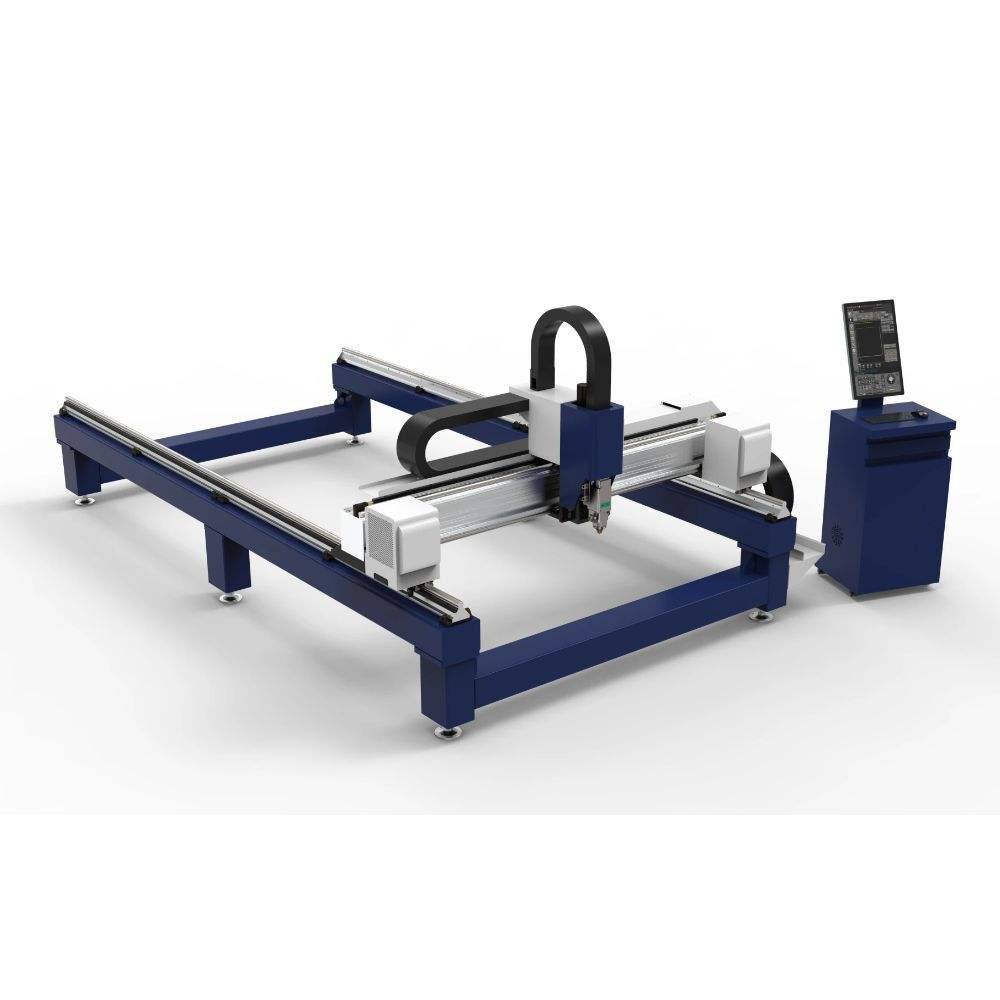 laser cutting machine” style=”width: 100%; max-width: 800px; height: auto; margin: 20px 0;”>
Why 6kW is the Industrial Benchmark for Stainless Steel
Stainless steel is notoriously difficult to process due to its high melting point and its tendency to warp under excessive heat. A 6kW system utilizes a concentrated fiber optic beam that delivers a high energy density. This allows the laser to vaporize the material almost instantaneously, minimizing the Heat-Affected Zone (HAZ). When the HAZ is minimized, the structural integrity of the stainless steel remains intact, and the risk of carbon precipitation—which can lead to corrosion—is significantly reduced.
Furthermore, the 6kW power level allows for the use of Nitrogen as an assist gas at higher pressures. Unlike Oxygen, which facilitates an exothermic reaction to cut through material, Nitrogen acts as a mechanical force to blow away molten metal while simultaneously cooling the cut edge. This results in a bright, oxide-free finish that is essential for components that require welding or aesthetic finishing later in the production cycle.
Technical Specifications of the 6kW Fiber Laser
To achieve precision at 6,000 watts, the system architecture must be rigid and highly responsive. Most modern 6kW systems in the Tijuana industrial corridor utilize a gantry-style design with reinforced frames to handle the high accelerations required for efficient laser cutting. The integration of high-end CNC controllers ensures that the beam follows the programmed path with micron-level accuracy, even at speeds exceeding 50 meters per minute.
Beam Quality and Precision Metrics
In precision engineering, the “Beam Parameter Product” (BPP) is a critical metric. A lower BPP indicates a beam that can be focused to a smaller spot size. For a 6kW system, maintaining a high-quality beam profile is paramount. If the beam is not perfectly focused, the energy is dissipated over a larger area, leading to wider kerf widths and increased dross. The 6kW systems deployed in high-output environments often feature “Auto-Focus” cutting heads that adjust the focal point in real-time based on the material thickness and type, ensuring consistent quality from the first part to the thousandth.

Linear Motors vs. Rack and Pinion
When operating at 6kW, the movement of the cutting head must be instantaneous. Many precision systems now opt for linear motors over traditional rack-and-pinion drives. Linear motors provide smoother motion and higher acceleration rates without the mechanical backlash associated with gears. This is particularly beneficial when cutting intricate geometries in stainless steel, such as small-diameter holes or complex interlocking parts for medical enclosures.
Optimizing Stainless Steel Processing in Tijuana
Tijuana’s unique position as a “Maquiladora” hub means that many facilities operate under high-pressure turnaround times for U.S.-based clients. Optimizing the 6kW laser for stainless steel involves more than just selecting the right power setting; it requires a holistic approach to the cutting environment. Factors such as ambient humidity, the purity of assist gases, and the stability of the local power grid all play a role in the final output quality.
Nitrogen vs. Oxygen: The Role of Assist Gases
For stainless steel, the choice of assist gas is rarely up for debate in high-precision applications. Nitrogen is the standard. However, the cost of Nitrogen can be a significant operational expense. Many advanced shops in Baja California are now investing in on-site Nitrogen generators. These systems take atmospheric air, filter it, and concentrate the Nitrogen to 99.99% purity. When paired with a 6kW laser cutting system, an on-site generator ensures that the machine never stops due to a lack of gas, while also providing the high pressures (up to 25 bar) required to clear molten stainless steel from the cut path.
Nesting Software and Material Efficiency
Given the high cost of stainless steel alloys (such as 304 and 316L), material utilization is a key performance indicator (KPI). Modern 6kW systems are bundled with sophisticated nesting software that uses algorithms to arrange parts as tightly as possible on a sheet. Features like “Common Line Cutting”—where two parts share a single cut path—not only save material but also reduce the total time the laser is active, further increasing the lifespan of the optical components.
Strategic Advantages for Tijuana-Based Manufacturers
The proximity to the San Diego border allows Tijuana manufacturers to serve as a “just-in-time” extension of U.S. production lines. A 6kW laser cutting system provides the versatility needed to switch between different projects rapidly. One hour, the machine might be cutting 2mm stainless steel brackets for an electronics firm; the next, it could be processing 12mm stainless steel flanges for a heavy machinery manufacturer.
Meeting International Standards (ISO/AS9100)
For companies in the aerospace and medical sectors, traceability and repeatability are non-negotiable. The 6kW precision laser systems often include integrated monitoring software that logs every cut parameter. This data can be exported to fulfill quality assurance requirements for ISO 9001 or AS9100 certifications. The precision of the fiber laser ensures that tolerances within +/- 0.05mm are consistently met, reducing the need for expensive inspection protocols and scrap rates.
Maintenance and Longevity of Precision Systems
Investing in a 6kW laser is a significant capital expenditure. To ensure a return on investment, a rigorous maintenance schedule is required. Unlike CO2 lasers, which require complex mirror alignments and gas refills for the resonator, fiber lasers are largely solid-state. However, this does not mean they are maintenance-free. The external optics, such as the protective window (cover glass), must be inspected daily for dust or splatter.
Preventive Maintenance for High-Uptime Environments
In the 24/7 manufacturing environments common in Tijuana, preventive maintenance (PM) is the difference between profit and loss. Key PM tasks for a 6kW system include:
- Chiller Maintenance: The laser source and the cutting head generate significant heat. The water chiller must be kept clean, and the coolant levels monitored to prevent thermal shifts that could affect beam quality.
- Drive System Calibration: Checking the tension of belts or the lubrication of linear guides ensures that the machine maintains its positional accuracy.
- Nozzle Inspection: A damaged or off-center nozzle will distort the flow of assist gas, leading to inconsistent cuts. Automated nozzle changers and cleaners can mitigate this risk.
Conclusion: The Future of Fabrication in Baja California
As the “nearshoring” trend continues to bring more manufacturing back to North America, Tijuana is poised to remain a leader in high-tech fabrication. The adoption of 6kW precision laser systems is a testament to the region’s commitment to quality and efficiency. By mastering the complexities of laser cutting on stainless steel, local manufacturers are not just cutting metal; they are carving out a role as indispensable partners in the global industrial ecosystem.
The 6kW laser is more than a tool; it is a platform for innovation. Whether it is reducing lead times for critical medical components or enabling the complex designs required for next-generation aerospace vehicles, this technology provides the speed, precision, and reliability that modern engineering demands. For those operating in the heart of Tijuana’s industrial zones, the 6kW system is the clear path forward.













