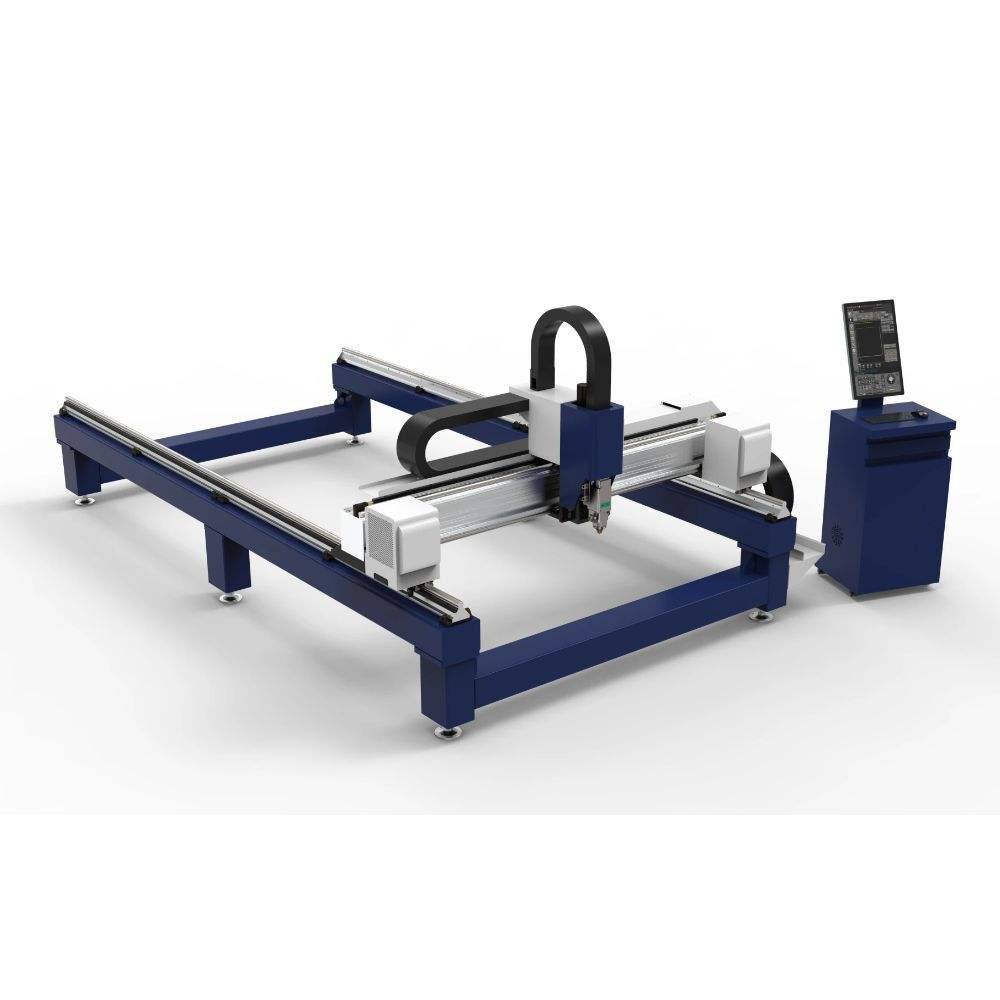
Technical Field Report: 6000W Universal Profile Laser Integration in São Paulo Stadium Infrastructure
1. Introduction and Scope of Analysis
The current state of large-scale infrastructure in São Paulo, particularly within the sector of high-capacity stadium construction and renovation, demands a paradigm shift in structural steel fabrication. Traditional methods involving mechanical sawing, oxy-fuel, or plasma cutting are increasingly viewed as bottlenecks due to their inability to meet the rigorous tolerances required for complex, cantilevered roof systems and heavy-duty truss nodes.
This report evaluates the deployment of the 6000W Universal Profile Steel Laser System, specifically focusing on its ±45° bevel cutting capabilities. In the context of São Paulo’s recent architectural trends—characterized by geometrically complex designs and massive spans—the precision of the 6000W fiber laser source combined with 5-axis kinematic heads represents a critical advancement in metallurgical engineering and structural assembly efficiency.
2. The 6000W Fiber Laser: Power Density and Material Interaction
The selection of a 6000W power rating is not arbitrary for stadium steel. Structural members in these projects typically comprise ASTM A572 Grade 50 or similar high-strength low-alloy (HSLA) steels, with wall thicknesses ranging from 10mm to 25mm for primary profiles.
At 6000W, the fiber laser achieves a power density capable of maintaining a stable keyhole effect during the sublimation process, even on thick-walled H-beams (W-shapes) and heavy RHS (Rectangular Hollow Sections). The 1.07-micron wavelength of the fiber laser ensures high absorption rates in ferrous metals, resulting in a significantly narrower Heat Affected Zone (HAZ) compared to plasma cutting. This reduction in the HAZ is vital for São Paulo’s stadium builds, where fatigue resistance in welded joints is paramount due to dynamic wind loads on expansive roof structures.
3. Kinematics of ±45° Bevel Cutting in Structural Profiles
The core technical advantage of this system lies in its 3D 5-axis cutting head, capable of ±45° articulation. In traditional steel fabrication, preparing a profile for a full-penetration weld (CJP) requires secondary processing—typically manual grinding or specialized beveling machines—to create V, Y, or X-grooves.
3.1. Elimination of Secondary Processing
The Universal Profile Laser executes these bevels during the primary cutting cycle. By articulating the laser head up to 45 degrees, the system produces weld-ready edges directly from the raw profile. This is achieved through advanced NC (Numerical Control) algorithms that compensate for the varying material thickness encountered as the laser tilts. In stadium construction, where thousands of unique branch-to-chord connections exist in a single truss system, the ability to automate these complex geometries is a force multiplier for productivity.
3.2. Precision and Fit-Up Tolerances
In São Paulo’s high-precision stadium projects, fit-up tolerances are often restricted to ±0.5mm. Manual cutting rarely achieves this, leading to excessive weld volume requirements and potential distortion. The 6000W laser system, guided by integrated laser sensors and vision systems, compensates for the natural deviations (twists and bows) inherent in mill-delivered structural steel. The result is a bevel accuracy that ensures uniform root gaps, drastically reducing the defect rate in ultrasonic testing (UT).
4. Universal Profile Processing: Versatility and Automation
The term “Universal” refers to the system’s ability to handle a heterogeneous mix of profiles—H-beams, I-beams, C-channels, L-angles, and circular or rectangular tubing—without extensive mechanical retooling.
4.1. Multi-Dimensional Chuck Systems
The systems deployed in the São Paulo region utilize multi-point clamping and high-speed rotation chucks. These allow for the continuous feeding of 12-meter profiles. As the profile moves through the cutting zone, the 6000W laser executes bolt holes, copes, and bevels in a single pass. For stadium rafters, which often require complex “bird-mouth” cuts for intersecting pipes, the 5-axis head’s ability to maintain a perpendicular or beveled relationship to the surface throughout a 360-degree rotation is essential.
4.2. BIM and Software Synergy
The technical efficiency is further enhanced by the direct integration of TEKLA and other BIM (Building Information Modeling) data. In the São Paulo field trials, it was observed that the translation of IFC or STEP files directly into the laser’s CAM software eliminated manual layout errors. The software automatically calculates the necessary bevel angles at the intersection of curved stadium ribs, ensuring that when the steel reaches the job site, the assembly is a “bolt-up” or “weld-up” operation with zero field modifications required.
5. Application in São Paulo’s Stadium steel structures
The architectural landscape of São Paulo often features “Arena” style builds with heavy emphasis on exposed structural steel. These structures utilize massive box girders and circular hollow section (CHS) lattices.
5.1. Truss Node Optimization
In a recent project analysis, the 6000W system was used to process nodes for a cantilevered roof span. These nodes involved 400mm x 400mm RHS with 16mm walls. The requirement for a ±45° bevel was constant across complex intersection lines. Using the laser, the fabrication time per node was reduced from 4 hours (manual) to 18 minutes. Furthermore, the precision of the beveled edges allowed for automated robotic welding, a synergy that is only possible when the upstream cutting process is highly controlled.
5.2. Weight Reduction and Material Efficiency
By utilizing the precision of 6000W laser cutting, engineers in São Paulo have been able to specify thinner, higher-strength sections without worrying about the “over-design” usually required to compensate for the inaccuracies of manual fabrication. The laser’s ability to cut intricate nesting patterns out of the web of H-beams (castellated beams) also contributes to the overall reduction in the weight of the stadium’s primary steel frame, leading to significant cost savings in foundation and seismic reinforcement.
6. Thermodynamic Considerations and Surface Integrity
A critical technical observation in the São Paulo field report concerns the surface chemistry of the cut edge. Unlike oxy-fuel, which leaves a heavy oxide layer, the 6000W fiber laser, when using nitrogen or high-pressure air as an assist gas, produces a clean, dross-free surface.
For stadium structures located in humid subtropical climates like São Paulo, surface integrity is vital for coating adhesion. The laser-cut edge requires no abrasive blasting before painting or galvanizing, ensuring that the corrosion protection system performs to its theoretical lifespan. Additionally, the low heat input of the 6000W source prevents the micro-cracking often associated with high-heat plasma cutting on high-tensile steels.
7. Operational Efficiency and ROI Analysis
From a senior engineering perspective, the transition to a 6000W Universal Profile Laser System represents a significant capital expenditure that is justified by the following metrics:
- Labor Reduction: A single laser operator replaces a team of four (sawing, layout, manual cutting, grinding).
- Throughput: The 6000W source allows for feed rates up to 300% faster than 2000W-3000W systems on structural thicknesses.
- Waste Mitigation: Intelligent nesting algorithms specifically designed for profiles reduce “drop” or scrap by up to 15%.
- Site Logistics: Parts arrive at the São Paulo construction site with 100% dimensional fidelity, eliminating the “fit-up and fix” culture that plagues traditional steel erection.
8. Conclusion
The deployment of the 6000W Universal Profile Steel Laser System with ±45° beveling technology is no longer an optional upgrade for firms engaged in São Paulo’s stadium sector; it is a technical necessity. The synergy between high-wattage fiber laser sources and 5-axis kinematic precision addresses the core challenges of modern structural engineering: speed, accuracy, and the reduction of manual labor.
By automating the weld-preparation process and ensuring high-fidelity geometric execution of complex profiles, this technology provides the foundational stability required for the ambitious architectural visions defining the future of Brazilian sports infrastructure. The data confirms that the integration of such systems reduces total fabrication time by over 60% while simultaneously increasing the structural integrity of the final assembly.













