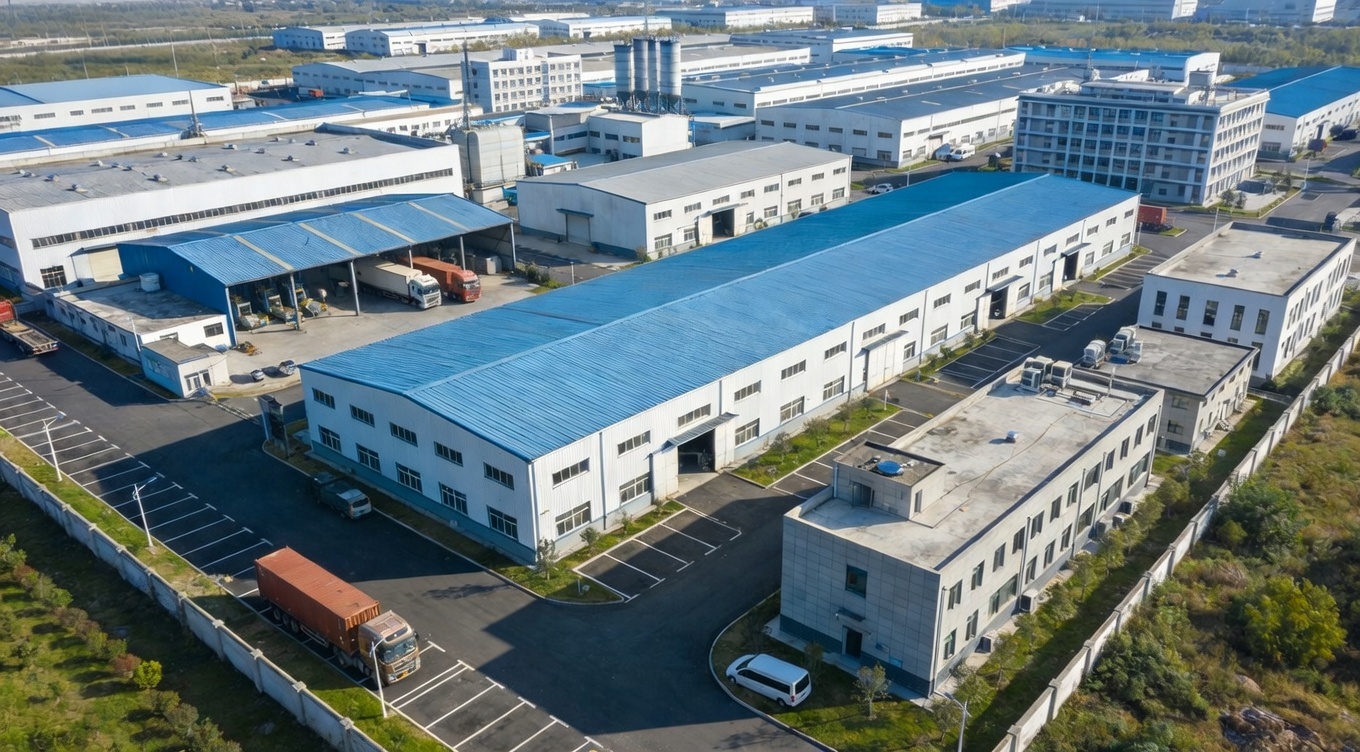
The Industrial Evolution of Queretaro: A Hub for Infrastructure Excellence
Queretaro has long been recognized as the heart of Mexico’s aerospace and automotive sectors. However, as the region prepares for massive logistics and transportation upgrades, the focus has shifted toward high-capacity infrastructure, most notably airport expansions and new construction projects. These projects require thousands of tons of structural steel, specifically I-beams that form the skeleton of terminals, cargo hubs, and aircraft hangars.
In this context, the 6000W Heavy-Duty I-Beam Laser Profiler is not merely a machine; it is a strategic asset. The choice of 6000W fiber laser power is intentional. At this wattage, the laser can penetrate thick-walled structural steel with high feed rates, ensuring that the high-volume requirements of an airport project are met without compromising the quality of the cut. In the competitive landscape of Queretaro’s manufacturing sector, the ability to deliver prefabricated, ready-to-weld beams directly to the construction site provides a significant logistical advantage.
Understanding the 6000W Fiber Laser Advantage in Structural Steel
Fiber laser technology has revolutionized metal fabrication, but its application in heavy-duty structural steel requires a specific configuration. A 6000W source offers the “sweet spot” for structural applications. It provides enough energy density to cut through 25mm carbon steel with ease, which covers the majority of web and flange thicknesses found in standard I-beams used in commercial architecture.
Unlike traditional plasma cutting, which often results in a wider heat-affected zone (HAZ) and significant dross, the fiber laser produces a narrow kerf and a localized heat profile. This is critical for airport construction, where the mechanical properties of the steel must be preserved to withstand seismic loads and heavy structural stress. The precision of the 6000W beam ensures that bolt holes, utility pass-throughs, and interlocking notches are cut with tolerances of ±0.1mm, ensuring a “perfect fit” during on-site assembly.
The Game-Changer: ±45° Bevel Cutting for Weld Preparation
Perhaps the most significant technological leap in this profiler is the 3D 5-axis cutting head capable of ±45° beveling. In traditional structural fabrication, an I-beam is cut to length, and then a secondary team of workers uses manual torches or milling machines to grind the edges into V, Y, or K-shaped profiles for welding. This secondary process is labor-intensive, prone to human error, and creates a bottleneck.
The 6000W I-Beam Profiler integrates this into a single process. As the laser maneuvers around the I-beam, it can tilt its head up to 45 degrees, creating the exact bevel required for deep-penetration welds. For the massive spans required in airport hangars, these welds are the most critical points of the structure. By automating the beveling process, the machine ensures that every weld joint is mathematically perfect, reducing the amount of filler wire needed and significantly lowering the risk of weld failure. This precision is essential for meeting international building codes and the stringent safety standards of the aviation industry.
Engineering for Heavy-Duty Performance: Handling Massive Profiles
Airport construction doesn’t use small tubes; it uses massive, heavy-duty structural members. A standard I-beam profiler designed for this environment must feature a robust bed and a high-torque chuck system. The “Heavy-Duty” designation refers to the machine’s ability to handle beams that can weigh several tons and extend up to 12 meters or more.
The system utilizes a series of synchronized pneumatic or hydraulic chucks that rotate the beam with extreme accuracy. In Queretaro’s fabrication shops, these machines are often equipped with automatic loading and unloading systems. This allows for continuous operation, where a raw I-beam is loaded, scanned for deviations (such as slight bows or twists in the raw material), and then cut according to the CAD/BIM (Building Information Modeling) data. The machine’s software compensates for any physical irregularities in the steel in real-time, ensuring that the finished product matches the digital twin of the airport design.
Strategic Application: Terminals, Hangars, and Support Infrastructure
The architecture of a modern airport is characterized by wide-open spaces and high ceilings, which place immense pressure on the structural framework. The 6000W laser profiler is particularly useful for:
1. **Long-Span Hangars:** These structures require massive H-beams and I-beams with complex cut-outs for bracing. The laser’s ability to cut intricate patterns allows architects to design lighter, more efficient structures without sacrificing strength.
2. **Terminal Skeletons:** Modern terminals often feature exposed steelwork. The clean, burr-free finish of the fiber laser means that the steel requires minimal post-processing before being painted or galvanized, improving the aesthetic quality of the visible structure.
3. **Baggage Handling and Utility Tunnels:** These systems require miles of support steel with thousands of identical mounting holes. The speed of the 6000W laser makes it possible to produce these components at a fraction of the cost of traditional drilling and sawing.
Economic Impact and Sustainability in Queretaro’s Construction Sector
Implementing a 6000W I-Beam Profiler in Queretaro offers profound economic benefits. While the initial capital expenditure is higher than plasma or manual methods, the Total Cost of Ownership (TCO) is lower due to the dramatic reduction in labor costs and material waste.
laser cutting is a high-efficiency process. The nesting software optimizes the cuts on each beam to minimize scrap. Furthermore, the precision of the laser eliminates the need for “on-site corrections.” In many traditional construction projects, beams arrive and don’t fit perfectly, requiring field-cutting and welding which is expensive and dangerous. With laser-profiled beams, the structure fits together like a precision-engineered puzzle, accelerating the construction timeline of the airport and allowing for faster operational readiness.
From a sustainability perspective, fiber lasers are more energy-efficient than older CO2 technology. They require no gas for the laser generation itself and have high wall-plug efficiency. For a city like Queretaro, which is increasingly focused on green manufacturing and sustainable development, this aligns with regional goals to reduce the carbon footprint of large-scale infrastructure projects.
Technical Synergy: BIM and Laser Profiling
The integration of the 6000W I-Beam Profiler into the Building Information Modeling (BIM) workflow is the final piece of the puzzle. In the construction of a complex airport, the digital model contains every detail of the building’s steel requirements. The laser profiler’s software can import these files directly (commonly in STEP or IGES formats).
This digital-to-physical bridge means that a structural engineer in an office can design a complex joint with a 35-degree bevel and a specific bolt-hole pattern, and the machine in Queretaro can execute that exact design minutes later. This “just-in-time” manufacturing capability is vital for airport projects, where scheduling is tight and various contractors must coordinate their efforts.
Conclusion: Setting a New Standard for Mexican Infrastructure
The deployment of a 6000W Heavy-Duty I-Beam Laser Profiler with ±45° beveling in Queretaro represents the pinnacle of modern structural fabrication. By combining the raw power of a 6kW fiber source with the surgical precision of 5-axis beveling, the construction industry is now equipped to build the next generation of airports with greater speed, safety, and architectural freedom.
As Queretaro continues to grow as a global industrial leader, the adoption of such advanced technology ensures that the region’s infrastructure is not just built for today, but engineered for the future. The ability to transform massive beams of steel into precision-engineered components is the foundation upon which the future of Mexican aviation and logistics will stand. For the airport construction sector, the 6000W laser profiler isn’t just a tool—it is the engine of progress.