The Dawn of High-Power Fiber Lasers in Mexican Infrastructure
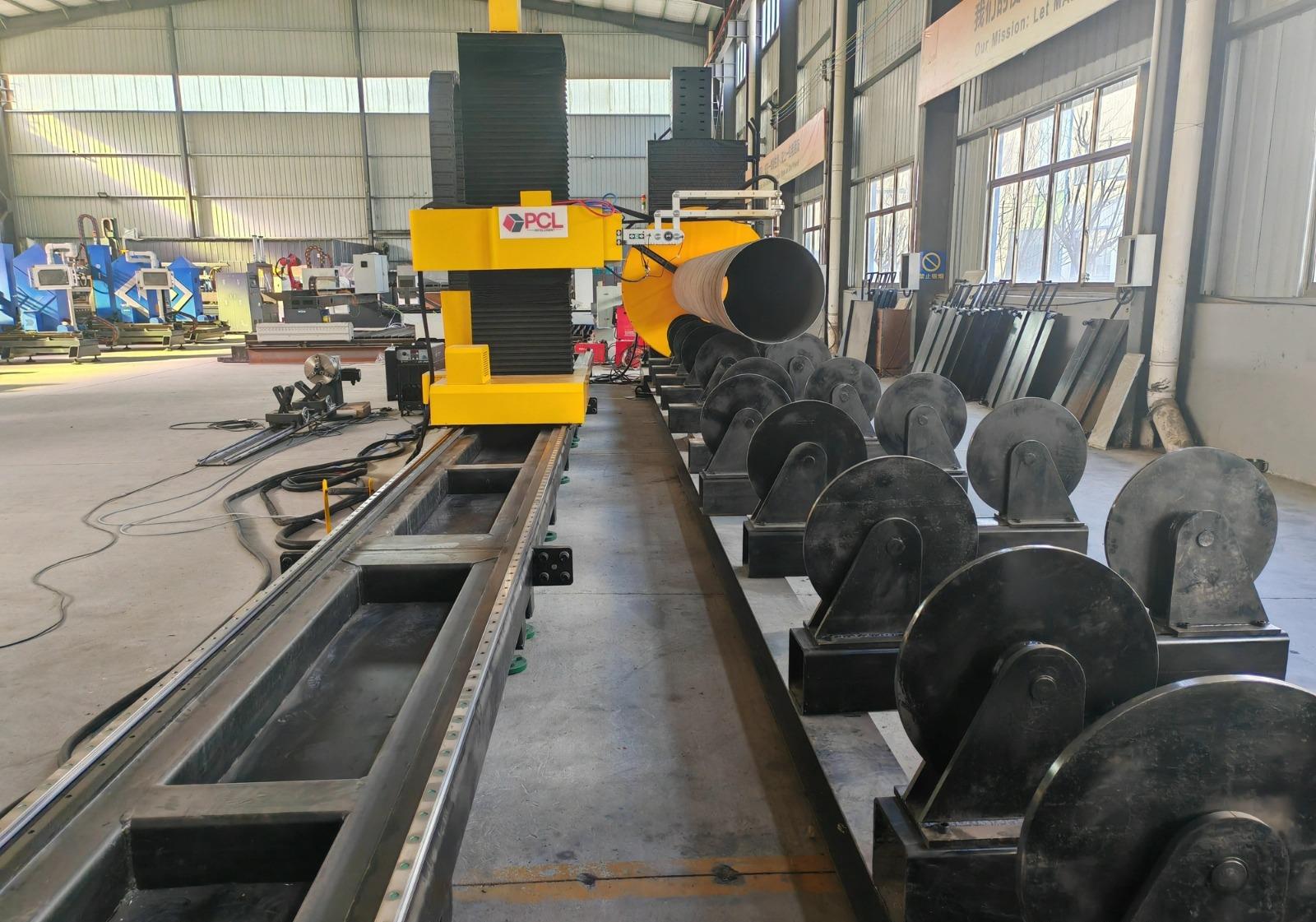
Mexico City stands as a testament to complex civil engineering, characterized by its unique seismic requirements and dense urban fabric. For bridge engineers operating in this environment, the precision of structural components is not merely a matter of aesthetics but a critical safety mandate. The introduction of the 6000W CNC Beam and Channel Laser Cutter has revolutionized how structural members like I-beams, H-beams, and C-channels are processed.
Historically, the Mexican construction industry relied on manual layout, mechanical drilling, and plasma cutting. However, as the complexity of bridge designs—such as those seen in the expansion of the Metrobús elevated lanes or the Interurban Train—increases, the margin for error shrinks. The 6000W fiber laser provides a concentrated energy source capable of cutting through carbon steel up to 25mm with a precision measured in microns, ensuring that every bolt hole and weld prep is perfectly aligned before it even reaches the construction site.
Technical Advantage: Why 6000W is the Industry Standard
In the realm of fiber lasers, power selection is a strategic decision. While 12kW and 20kW machines exist, the 6000W configuration is widely regarded by experts as the optimal balance between capital investment and operational capability for bridge engineering.
At 6000W, the laser beam maintains a high-quality M2 factor, allowing for clean cuts through the thick flanges of structural beams. This power level is particularly effective for the “medium-heavy” plate and profile thicknesses common in bridge girders. The fiber laser’s wavelength (approx. 1.06µm) is absorbed more efficiently by steel than the CO2 lasers of the past, resulting in a narrower Heat Affected Zone (HAZ). In bridge engineering, minimizing the HAZ is vital to preserve the metallurgical integrity of the steel, preventing embrittlement near the cut edges that could lead to fatigue failure under the rhythmic loads of vehicular traffic.
Mastering Beams and Channels: 3D CNC Capabilities
Unlike flatbed lasers, a beam and channel cutter must operate in a three-dimensional workspace. These machines feature a specialized rotary chuck system and often a tilting 3D cutting head. This allows the laser to move around the geometry of a channel or an H-beam, cutting not just the web but also the interior and exterior of the flanges.
For a bridge project in Mexico City, this means that complex notches, cope cuts, and bird-mouth joins can be executed in a single program. The CNC software integrates directly with BIM (Building Information Modeling) and programs like Tekla Structures. The digital model of the bridge is exported directly to the laser’s controller, ensuring that every cut on a 12-meter beam matches the engineering specifications exactly. This level of integration eliminates “field fitting,” where workers must grind or re-cut pieces on-site, a process that is both dangerous and costly in a congested urban environment.
The Critical Role of Automatic Unloading Systems
One of the most significant bottlenecks in heavy-profile fabrication is material handling. A single 6000W laser can cut faster than a team of four workers can manually clear the machine. This is where the automatic unloading system becomes indispensable.
In a high-output facility in Mexico City, the automatic unloading system uses a series of synchronized conveyors and hydraulic lifters to move finished beams away from the cutting zone. As the laser completes its final cut on a structural channel, the unloading mechanism supports the weight—often several hundred kilograms—and transitions it to a storage rack or the next phase of production (such as shot blasting or painting).
This automation serves two purposes. First, it ensures the “Spindle-On” time remains above 80%, as the machine does not have to wait for a crane operator to clear the bed. Second, it dramatically improves workplace safety. In the industrial zones of Vallejo or Tlalnepantla, reducing the frequency of overhead crane movements lowers the risk of industrial accidents, a key concern for modern Mexican Tier-1 contractors.
The Mexico City Context: Altitude and Environment
Operating a 6000W laser in Mexico City presents unique environmental challenges that an expert must address. At an elevation of 2,240 meters, the atmospheric pressure is lower than at sea level. This affects the cooling capacity of the laser’s chiller and the behavior of the assist gases (Oxygen and Nitrogen).
A professional-grade 6000W system installed in CDMX must be equipped with oversized chillers to compensate for the reduced heat exchange efficiency of thinner air. Furthermore, the selection of assist gas is critical. When cutting bridge components, many engineers prefer Nitrogen for a “bright cut” that requires no post-processing before painting. However, the logistics of gas delivery in Mexico City’s traffic mean that many shops are opting for high-pressure air-cutting systems, utilizing specialized compressors that can deliver 15-20 bar of pressure, significantly reducing the cost per meter of the cut.
Economic Impact: ROI and Nearshoring
The shift toward 6000W laser technology is also driven by the “Nearshoring” trend currently sweeping Mexico. As North American companies look to diversify their supply chains, Mexican fabricators are being asked to produce bridge and structural components that meet international AWS (American Welding Society) and AISC (American Institute of Steel Construction) standards.
Investing in an automated laser cutter allows Mexican firms to compete on a global scale. The Return on Investment (ROI) is realized through three avenues:
1. **Material Savings:** The CNC nesting software for profiles optimizes the layout of cuts, reducing “drop” or scrap metal.
2. **Labor Reallocation:** Instead of having five workers dedicated to manual drilling and sawing, one technician can oversee the entire automated laser process.
3. **Speed to Market:** Projects that previously took months in the fabrication shop can now be completed in weeks, allowing bridge contractors to meet the aggressive timelines often demanded by Mexican government infrastructure tenders.
Quality Control and Structural Integrity
In bridge engineering, the quality of a hole is as important as the strength of the beam. Traditional punching or plasma cutting can create micro-cracks or tapered holes that compromise bolt tension. The 6000W fiber laser, guided by high-precision rack-and-pinion drives and linear motors, produces holes with perfect cylindricity.
The laser’s ability to perform “Common Line Cutting” and “Bevel Cutting” is also a game-changer for weld preparation. By beveling the edges of a thick H-beam flange during the cutting process, the machine prepares the part for full-penetration welding immediately. This eliminates the need for manual grinding, which is often the most labor-intensive part of bridge fabrication. For Mexico City’s engineers, this means the finished bridge has more consistent weld joints, providing better resistance to the dynamic stresses of seismic activity.
Conclusion: The Future of Mexican Steel Fabrication
The 6000W CNC Beam and Channel Laser Cutter with Automatic Unloading is more than just a tool; it is a catalyst for the modernization of Mexico’s national infrastructure. By bridging the gap between digital design and physical fabrication, this technology allows for the creation of lighter, stronger, and more complex bridge structures.
As Mexico City continues to grow and its infrastructure ages, the need for rapid, high-precision replacement and expansion is paramount. The fiber laser expert sees not just a machine, but a solution to the challenges of urban density and structural safety. For the fabricators of the Valle de México, adopting this technology is the definitive step toward a more efficient, automated, and prosperous future in structural engineering.