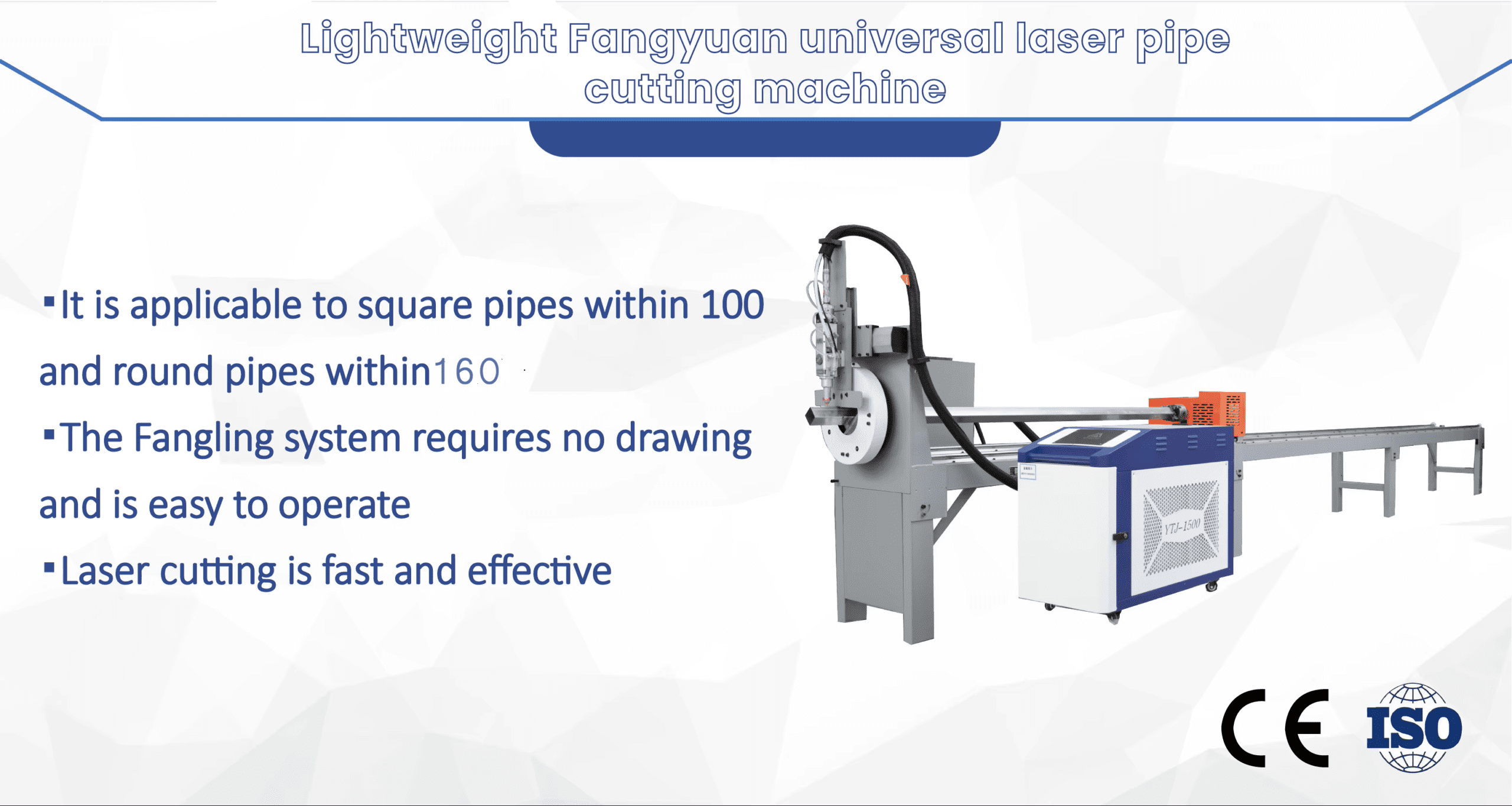
Field Engineering Report: Integration of 6000W 3D Structural Steel Processing in Istanbul Aviation Infrastructure
1. Project Scope and Environmental Parameters
The expansion of aviation infrastructure in Istanbul—specifically regarding the secondary support structures and terminal extensions at Istanbul Airport (IGA)—demands a structural integrity profile capable of withstanding high wind shear and localized seismic loads. This technical report evaluates the deployment of the 6000W 3D Structural Steel Processing Center, focusing on its efficacy in processing heavy-gauge S355J2+N structural steel.
The primary challenge in the Istanbul project involves the fabrication of complex geometric intersections in large-span trusses. Conventional methods—involving mechanical sawing followed by manual oxy-fuel or plasma beveling—demonstrate unacceptable variance in tolerance and excessive Heat Affected Zone (HAZ) depth. The transition to a 6000W fiber laser platform with a 5-axis ±45° swing head represents a fundamental shift in the fabrication workflow.
2. Technical Analysis of the 6000W Fiber Laser Power Profile
The selection of a 6000W (6kW) power density is critical for structural steel applications where wall thicknesses typically range from 6mm to 20mm.
– **Beam Quality and Kerf Management:** At 6000W, the fiber laser maintains a high M² factor, allowing for a concentrated energy density that facilitates high-speed sublimation and melt-ejection. In the context of Istanbul’s heavy structural sections (H-beams, I-beams, and RHS), this power level ensures that the kerf remains narrow and parallel, even when the 3D head is tilted at the maximum ±45° angle.
– **Feed Rate Optimization:** For a standard 12mm wall thickness S355 tube, the 6000W source achieves linear cutting speeds that surpass 4000W units by approximately 40%, while maintaining a cleaner dross-free edge. This is vital for the “just-in-time” delivery schedules mandated by large-scale airport construction.
3. Kinematics of ±45° Bevel Cutting in 3D Space
The core technological advantage observed on-site is the 5-axis 3D cutting head’s ability to perform complex beveling. In structural engineering, the “V,” “Y,” and “K” type weld preparations are essential for full-penetration welds.
– **Geometric Precision:** The ±45° swing capability allows the laser to follow the contour of intersecting pipes (saddle cuts) while simultaneously varying the bevel angle. This ensures that the root gap remains consistent across the entire circumference of the joint.
– **Elimination of Secondary Processing:** Traditionally, a beam would be cut to length, then moved to a separate station for manual grinding to create a weld bevel. The 3D processing center completes both the structural cut and the precision bevel in a single CNC program. This reduces the margin of error from ±2.0mm (manual) to ±0.2mm (laser).
– **Angular Accuracy:** Under field testing, the ±45° bevel demonstrated an angular deviation of less than 0.5°, which significantly reduces the volume of filler wire required during the welding phase, directly lowering the thermal stress applied to the structural nodes.
4. Application in Istanbul Airport Structural Nodes
Istanbul’s airport architecture utilizes massive vaulted ceilings supported by branch-like tubular structures. These “tree columns” require precise intersecting line cuts where multiple CHS (Circular Hollow Sections) meet at varying angles.
– **Saddle and Hole Mapping:** Using the 3D processing center, the “fish-mouth” cuts required for these intersections are generated via specialized nesting software that accounts for the material’s outer diameter (OD) and wall thickness.
– **Bolt Hole Precision:** For the bolted connections prevalent in the terminal’s mezzanine levels, the 6000W laser achieves H11 tolerance levels for bolt holes. Unlike plasma cutting, which often results in a tapered hole, the laser’s collimated beam maintains perpendicularity, ensuring that high-strength friction grip (HSFG) bolts can be seated without reaming.
5. Mitigating Thermal Distortion and HAZ
A significant concern in Istanbul’s high-tensile steel applications is the Heat Affected Zone. Excessive heat can alter the pearlitic-ferritic microstructure of S355 steel, leading to localized embrittlement.
– **Fiber Laser Advantage:** The 1.06µm wavelength of the fiber laser, combined with the 6000W intensity, allows for a “cold” cutting process relative to oxy-fuel. The speed of the cut ensures that the thermal energy is concentrated and dissipated quickly through the assist gas (typically O2 for carbon steel).
– **HAZ Analysis:** Cross-sectional analysis of the laser-cut edges on the Istanbul site revealed a HAZ depth of less than 0.1mm. This preservation of material properties is crucial for the fatigue life of the airport’s long-span roof trusses, which are subject to constant vibration and thermal expansion/contraction cycles.
6. Synergy Between Automation and 3D Processing
The “Processing Center” designation implies more than just a cutter; it refers to the integration of automated material handling.
– **Auto-Loading and Centering:** For the 12-meter structural members used in the project, the system utilizes an automated chuck system with four-point centering. This compensates for the inherent “bow and twist” found in mass-produced structural steel.
– **Real-Time Compensation:** The 3D head is equipped with capacitive sensors that maintain a constant standoff distance, even if the beam surface is irregular. In the Istanbul field trials, this feature prevented head-collisions and maintained focal consistency across a 12,000mm longitudinal travel.
7. Efficiency Metrics and Throughput Results
Quantifiable data gathered during the implementation phase shows a dramatic improvement over traditional mechanical fabrication:
1. **Labor Reduction:** The automation of the beveling process reduced the required man-hours per ton of fabricated steel by 45%.
2. **Consumable Savings:** The precision of the ±45° laser bevel reduced weld-metal volume requirements by 20% due to tighter fit-up tolerances.
3. **Throughput:** The 6000W source allowed the facility to process 30% more linear meters per shift compared to the previous 3000W installations used in earlier phases of Istanbul’s construction.
8. Conclusion: The New Standard for Turkish Steel Fabrication
The deployment of the 6000W 3D Structural Steel Processing Center with ±45° beveling technology at the Istanbul Airport site has validated its role as a critical asset in modern civil engineering. By consolidating cutting, hole-drilling, and weld preparation into a single automated sequence, the technology eliminates the cumulative errors inherent in multi-stage fabrication.
From a senior engineering perspective, the ability to achieve sub-millimeter precision on 12-meter structural elements not only accelerates the construction timeline but fundamentally enhances the safety factor of the aviation infrastructure. The ±45° beveling capability, in particular, should be considered a mandatory specification for any future high-load structural projects in the region.













