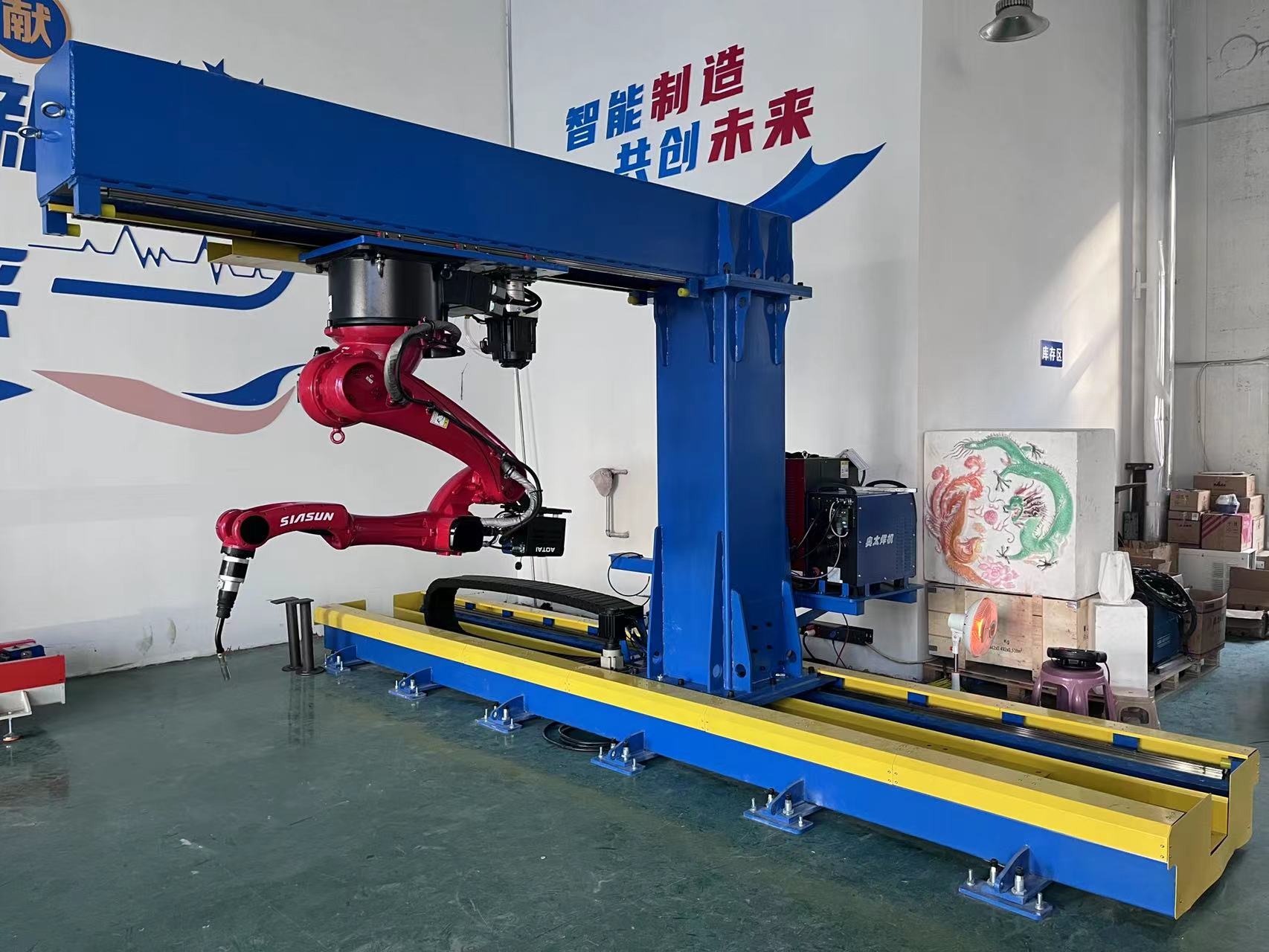
The Dawn of High-Precision Offshore Fabrication in Riyadh
The industrial landscape of Riyadh is currently undergoing a radical transformation. Traditionally known as a hub for administrative and light industrial activity, the city is rapidly evolving into a high-tech manufacturing epicenter, specifically servicing the massive offshore oil and gas expansion projects of the Red Sea and the Gulf. At the center of this revolution is the 6000W 3D Structural Steel Processing Center—a sophisticated marriage of photonics, robotics, and software designed to handle the heavy-duty demands of marine engineering.
For decades, the fabrication of offshore platforms—jackets, topsides, and subsea structures—relied on manual layout, mechanical sawing, and plasma cutting. These methods, while functional, lacked the precision required for modern modular construction and resulted in significant material wastage. As an expert in fiber laser technology, I have observed that the transition to a 6000W fiber source, integrated into a 3D structural framework, represents more than just an upgrade; it is a total paradigm shift in how we approach the structural integrity of offshore assets.
6000W Fiber Laser: The Sweet Spot for Structural Steel
In the realm of fiber lasers, power selection is a critical engineering decision. While 10kW or 20kW lasers exist, the 6000W (6kW) threshold is widely considered the “sweet spot” for structural steel processing for several reasons. Offshore platforms predominantly utilize high-strength carbon steels (such as S355 or API 5L grades) with thicknesses ranging from 6mm to 25mm for secondary and tertiary structures.
A 6000W fiber laser provides the power density necessary to maintain a narrow Heat-Affected Zone (HAZ). In marine environments, the HAZ is a vulnerability; it is where the grain structure of the steel is altered by heat, potentially leading to stress corrosion cracking or fatigue failure under the constant cycling of ocean waves. By utilizing a 6kW source, we achieve high cutting speeds that minimize heat soak, preserving the metallurgical properties of the marine-grade steel. Furthermore, the 1.07-micron wavelength of the fiber laser is absorbed efficiently by steel, offering a cutting efficiency that CO2 lasers or plasma cutters simply cannot match.
3D Kinematics: Beyond the Flatbed
The “3D” aspect of this processing center refers to the ability to cut across multiple planes on complex geometries. Offshore platforms are not built from flat plates alone; they are a lattice of H-beams, I-beams, C-channels, and large-diameter circular hollow sections (CHS).
Traditional 2D lasers are confined to the X and Y axes. However, a 3D structural center employs a five-axis or six-axis laser head capable of tilting and rotating. This allows for the creation of complex weld preparations—V-cuts, Y-cuts, and K-cuts—directly on the structural member. In the offshore sector, where full-penetration welds are mandatory for safety, the ability to laser-cut a precise bevel on a 20mm thick pipe or beam is invaluable. It eliminates the need for secondary grinding or manual bevelling, which are labor-intensive and prone to human error.
In Riyadh’s specialized facilities, these 3D heads are often mounted on gantry systems or robotic arms that can traverse lengths of 12 meters or more, accommodating the massive structural members common in offshore jacket construction.
Zero-Waste Nesting: Economics Meets Ecology
One of the most significant challenges in structural steel fabrication is the cost of raw materials. Marine-grade steel is an expensive commodity, and historical scrap rates in structural fabrication have hovered around 15% to 20%. The “Zero-Waste Nesting” protocols integrated into these Riyadh-based centers utilize sophisticated CAD/CAM algorithms to drive these numbers down to near-zero.
Zero-Waste Nesting works by intelligently “packing” different parts onto a single beam or tube. In traditional sawing, each part requires a “kerf” or a gap, and remnants are often discarded. The advanced software in a 6000W processing center uses “common-line cutting,” where a single laser pass creates the edge for two adjacent parts.
Furthermore, the software manages “residual management.” If a 12-meter beam is only partially used, the system automatically logs the remaining length into a digital library, ensuring it is prioritized for the next job. In the context of Riyadh’s logistical chain—where importing specialized steel can involve long lead times—this maximum utilization of every kilogram of steel is a massive competitive advantage.
Engineering for the Offshore Environment: Precision and Durability
Offshore platforms are subject to some of the harshest conditions on Earth. The structural components must fit together with surgical precision to ensure load distribution is uniform. Even a 2mm deviation in a beam’s notch can result in a “locked-in stress” once the structure is welded, which can lead to catastrophic failure in the open sea.
The 6000W 3D processing center offers a positioning accuracy of ±0.05mm. When cutting the complex “fish-mouth” joints required where two tubular sections meet at an angle, the laser ensures a perfect fit-up. This “plug-and-play” assembly at the shipyard (often in Dammam or Jubail, after fabrication in Riyadh) reduces the need for expensive on-site adjustments. The precision of the laser also allows for the engraving of part numbers and welding instructions directly onto the steel, streamlining the assembly process and ensuring full traceability—a key requirement for Saudi Aramco and other global energy majors.
The Riyadh Factor: Adapting Technology to the Desert
Operating a high-power fiber laser in Riyadh presents unique environmental challenges that require expert-level solutions. The primary concerns are heat and dust. Fiber lasers are highly sensitive to ambient temperature; the laser diodes and the optical path must be kept within a narrow temperature range to prevent “thermal lensing” or catastrophic component failure.
The processing centers in Riyadh are equipped with dual-circuit industrial chillers and climate-controlled enclosures. Given the high summer temperatures in Central Arabia, these systems utilize advanced refrigerants and oversized heat exchangers to ensure the 6000W source remains stable.
Moreover, the fine dust of the Nejd region is the enemy of high-end optics. These 3D processing centers utilize pressurized optical paths—where nitrogen or clean dry air is pumped into the laser head to create a “positive pressure” environment. This prevents dust particles from settling on the protective windows or the focusing lens, ensuring the beam quality remains pristine even in a desert industrial zone.
Integration with the IKTVA Program and Vision 2030
The deployment of such advanced machinery in Riyadh is a direct response to the “In-Kingdom Total Value Add” (IKTVA) program. By localizing the fabrication of offshore structural components, Saudi companies are moving up the value chain from basic assembly to high-tech manufacturing.
This 6000W 3D processing center represents a move toward “Industry 4.0.” The machine is typically connected to a centralized cloud system, allowing for real-time monitoring of cutting gas consumption (Nitrogen or Oxygen), power usage, and production throughput. For a developer in Riyadh, this means having the data to provide accurate quotes and timelines for multi-billion dollar offshore projects, backed by the reliability of fiber laser technology.
Conclusion: The Future of Saudi Maritime Infrastructure
As we look toward the future of energy in the Kingdom, the role of high-precision manufacturing cannot be overstated. The 6000W 3D Structural Steel Processing Center is more than just a tool; it is a statement of industrial intent. By mastering the ability to cut, bevel, and nest complex structural members with zero waste, Riyadh-based fabricators are setting a new global standard for how offshore platforms are built.
The synergy of 6kW power, 3D robotic flexibility, and intelligent nesting software creates a trifecta of efficiency, precision, and sustainability. For the offshore platforms of the Red Sea and the Persian Gulf, this technology ensures that the backbone of Saudi Arabia’s energy infrastructure is built to the highest possible standards, right in the heart of the country. As a fiber laser expert, I see this not just as the evolution of a local industry, but as a blueprint for the future of global maritime engineering.