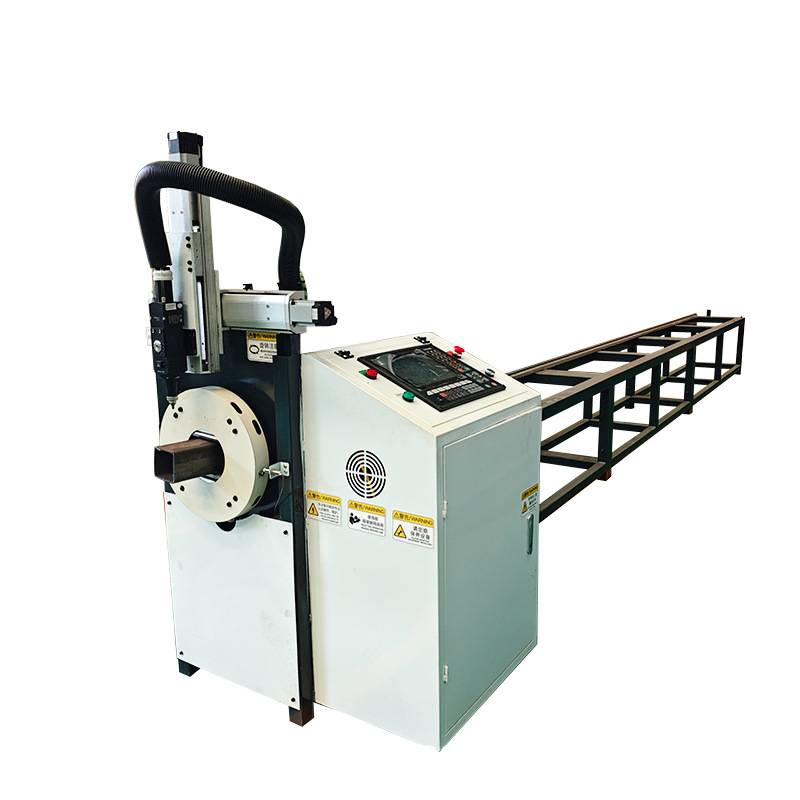
Field Engineering Report: Integration of 6000W 3D Structural Steel Processing in the Ho Chi Minh City Mining Machinery Sector
1. Executive Summary: The Shift to Automated 3D Laser Processing
The industrial landscape of Ho Chi Minh City (HCMC), particularly within the heavy machinery corridors of District 9 and surrounding satellite industrial zones, is currently undergoing a radical transition. The fabrication of mining machinery—specifically primary crushers, vibrating screens, and heavy-duty conveyor chassis—demands structural integrity that conventional plasma or manual oxy-fuel cutting cannot consistently provide. This report evaluates the deployment of a 6000W 3D Structural Steel Processing Center equipped with Zero-Waste Nesting algorithms. The integration of high-wattage fiber laser sources with multi-axis kinematics has redefined the tolerances achievable in heavy-gauge H-beams, I-beams, and C-channels.
2. Technical Specifications of the 6000W Fiber Laser Synergy
The selection of a 6000W fiber oscillator is a strategic decision for the HCMC mining equipment sector. While higher wattages exist, the 6kW threshold represents the “optimal power-to-thermal-load ratio” for the thicknesses typically encountered in mining frames (8mm to 25mm wall thicknesses).
At 6000W, the Beam Parameter Product (BPP) is refined enough to maintain a narrow kerf width even when processing thick-walled RHS (Rectangular Hollow Sections). In the context of 3D processing, the laser head must maintain a constant focal point while articulating across five or six axes to accommodate beveling and complex intersections. The 6kW source provides sufficient power density to maintain feed rates of 1.2–2.5 m/min on 20mm structural carbon steel, significantly reducing the Heat Affected Zone (HAZ) compared to traditional methods. This reduction in HAZ is critical for mining machinery subjected to high-cycle fatigue, as it prevents the initiation of micro-cracks at the cut edge.
3. Kinematics and 3D Structural Geometry
Unlike flatbed lasers, the 3D Structural Steel Processing Center utilizes a rotary chuck system combined with a secondary 3D cutting head. In HCMC’s mining machinery production, components often require complex saddle cuts and fish-mouth joints for tubular truss structures.
The 3D head’s ability to perform ±45-degree beveling in a single pass is the cornerstone of modern structural efficiency. For the fabrication of underground support arches, the system executes precision V-groove and Y-groove preparations. This eliminates the secondary grinding process previously required for weld preparation according to AWS D1.1 structural welding codes. The synchronization between the chuck’s rotational C-axis and the cutting head’s A/B axes ensures that the beam’s geometric center is maintained, even when processing warped or non-linear raw materials—a common occurrence in heavy-duty structural stock.
4. Zero-Waste Nesting Logic: Algorithmic Material Optimization
The primary bottleneck in HCMC’s heavy steel fabrication has historically been material yield. With high-tensile structural steel prices fluctuating, the “Zero-Waste Nesting” technology serves as a critical economic and technical lever.
4.1 The Mechanism of Minimal Tailing
Standard structural laser systems typically leave a “tailing” of 200mm to 500mm due to the physical limitations of the chuck’s gripping zone. The Zero-Waste system deployed in this center utilizes a multi-chuck synchronized movement (often a triple-chuck configuration). As the laser nears the end of a beam, the secondary and tertiary chucks hand off the workpiece, allowing the cutting head to process material within the “dead zone” of the primary gripper.
4.2 Nesting Algorithms for Structural Sections
The software layer utilizes 3D nesting logic that differs significantly from 2D sheet nesting. It accounts for the structural profile’s cross-sectional inertia. In mining conveyor production, where long runs of C-channel are standard, the algorithm identifies “common-line” cutting opportunities between adjacent parts. By sharing a cut path, the system not only reduces gas consumption but also minimizes the thermal input into the beam, preventing longitudinal bowing.
5. Application Analysis: Mining Machinery in the HCMC Context
Mining machinery manufactured in Vietnam’s southern hubs faces unique environmental and operational challenges. The equipment often operates in high-humidity, high-abrasion environments (e.g., bauxite mining or granite quarrying).
5.1 Vibrating Screen Side Plates
The precision of bolt-hole arrays in vibrating screens is paramount. Conventional punching or plasma cutting often results in tapered holes or work-hardening of the hole perimeter. The 6000W laser, through high-speed pulsing, produces holes with a taper ratio of less than 0.1mm on a 15mm plate. This ensures a “interference fit” for high-strength friction grip (HSFG) bolts, which is essential for components subjected to constant harmonic vibration.
5.2 Chassis Component Integration
For heavy-duty crawler frames, the center processes thick-walled H-beams with integrated notches for cross-member pass-throughs. The Zero-Waste Nesting allows for the inclusion of small gussets and stiffener plates within the “windows” of larger cut-outs, effectively achieving a material utilization rate of over 95%, a figure previously unthinkable in structural beam processing.
6. Thermal Management and Ambient Considerations in HCMC
Operating a 6000W fiber laser in Ho Chi Minh City requires specific engineering adjustments regarding thermal stability. The high ambient temperature and humidity necessitate a dual-circuit industrial chiller with a high cooling capacity coefficient.
During our field observation, the 3D Processing Center’s cabinet was pressurized and climate-controlled to prevent condensation on the collimating lenses of the 3D head. Furthermore, the 6000W source requires a stabilized power input; the local grid fluctuations in industrial parks like Bien Hoa or HCMC High-Tech Park are mitigated through high-speed voltage regulators to ensure the laser’s power stability (±1%) is maintained during deep penetration cuts.
7. Precision Metrics and Empirical Data
Data collected from the HCMC field site indicates the following performance benchmarks for the 6000W 3D system:
* **Dimensional Accuracy:** ±0.05mm over a 6000mm beam length.
* **Bevel Accuracy:** ±0.2 degrees on 45-degree prep cuts.
* **Scrap Reduction:** Average reduction of 12% in raw material waste per chassis assembly compared to 2D-nested plasma cutting.
* **Throughput:** A 300% increase in parts-per-hour for complex interlocking truss members versus manual fabrication.
8. Technical Challenges and Mitigation
Processing heavy structural steel is not without challenges. “Beam twist”—where the raw material has a slight longitudinal rotation—can cause 3D cutting paths to deviate. The system utilizes a laser-based touch probe or induction sensing to map the actual profile of the beam in real-time. This “Active Mapping” technology adjusts the 5-axis cutting path to the actual geometry of the steel, ensuring that even if the beam is slightly deformed, the cut remains perpendicular to the theoretical datum.
9. Conclusion
The implementation of the 6000W 3D Structural Steel Processing Center with Zero-Waste Nesting represents a significant leap for mining machinery fabrication in Ho Chi Minh City. By combining high-density fiber laser energy with advanced kinematic hand-offs, manufacturers are achieving levels of precision that eliminate downstream assembly errors. The “Zero-Waste” capability directly addresses the overhead costs of heavy-gauge steel, while the 3D beveling capabilities satisfy the stringent welding requirements of the mining industry. This system is no longer a luxury but a fundamental requirement for HCMC-based exporters aiming to meet global mining equipment standards.













