Introduction to 4kW Tube laser cutting in Toluca’s Industrial Sector
The industrial corridor of Toluca, State of Mexico, stands as one of the most significant manufacturing hubs in North America. As the region continues to evolve from traditional assembly to high-precision engineering, the adoption of advanced fiber laser technology has become a prerequisite for competitiveness. Among the various configurations available, the 4kW tube laser cutting system has emerged as the industry standard for processing stainless steel. This specific power rating offers an optimal balance between capital investment, operational cost, and the ability to penetrate the wall thicknesses most commonly found in automotive, aerospace, and food processing applications.
Laser cutting technology has undergone a paradigm shift with the transition from CO2 to fiber sources. For manufacturers in Toluca, where efficiency and throughput are dictated by stringent supply chain requirements, the 4kW fiber laser provides the necessary photon density to process stainless steel with unparalleled speed and edge quality. This guide explores the technical nuances, material considerations, and regional advantages of deploying 4kW tube laser systems in the heart of Mexico’s industrial zone.
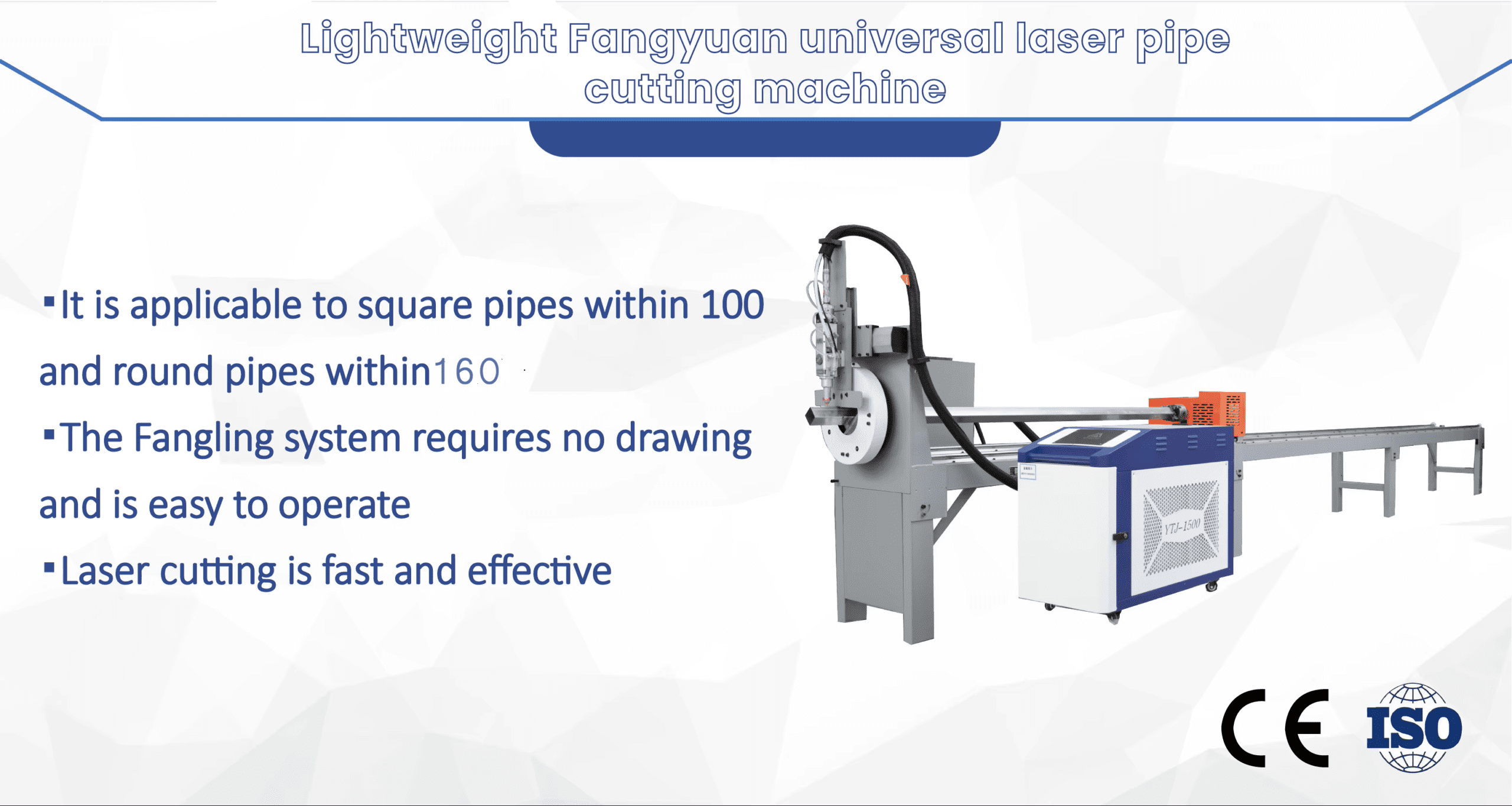 laser cutting machine MAK160″>
The Engineering Advantage of 4kW Fiber Technology
Power Density and Material Interaction
The 4kW power level is particularly effective for stainless steel due to the wavelength of fiber lasers (typically around 1.06 microns). At this wavelength, stainless steel exhibits a high absorption rate, far exceeding that of traditional CO2 lasers. When 4,000 watts of power are focused into a spot size of a few dozen microns, the energy density is sufficient to instantaneously sublime the metal. This allows for high-speed laser cutting that minimizes the Heat Affected Zone (HAZ), ensuring that the structural integrity and corrosion resistance of the stainless steel remain intact.
Wall Thickness and Capacity
A 4kW tube laser is capable of processing stainless steel tubing with wall thicknesses ranging from 0.5mm up to 10mm or 12mm, depending on the assist gas and optical configuration. For the majority of industrial applications in Toluca—such as exhaust systems, structural frames, and fluid handling pipes—the wall thickness typically falls between 1.5mm and 6mm. In this “sweet spot,” the 4kW system operates at peak efficiency, maintaining high feed rates that significantly reduce the cycle time per part compared to lower-powered alternatives.
Processing Stainless Steel: Technical Challenges and Solutions
Managing Reflectivity and Thermal Conductivity
Stainless steel, particularly series 304 and 316, presents unique challenges during the laser cutting process. While not as reflective as aluminum or copper, its surface finish can still bounce back laser energy, potentially damaging the optical delivery system. Modern 4kW fiber lasers are equipped with back-reflection isolation technology, allowing them to process polished stainless tubes without risk. Furthermore, stainless steel has lower thermal conductivity than carbon steel, meaning the heat stays concentrated at the cut edge. This requires precise control of the pulse frequency and duty cycle to prevent dross accumulation on the interior of the tube.
Assist Gas Dynamics: Nitrogen vs. Oxygen
In Toluca’s high-precision shops, Nitrogen is the preferred assist gas for laser cutting stainless steel. The use of high-pressure Nitrogen (often exceeding 15-20 bar) performs a dual role: it mechanically expels the molten metal from the kerf and provides an inert atmosphere that prevents oxidation. This results in a “bright” or “clean” cut edge that requires no post-processing before welding or painting. While Oxygen can be used to cut thicker sections by utilizing an exothermic reaction, it leaves a dark oxide layer that compromises the corrosion resistance of the stainless steel, making Nitrogen the standard for 4kW applications.

Strategic Applications in Toluca’s Key Industries
Automotive and Transportation
Toluca is home to several major Original Equipment Manufacturers (OEMs) and Tier 1 suppliers. The 4kW tube laser is indispensable for producing complex exhaust manifolds, chassis components, and seat frames. The ability to cut intricate geometries—including fish-mouth joints, miter cuts, and internal slots—allows engineers to design “tab-and-slot” assemblies. This reduces the need for expensive welding fixtures and ensures that components self-align during the assembly process, increasing overall manufacturing throughput in the Lerma-Toluca valley.
Food, Beverage, and Pharmaceutical Processing
Given the concentration of food and pharmaceutical companies in the State of Mexico, the demand for sanitary-grade stainless steel components is high. 4kW laser cutting systems are used to fabricate conveyor frames, mixing tanks, and specialized piping. The precision of the fiber laser ensures that there are no burrs or irregular surfaces where bacteria can accumulate, meeting the strict hygiene standards required by COFEPRIS and international regulatory bodies.
Operational Excellence: Software and Automation
Nesting and Material Utilization
To maximize the ROI of a 4kW system, advanced CAD/CAM software is utilized for nesting. In tube laser cutting, nesting involves more than just arranging parts; it requires sophisticated algorithms to manage “common line cutting” and “scrap reduction.” By optimizing how parts are placed on a standard 6-meter or 9-meter tube, manufacturers in Toluca can reduce material waste by 10-15%, which is a significant cost saving given the high price of stainless steel alloys.
Automation and Loading Systems
The speed of a 4kW laser often outpaces manual loading capabilities. Therefore, many facilities in Toluca integrate automatic bundle loaders. These systems can pick a single tube from a bundle, measure its length, detect the weld seam (to ensure it doesn’t interfere with critical holes), and feed it into the chucks. This level of automation allows for “lights-out” manufacturing, where the laser cutting machine operates with minimal human intervention, further lowering the cost per part.
Maintenance and Environmental Considerations in Toluca
Altitude and Atmospheric Pressure
Toluca sits at an elevation of approximately 2,660 meters above sea level. This high altitude results in lower atmospheric pressure, which can affect the cooling efficiency of chillers and the behavior of assist gases. When calibrating a 4kW laser cutting machine in this region, engineers must account for these variables. High-capacity chillers are often required to ensure the laser source and cutting head remain at stable temperatures despite the thinner air.
Preventive Maintenance Protocols
The longevity of a 4kW fiber laser depends on the cleanliness of the optical path. In industrial environments like those found in Toluca, airborne particulates can be a concern. Utilizing pressurized, filtered cabinets for the laser source and ensuring the cutting head’s protective windows are changed in a clean environment are critical steps. Regular calibration of the centering and focus of the beam ensures that the 4kW of power is used efficiently, preventing unnecessary wear on the machine’s mechanical components.
The Economic Impact: Why 4kW is the Standard
From a financial perspective, the 4kW tube laser represents a strategic middle ground. While 6kW or 10kW machines exist, they often provide diminishing returns for the wall thicknesses typically processed in the Toluca industrial zone. The 4kW system offers significantly faster speeds than a 2kW or 3kW machine—often doubling the throughput on 3mm stainless steel—while maintaining lower energy consumption and lower initial costs than ultra-high-power systems. For a job shop or an OEM in Mexico, this translates to a faster payback period and the flexibility to take on a wide variety of contracts.
Furthermore, the laser cutting process eliminates the need for secondary operations like drilling, milling, or deburring. By consolidating these steps into a single machine cycle, companies can reduce their floor space requirements and labor costs, making their “Made in Mexico” products more competitive on the global stage.
Conclusion
The integration of 4kW tube laser cutting technology is a cornerstone of the modern manufacturing strategy in Toluca. By providing the power necessary to handle stainless steel with precision and speed, these machines enable local manufacturers to meet the exacting standards of global industries. As the region continues to attract investment in high-tech sectors, the role of fiber laser technology will only grow. For any facility looking to optimize its production of stainless steel components, the 4kW tube laser remains the most versatile and efficient tool in the engineering arsenal, driving innovation and productivity in the heart of Mexico’s industrial landscape.













