Introduction to 4kW Tube laser cutting in Puebla’s Industrial Sector
The industrial landscape of Puebla, Mexico, has undergone a significant transformation over the last decade. As a primary hub for automotive manufacturing and food processing, the demand for high-precision components has skyrocketed. Central to this evolution is the adoption of fiber laser technology, specifically the 4kW tube laser cutter. This power level represents a “sweet spot” for engineering firms in the region, offering a perfect balance between speed, edge quality, and the ability to process varying thicknesses of stainless steel. In an environment where Tier 1 and Tier 2 automotive suppliers must meet rigorous international standards, the precision of laser cutting is no longer a luxury but a fundamental requirement.
Stainless steel, known for its corrosion resistance and structural integrity, is a staple material in Puebla’s factories. However, its reflective properties and thermal conductivity pose unique challenges during the fabrication process. A 4kW fiber laser system addresses these challenges by utilizing a wavelength that is highly absorbed by metallic surfaces, ensuring a clean vaporizing action rather than a messy melt. This guide explores the technical nuances of operating a 4kW system, the specific advantages for the Puebla market, and the best practices for achieving world-class results with stainless steel alloys.
 laser cutting machine MAK160″>
Technical Specifications of the 4kW Fiber Laser System
Power Density and Material Interaction
The 4kW power rating refers to the output of the fiber laser source. In the context of tube laser cutting, this power is concentrated into a beam typically measuring between 100 to 150 microns in diameter. This high power density allows the machine to pierce stainless steel almost instantaneously. For stainless steel tubes, a 4kW source can comfortably handle wall thicknesses up to 10mm or 12mm while maintaining high feed rates on thinner gauges (1mm to 3mm), which are common in exhaust systems and furniture frames.
The Role of Fiber Optics
Unlike older CO2 systems, fiber lasers transport the beam through a flexible fiber optic cable directly to the cutting head. This eliminates the need for complex mirror alignments, which is critical in a high-vibration industrial environment like Puebla’s industrial parks. The stability of the fiber beam ensures that the laser cutting process remains consistent regardless of where the cutting head is positioned along the length of the tube, which can often reach up to 6 or 9 meters.
Chuck Mechanics and Tube Handling
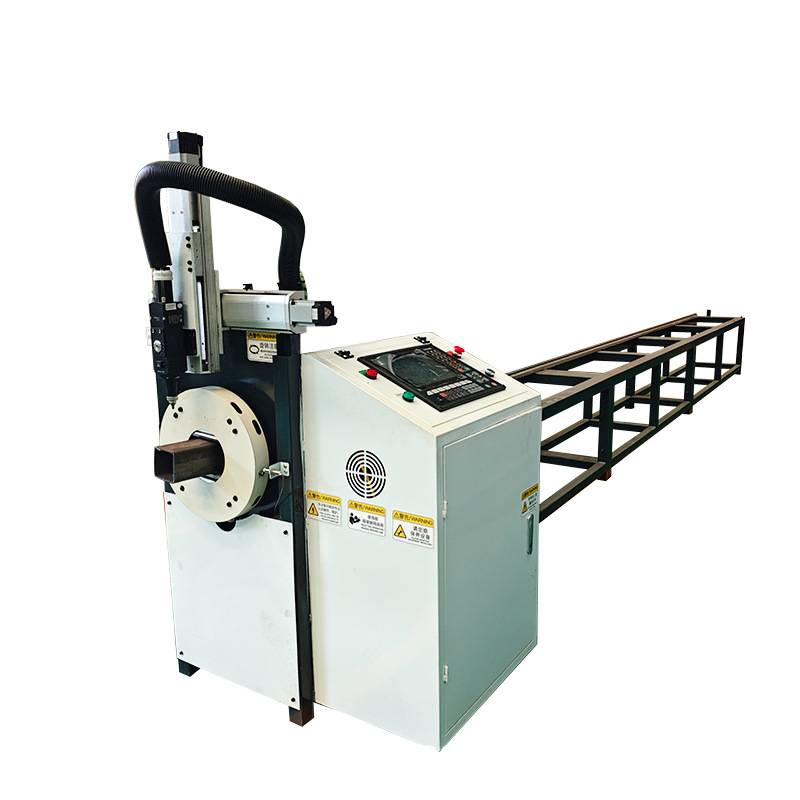
A high-end 4kW tube laser cutter is equipped with automated pneumatic chucks. These components are responsible for rotating the tube with high precision while the laser head moves along the X and Z axes. In Puebla’s high-volume manufacturing sectors, the ability of the chucks to self-center and adjust clamping pressure automatically is vital to prevent the deformation of thin-walled stainless steel tubes. Precision in rotation is what allows for complex geometries, such as interlocking “tab and slot” designs, which simplify subsequent welding processes.
Optimizing Stainless Steel Fabrication
Grade-Specific Considerations: 304 vs. 316
Most stainless steel processed in Puebla falls into the 300-series. Grade 304 is the workhorse of the industry, used in everything from automotive trim to kitchen equipment. Grade 316, containing molybdenum, is preferred for chemical processing and marine environments. When laser cutting these materials, the 4kW system must be tuned to account for the slightly different thermal profiles. Grade 316 tends to be slightly more viscous when molten, requiring precise adjustment of the nozzle height and gas pressure to ensure a dross-free finish.
The Necessity of Nitrogen Assist Gas
For stainless steel, the choice of assist gas is critical. While oxygen can be used to speed up the cutting of carbon steel through an exothermic reaction, it causes oxidation (charring) on stainless steel. To maintain the “bright” edge that stainless is known for, nitrogen is used as the assist gas. The nitrogen acts as a mechanical force to blow the molten metal out of the kerf while shielding the heated edge from oxygen. A 4kW system requires high-pressure nitrogen (often up to 20-25 bar) to achieve the cleanest possible laser cutting results on thicker tube walls.
Managing Reflectivity
Stainless steel is naturally reflective. In the early days of laser technology, “back-reflection” could travel back up the beam path and damage the laser source. Modern 4kW fiber lasers are designed with isolators and protective windows that allow them to process reflective materials safely. This is particularly important when processing polished or “mirror-finish” stainless steel tubes often used in Puebla’s architectural and food-grade projects.
Applications in Puebla’s Industrial Corridors
Automotive Exhaust and Chassis Components
Puebla is home to some of the world’s largest automotive assembly plants. The 4kW tube laser cutter is indispensable for producing exhaust manifolds, tailpipes, and structural reinforcements. The speed of laser cutting allows manufacturers to keep up with Just-In-Time (JIT) delivery schedules. Furthermore, the ability to cut holes, slots, and complex end-profiles in a single pass eliminates the need for secondary drilling or milling operations, significantly reducing the cost per part.
Food Processing and Pharmaceutical Equipment
The region also boasts a robust food and beverage industry. Sanitary tubing made of 304 or 316 stainless steel must be cut with extreme precision to ensure that joints are perfectly flush for orbital welding. Any burrs or irregularities in the laser cutting process could harbor bacteria, making the high-quality finish of a 4kW fiber laser essential for compliance with health and safety regulations.
Architectural and Urban Infrastructure
From bus shelters to high-end commercial railings, the aesthetic versatility of stainless steel is widely utilized in Puebla’s urban development. The 4kW laser allows for intricate decorative patterns to be cut into square and rectangular tubing, providing architects with creative freedom that was previously cost-prohibitive. The precision of the laser ensures that even the most complex designs are repeatable across thousands of units.
Operational Excellence and Maintenance
Nozzle Selection and Calibration
To achieve the best laser cutting performance, operators must select the correct nozzle diameter based on the material thickness. A 1.5mm or 2.0mm nozzle is standard for most stainless tube applications. Daily calibration of the capacitive height sensor is also mandatory. This sensor maintains a constant distance between the nozzle and the tube surface, compensating for any slight bows or twists in the raw material.
Cooling Systems and Environment
A 4kW laser generates significant heat within the source and the cutting head. A high-capacity industrial chiller is required to maintain a stable operating temperature. In Puebla, where ambient temperatures can fluctuate and dust from industrial activity can be a factor, maintaining a clean, climate-controlled enclosure for the laser source is vital for longevity. Regular filter changes and coolant inspections prevent downtime and ensure the beam quality remains sharp.
Software Integration: CAD/CAM for Tubes
The hardware is only as good as the software driving it. Modern 4kW systems utilize specialized nesting software that optimizes the layout of parts on a single tube to minimize scrap. For stainless steel, which is more expensive than carbon steel, reducing waste by even 5% can result in significant annual savings. The software also handles “corner cooling” or “power ramping,” where the laser power is automatically reduced when navigating tight corners to prevent over-burning the material.
Economic Impact and ROI for Puebla Businesses
Investing in a 4kW tube laser cutter is a significant capital expenditure, but the Return on Investment (ROI) in the Puebla market is often realized within 18 to 24 months. By consolidating multiple processes—sawing, drilling, deburring, and milling—into a single laser cutting station, companies reduce labor costs and floor space requirements. Additionally, the high speed of the 4kW fiber source allows shops to take on more contracts and increase their throughput.
Furthermore, the energy efficiency of fiber technology compared to CO2 lasers results in lower electricity bills. For a region like Puebla, where energy costs are a constant consideration for manufacturing plants, the lower “plug-to-fiber” efficiency of a 4kW system provides a competitive edge in the global market.
Conclusion
The 4kW tube laser cutter has become a cornerstone of modern manufacturing in Puebla. Its ability to handle the complexities of stainless steel with speed and precision makes it an invaluable tool for the automotive, food-grade, and construction sectors. By understanding the technical requirements—from nitrogen gas management to proper nozzle calibration—local fabricators can produce world-class components that compete on a global scale. As laser cutting technology continues to advance, the integration of 4kW systems will remain a key driver of industrial growth and engineering excellence in the heart of Mexico.













