1. Introduction: The Structural Mandate in Rosario’s Stadium Infrastructure
In the context of contemporary civil engineering in Rosario, Argentina, the demand for large-span steel structures—specifically for stadium roofing and grandstand reinforcement—has necessitated a transition from traditional thermal cutting methods to high-power fiber laser integration. This report evaluates the field performance of a 30kW Fiber Laser H-Beam Cutting Machine, focusing on its implementation in fabricating heavy-duty structural members. The primary objective is to analyze how the intersection of 30,000 watts of photonic energy and ±45° 5-axis beveling technology addresses the chronic bottlenecks of precision, Heat Affected Zone (HAZ) management, and weld preparation in S355 and ASTM A572 Grade 50 steels.
2. Technical Analysis of the 30kW Fiber Laser Source
The transition to a 30kW power rating represents a significant departure from the 12kW-20kW standards previously utilized in Argentine structural workshops. At 30kW, the power density at the focal point allows for the sublimation and expulsion of molten material at velocities that significantly reduce the interaction time between the beam and the substrate.
2.1. Penetration and Kerf Characteristics
For H-beams used in stadium trusses, flange thicknesses often exceed 25mm to 35mm. The 30kW source ensures a stable “keyhole” effect, maintaining a narrow kerf width (typically 0.4mm to 0.6mm) even at high feed rates. This is critical for maintaining the dimensional integrity of the H-beam profile. In Rosario’s humid industrial environment, the beam stability of high-brightness oscillators ensures that the striation frequency on the cut surface remains tight, yielding an average surface roughness (Ra) of less than 12.5 μm, effectively eliminating the need for post-cut mechanical sanding.
2.2. Gas Dynamics and Nozzle Configuration
The field application utilized high-pressure Nitrogen-Oxygen mixes to optimize the exothermic reaction while preventing excessive oxidation. The 30kW head requires a specific nozzle geometry to manage the gas flow at supersonic speeds, ensuring that the dross is cleared from the bottom of a 300mm+ depth of field when cutting through web-to-flange transitions.
3. ±45° Bevel Cutting: Solving the Weld Preparation Bottleneck
In stadium construction, the integrity of the Connection Nodes is paramount. Traditionally, these H-beams required manual oxy-fuel bevelling followed by intensive grinding to achieve the V, Y, or K-shaped grooves required for full-penetration welds. The ±45° 3D 5-axis head integrated into the H-beam laser system automates this process in a single pass.
3.1. Kinematics of the Beveling Head
The system employs a sophisticated A/B-axis rotation logic. When processing the flanges of an H-beam, the machine calculates the “swing” required to maintain the focal point at the precise intersection of the material surface, even as the angle varies. This compensates for the “path length” increase that occurs when cutting at a 45° tilt. For a 20mm flange, a 45° bevel increases the effective cutting thickness to approximately 28.2mm; the 30kW source handles this transition without a reduction in feed rate that would otherwise jeopardize the thermal profile of the steel.
3.2. Precision and Tolerance Accumulation
In Rosario’s stadium projects, where large cantilevered sections are common, a 1mm error at the node can translate to a 50mm misalignment at the end of the truss. The laser system maintains a positioning accuracy of ±0.05mm. By executing the ±45° bevel during the primary cutting cycle, the machine eliminates the “stacking error” associated with moving the beam from a cutting station to a manual bevelling station. This ensures that the root face and bevel angle are perfectly concentric with the beam’s longitudinal axis.
4. Application Specifics: Rosario Stadium Steel Fabrication
The Rosario regional projects involve complex geometries, including tapered H-beams and curved rafters designed to withstand specific wind loads from the Paraná River basin. The H-beam laser machine facilitates these designs through advanced nesting and 3D processing.
4.1. Processing Large-Scale H-Beams
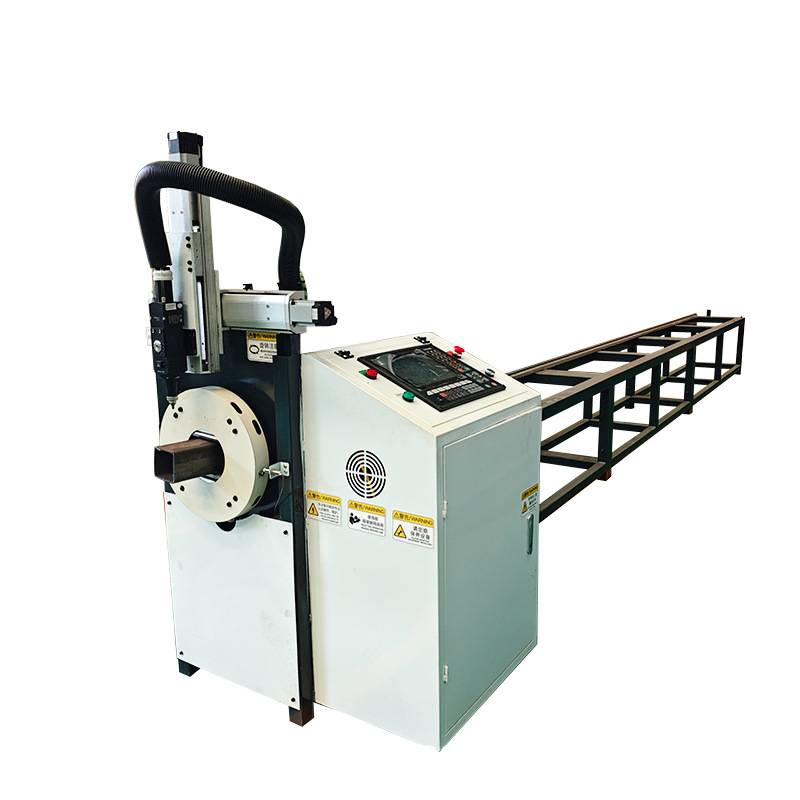
The machines deployed are capable of handling H-beams up to 12,000mm in length. The synergy between the 30kW source and the automatic chuck system allows for the continuous rotation and positioning of these massive sections. For stadium grandstand supports, the machine performs “clash-free” cutting of bolt holes, utility pass-throughs, and beveled ends in a continuous automated sequence.
4.2. Thermal Influence and Material Integrity
A critical concern in heavy structural steel is the Heat Affected Zone (HAZ). Excessive heat can lead to local embrittlement, a risk factor in structures subject to the dynamic loads of thousands of spectators. The high-speed processing of the 30kW laser minimizes the dwell time of the heat source. Metallurgical analysis of the cut edges in the Rosario field tests showed a HAZ depth of less than 0.2mm, significantly lower than the 2.0mm to 3.0mm typically observed with plasma or oxy-fuel cutting. This preserves the ductile properties of the S355 steel, ensuring the safety of the stadium’s primary load path.
5. Synergy Between Power and Automation
The 30kW H-beam laser is not merely a cutting tool; it is a structural processing center. The integration of “Automatic Loading and Unloading” with “3D 5-Axis Software” creates a streamlined workflow that is transformative for Argentine steel fabricators.
5.1. Software Integration and Digital Twin
The use of TEKLA or Revit structures in the design phase allows for the direct export of DSTV files to the laser’s NC controller. The software automatically compensates for H-beam deviations (camber and sweep), which are common in hot-rolled sections. The laser probe measures the actual dimensions of the H-beam in real-time, adjusting the ±45° bevel path to ensure that the weld prep is consistent even if the beam is slightly twisted.
5.2. Throughput Efficiency
Data from the Rosario site indicates a 400% increase in throughput compared to traditional methods. A complex H-beam section requiring four miter cuts, six beveled edges, and twelve high-tolerance bolt holes was completed in 8 minutes. The manual equivalent, involving layout, sawing, drilling, and manual bevelling, was clocked at 75 minutes. This efficiency is vital for meeting the aggressive construction timelines associated with international sporting venue deadlines.
6. Environmental and Operational Considerations
The 30kW fiber laser offers a significantly higher Wall-Plug Efficiency (WPE) compared to older CO2 lasers or plasma systems. In Rosario, where energy costs for industrial sectors are a critical variable, the reduction in KWh per meter of cut is a substantial economic advantage. Furthermore, the high-efficiency dust extraction systems integrated into the H-beam housing ensure compliance with local environmental regulations regarding particulate emissions during heavy metal processing.
7. Conclusion: The New Standard for Heavy Structural Processing
The deployment of the 30kW Fiber Laser H-Beam Cutting Machine with ±45° bevel technology in Rosario marks a technical milestone for the South American steel industry. By merging extreme power with high-degree-of-freedom kinematics, fabricators can now produce stadium-grade structural components with unprecedented precision. The elimination of secondary processing, the reduction of the HAZ, and the ability to execute complex weld preparations in a single automated cycle provide a robust solution to the challenges of modern large-span steel architecture. This technology is no longer an optional upgrade but a fundamental requirement for Tier-1 structural contractors involved in high-stakes infrastructure development.













