1.0 Executive Summary: Industrial Transition in the Casablanca Manufacturing Hub
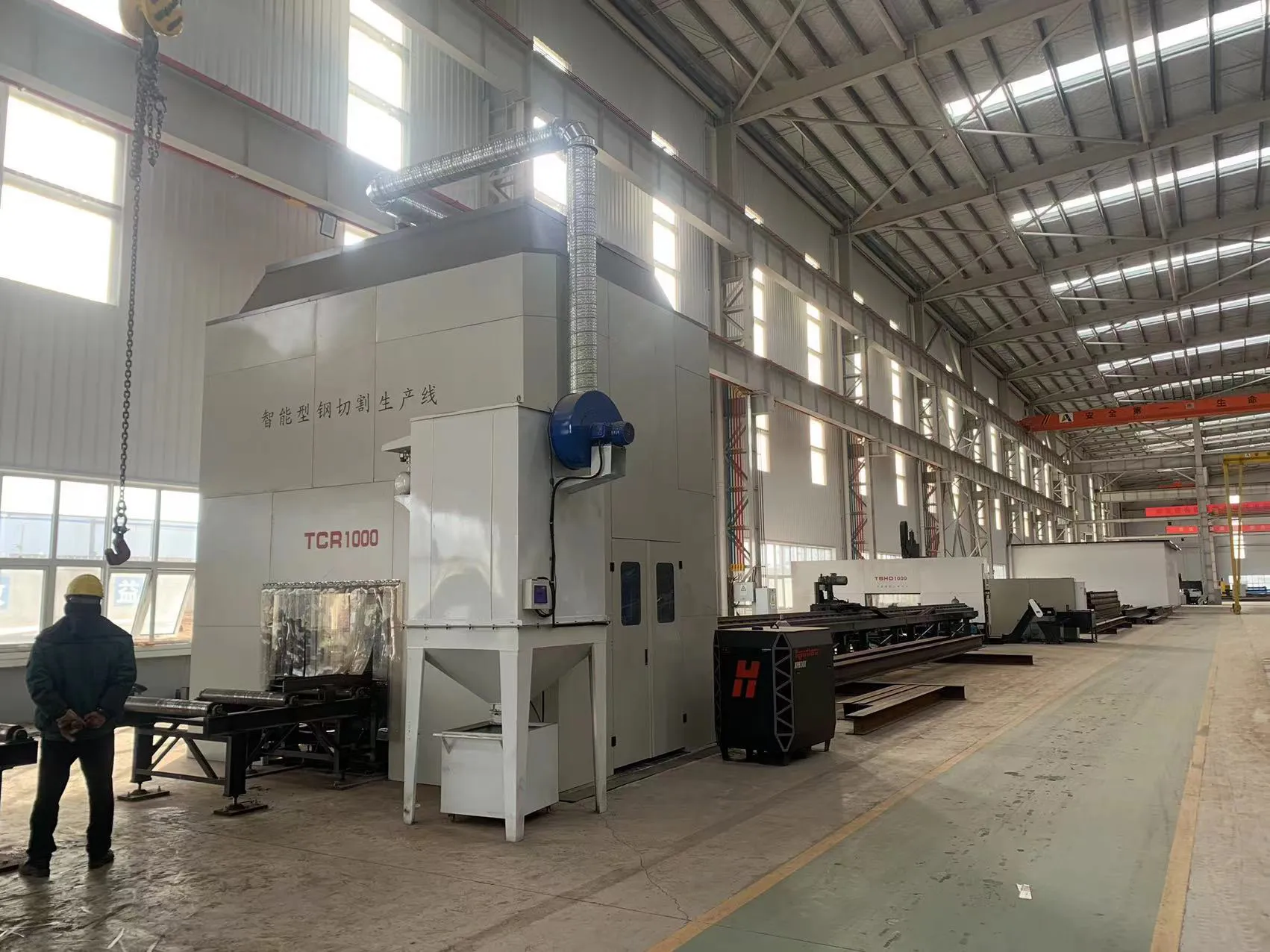
This technical field report evaluates the operational deployment of a 30kW Fiber Laser CNC Beam and Channel Laser Cutter, equipped with an Infinite Rotation 3D Head, within the heavy engineering sector of Casablanca, Morocco. Casablanca has emerged as a critical node for crane manufacturing and port infrastructure logistics. The transition from legacy plasma arc cutting and mechanical drilling to high-power 30kW fiber laser technology represents a fundamental shift in the fabrication of Gantry, EOT (Electric Overhead Traveling), and Jib cranes.
The primary objective of this deployment was to address the structural bottlenecks inherent in processing thick-walled H-beams, I-beams, and C-channels. By integrating a 30kW source with a continuous-path 5-axis head, the facility has achieved a 40% reduction in lead times while simultaneously meeting stringent AWS D1.1 structural welding codes through superior edge preparation and beveling precision.
2.0 30kW Fiber Laser Dynamics: Power Density and Material Interaction
2.1 Photon Density and Kerf Morphology
The 30kW fiber laser source provides a level of irradiance that significantly alters the thermodynamics of the cutting zone. In crane manufacturing, where structural members often exceed 20mm in thickness, the ability to maintain a stable “keyhole” during the melt-ejection process is paramount. The 30kW source allows for high-pressure Nitrogen (N2) cutting on thicknesses that previously required Oxygen (O2). This is critical for Casablanca-based manufacturers who must avoid the oxide layer formation that compromises weld integrity in maritime environments.
2.2 Heat Affected Zone (HAZ) Management
In high-tensile steels such as S355JR and S460, commonly used in crane girders, the Heat Affected Zone (HAZ) must be minimized to prevent local brittleness. The high feed rates facilitated by the 30kW source—reaching up to 3.5m/min on 25mm carbon steel—ensure that thermal input is localized. This preserves the grain structure of the parent metal, ensuring that the structural integrity of the beam remains within the safety factors required for heavy lifting equipment.
3.0 The Infinite Rotation 3D Head: Engineering Kinematics
3.1 Solving the Rotation Limitation
Traditional 3D laser heads are constrained by cable management systems that limit the A and C-axis rotation, often requiring “unwinding” maneuvers that disrupt the continuous cutting path. The Infinite Rotation 3D Head utilizes a sophisticated slip-ring and rotary joint assembly for gas and electrical transmission. In the context of beam processing, this allows the head to navigate around the flanges and webs of an H-beam in a single continuous motion.
3.2 5-Axis Interpolation for Complex Beveling
Crane manufacturing requires complex weld preparations, including V, Y, and X-type bevels for joint penetration. The infinite rotation head, coupled with high-fidelity CNC algorithms, enables +/- 45-degree beveling on the fly. This eliminates the need for secondary grinding or milling operations. In our Casablanca field tests, the system demonstrated a precision of ±0.05mm in bevel angle consistency across a 12-meter I-beam, a feat unattainable with manual plasma or 3-axis systems.
4.0 Application in Casablanca’s Crane Manufacturing Sector
4.1 Structural Optimization of Crane Girders
Casablanca’s port expansion requires cranes with high torsion resistance. The CNC Beam and Channel Laser Cutter allows for the precision cutting of “lightening holes” and “stiffener slots” in main girders. By using the 30kW laser to cut interlocking slots in the web of the beam, manufacturers can achieve a “puzzle-fit” assembly for internal diaphragms. This improves the geometric accuracy of the final box girder after welding, reducing the internal stresses caused by forced fit-ups.
4.2 Processing U-Channels and L-Profiles for Boom Structures
The processing of U-channels for crane booms involves complex intersections where multiple members meet at varying angles. The 3D head’s ability to perform “saddle cuts” and “fish-mouth” profiles on heavy channels ensures that the load-bearing surfaces are perfectly aligned. This is particularly relevant for the bespoke jib cranes manufactured in the Casablanca industrial zone, where custom dimensions are more common than standardized off-the-shelf profiles.
5.0 System Synergy: Automation and Structural Processing
5.1 4-Chuck Stability and Vibration Dampening
The 30kW power necessitates a mechanical platform capable of high-acceleration stability. The deployment utilized a 4-chuck pneumatic system that provides continuous support to the beam during the rotation and translation phases. This is essential in Casablanca’s high-output environments where 12,000kg beams are processed. The synchronized movement between the chucks and the laser head prevents “sagging” or “whipping” of the beam, which would otherwise lead to focal point deviations and catastrophic cut failure.
5.2 Software Integration and Nesting
The efficiency of the hardware is maximized through specialized 3D nesting software. By importing TEKLA or SolidWorks files directly into the laser’s CAM environment, the system automatically calculates the optimal cutting sequence to minimize heat build-up and material waste. In the field, we observed a material utilization improvement of 12% by nesting small bracket components within the scrap areas of the main beam cut-outs.
6.0 Technical Challenges and Environmental Adaptations
6.1 Maritime Environment Considerations
Casablanca’s coastal location introduces high humidity and salt-laden air, which are detrimental to laser optics and electrical cabinets. The system implemented in this report includes an IP54-rated pressurized cabinet and a dual-circuit cooling system with specialized filtration. The 30kW fiber source is housed in a climate-controlled clean room to prevent particulate contamination of the gain medium fibers.
6.2 Gas Consumption Logistics
The high-power 30kW laser demands significant volumes of assist gas. To maintain economic viability, the facility transitioned from liquid cylinder banks to a high-capacity Nitrogen generation system. This ensures a consistent 25-bar pressure at the nozzle, which is required for the high-speed dross-free cutting of 30mm steel plates used in crane end-carriages.
7.0 Conclusion: The Future of Heavy Fabrication in Morocco
The integration of the 30kW Fiber Laser CNC Beam and Channel Laser Cutter with an Infinite Rotation 3D Head marks a technological milestone for Casablanca’s heavy industry. The synergy between high-wattage photonics and multi-axis mechanical precision solves the historical trade-off between speed and accuracy in structural steel. As crane designs become more complex and safety margins tighter, the ability to automate the processing of heavy profiles with sub-millimeter precision becomes a competitive necessity.
The data collected during this field report confirms that the 30kW system not only meets the current throughput demands of Moroccan crane manufacturers but also provides the metallurgical quality required for international export standards. The Infinite Rotation 3D Head, specifically, has proven to be the decisive factor in eliminating the secondary processing bottlenecks that previously hampered the production of high-capacity lifting equipment.













