The Dawn of Ultra-High Power: Why 30kW Matters
In the realm of structural steel, thickness and density have traditionally been the enemies of speed. For decades, the storage racking industry relied on a combination of mechanical sawing, punch presses, and plasma cutting. However, the introduction of the 30kW fiber laser has shattered the “speed vs. thickness” ceiling. As a fiber laser expert, I have witnessed the progression from 2kW to 30kW, and the leap to 30kW is not merely incremental; it is a paradigm shift.
At 30kW, the power density is sufficient to achieve “high-speed vaporization” of carbon steel. In Casablanca’s burgeoning industrial zones, where efficiency is the primary driver of ROI, a 30kW system can process 20mm to 25mm structural steel flanges with the same fluidity that a 4kW laser processes thin sheet metal. This power allows for much faster piercing times—reducing a multi-second process to a fraction of a second—which significantly minimizes the Heat-Affected Zone (HAZ). For storage racking, maintaining the metallurgical integrity of the steel is vital; a smaller HAZ ensures that the structural uprights and beams retain their rated load-bearing capacities without the brittleness often introduced by slower, high-heat processes.
3D Processing: Beyond the Flatbed
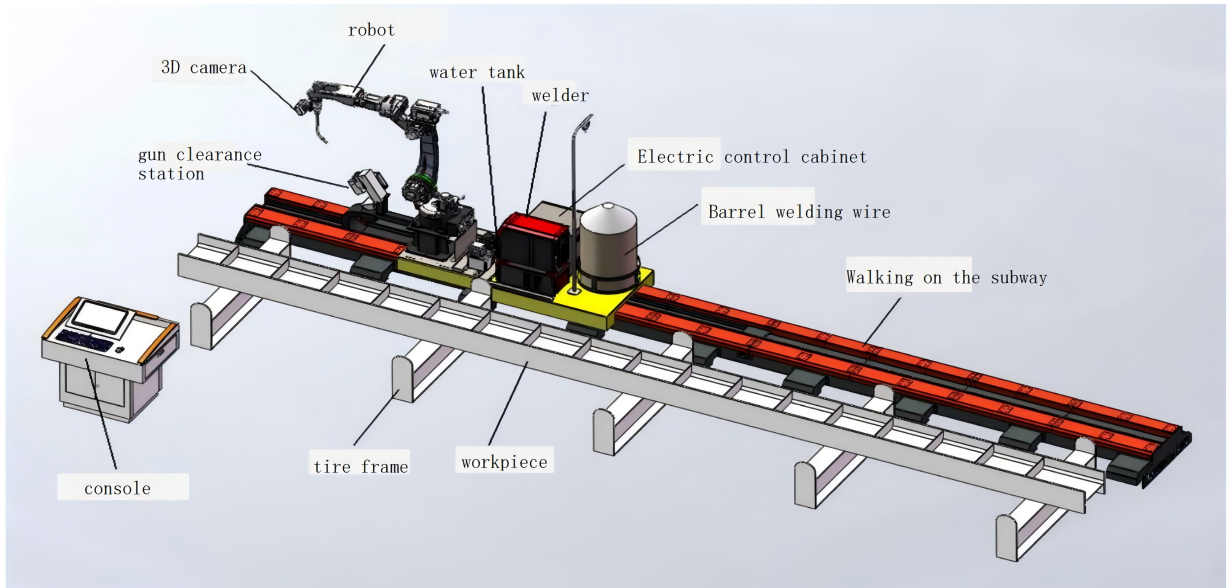
Storage racking systems are complex three-dimensional assemblies. They are not merely flat plates but are composed of intricate geometries: uprights with teardrop patterns, cross-braces with beveled ends, and heavy-duty beams with interlocking connectors. A 3D Structural Steel Processing Center utilizes a multi-axis head (typically 5 or 6 axes) capable of rotating and tilting to follow the contours of these profiles.
The 3D capability eliminates the need for multiple machine setups. In a traditional shop, an H-beam would be sawed to length, moved to a drilling station for bolt holes, and then moved again for manual beveling. The 30kW 3D laser center performs all these tasks in a single continuous cycle. It can cut “bird-mouth” joints, miter cuts, and complex notches directly into the web and flanges of the steel. This level of precision ensures that when these components reach the job site in Casablanca or are exported across the Maghreb, they fit together with zero tolerance for error, drastically reducing on-site welding and assembly time.
Zero-Waste Nesting: The Economics of Efficiency
In the storage racking industry, material costs typically account for 60% to 70% of the total project value. Waste is quite literally discarded profit. Traditional nesting often leaves “skeletons” or significant offcuts at the end of each beam or profile. The “Zero-Waste” philosophy integrated into modern 3D laser centers utilizes advanced CAD/CAM algorithms to maximize every millimeter of raw material.
Zero-waste nesting works through several sophisticated techniques:
- Common Line Cutting: Two adjacent parts share a single cut line, halving the cutting time for that edge and eliminating the scrap gap between them.
- Remnant Management: The software tracks offcuts and automatically nests smaller components, such as base plates or gussets, into the remaining sections of a large beam.
- Chain Cutting: The laser moves from one part to the next without shutting off the beam, optimizing the path and reducing the lead-in/lead-out waste.
For a manufacturer in Casablanca, where steel is often imported, reducing scrap by even 5% can result in hundreds of thousands of dollars in annual savings. This efficiency makes the local production of racking systems globally competitive against imports from high-volume exporters.
Precision Engineering for Storage Racking
Storage racking is a life-safety product. Whether it is a selective rack, a drive-in system, or an automated storage and retrieval system (ASRS), the precision of the laser cut is paramount. The 30kW fiber laser offers a kerf width (the width of the cut itself) that is significantly narrower and more consistent than plasma cutting.
In Casablanca’s logistics sector, there is an increasing demand for high-bay racking that reaches heights of over 30 meters. At these heights, even a one-degree deviation in the perpendicularity of a cut can lead to significant leaning at the top of the rack. The 3D laser center’s ability to execute perfect 90-degree cuts on thick-walled sections ensures that uprights are perfectly plumb. Furthermore, the ability to laser-cut the “hooks” and “tabs” of beam connectors with high repeatability means that the mechanical lock between the beam and the upright is tighter and more secure, enhancing the overall seismic resilience of the structure.
The Casablanca Advantage: A Strategic Industrial Hub
Casablanca is the beating heart of Morocco’s “Industrial Acceleration Plan.” The city’s proximity to the Tanger Med port and its role as a gateway to West Africa make it a strategic location for a high-tech processing center. By housing a 30kW 3D laser facility, local manufacturers can pivot from being mere distributors to high-value-add producers.
The local availability of such technology allows for “Just-In-Time” (JIT) manufacturing. Instead of waiting months for customized racking components to arrive from overseas, Moroccan logistics firms can have bespoke systems designed, nested, and cut locally in a matter of days. This agility is a massive competitive advantage in the fast-paced world of e-commerce and cold chain logistics, both of which are seeing explosive growth in the Casablanca-Settat region.
Integration of AI and Industry 4.0
A 30kW 3D laser center is not an isolated machine; it is an IOT-enabled node in a smart factory. These systems are equipped with sensors that monitor beam quality, gas pressure, and nozzle condition in real-time. In the context of Casablanca’s move toward Industry 4.0, these machines provide vital data back to the ERP system.
Predictive maintenance is a key feature for a fiber laser expert to highlight. The system can alert operators if a protective window is contaminated or if the laser source is operating outside of optimal parameters. This prevents unplanned downtime, which is critical when fulfilling large-scale racking contracts for multinational retailers. Furthermore, the AI nesting software learns from previous jobs, constantly refining its ability to suggest the most efficient layout for various structural profiles.
Environmental Impact and Sustainability
Modern industrial standards increasingly demand “green” manufacturing processes. Fiber lasers are inherently more energy-efficient than older CO2 lasers or plasma systems. A 30kW fiber laser has a wall-plug efficiency of approximately 35-40%, whereas CO2 lasers hover around 10%. Furthermore, the precision of the 3D laser reduces the need for secondary grinding or cleaning, which in turn reduces dust and noise pollution in the Casablanca facility.
The “Zero-Waste” aspect is perhaps the strongest environmental argument. By minimizing the amount of steel that must be melted down and recycled (a highly energy-intensive process), the 3D laser center significantly reduces the carbon footprint per ton of racking produced. This aligns with Morocco’s national goals of sustainable industrial development and green energy transition.
Conclusion: The Future of Moroccan Steel
The installation of a 30kW Fiber Laser 3D Structural Steel Processing Center in Casablanca is more than a purchase of equipment; it is a statement of intent. It signals that the Moroccan storage racking industry is ready to compete on a global stage, prioritizing precision, speed, and sustainability. As these systems become the backbone of local production, we will see a shift toward more complex, taller, and safer warehousing solutions across the African continent. For the structural steel expert, the 30kW laser is the ultimate tool, turning the heavy, stubborn medium of steel into a material that can be crafted with the elegance and exactness of a surgeon’s scalpel.













