Maximizing Efficiency with 2kW Precision Laser Systems for Galvanized Steel in Leon
The industrial landscape of Leon, Guanajuato, has undergone a significant transformation over the last decade. As a primary hub within Mexico’s “Bajío” region, Leon has evolved from its traditional leather and footwear roots into a sophisticated center for automotive manufacturing, construction, and aerospace logistics. Central to this evolution is the adoption of advanced fabrication technologies, specifically the 2kW precision laser system. For local manufacturers working with galvanized steel, mastering the nuances of laser cutting is no longer an optional upgrade—it is a requirement for maintaining a competitive edge in a globalized market.
Galvanized steel, prized for its corrosion resistance and structural integrity, presents unique challenges during the thermal cutting process. The presence of a zinc coating, while beneficial for the longevity of the final product, introduces variables that can affect edge quality, processing speed, and machine maintenance. A 2kW fiber laser system offers the optimal power density to navigate these challenges, providing a balance between high-speed throughput and the delicate precision required for intricate components.
The Technical Advantage of 2kW Fiber Laser Technology
In the context of modern fabrication, the 2kW fiber laser represents the “sweet spot” for many medium-duty industrial applications. Fiber lasers operate at a wavelength of approximately 1.06 microns, which is highly absorbed by metallic surfaces compared to traditional CO2 lasers. When processing galvanized steel, this absorption rate allows for a smaller heat-affected zone (HAZ), which is critical for preserving the integrity of the zinc layer near the cut edge.
For shops in Leon focusing on automotive brackets, HVAC ducting, or electrical enclosures, the 2kW power level provides enough energy to vaporize the steel substrate rapidly while maintaining enough control to prevent excessive “boiling” of the zinc coating. This precision ensures that the laser cutting process results in clean, burr-free edges that require little to no post-processing, significantly reducing labor costs and lead times.
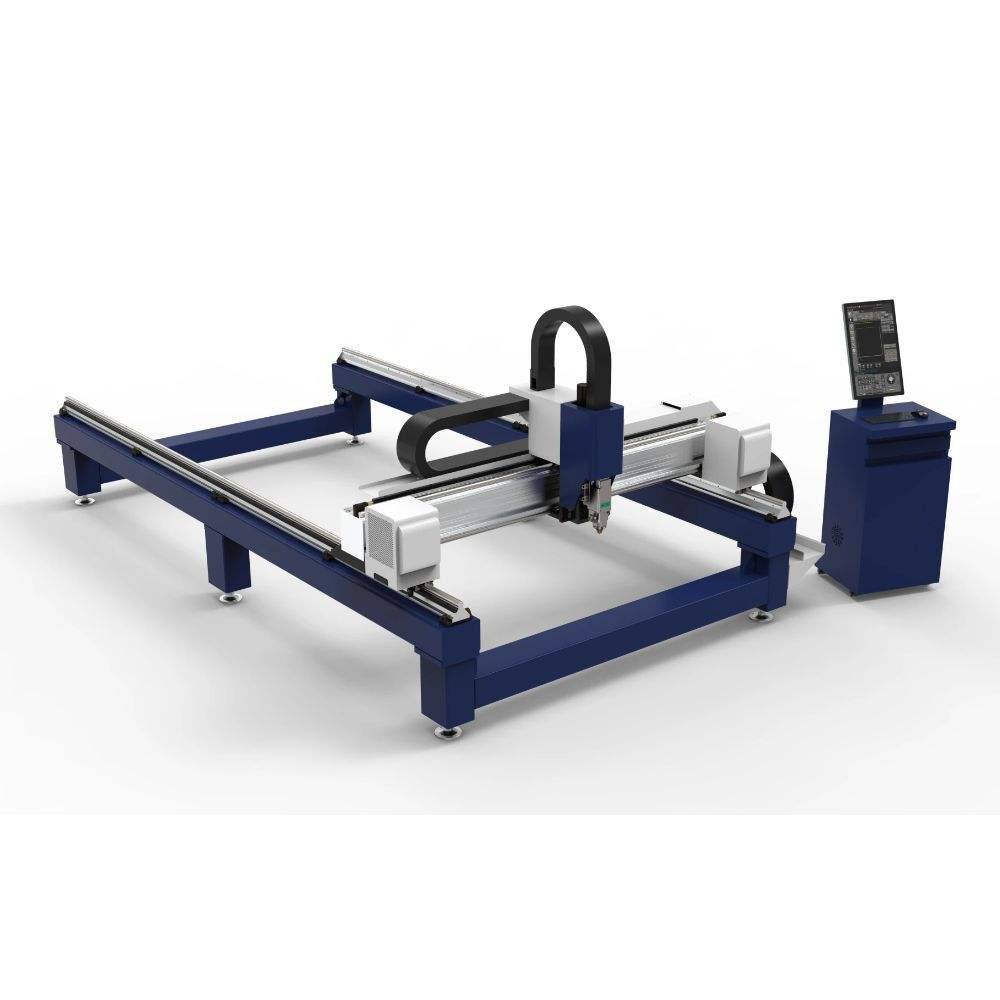
Overcoming the Challenges of Galvanized Steel
The primary difficulty in laser cutting galvanized steel lies in the disparate melting and boiling points of the two metals involved. Zinc vaporizes at approximately 907°C, while the underlying steel melts at roughly 1,370°C. During the cutting process, the zinc coating often vaporizes before the steel melts, creating high-pressure gas that can interfere with the stability of the laser beam and the assist gas flow. This often leads to “dross” or “slag” accumulation on the underside of the workpiece.
To mitigate this, precision 2kW systems utilize advanced CNC controllers that can modulate pulse frequency and duty cycles in real-time. By fine-tuning these parameters, operators in Leon can achieve a stable “keyhole” in the material, allowing the vaporized zinc to escape without disrupting the molten pool of steel. Furthermore, the use of specialized nozzles—often double-layered or “high-flow” designs—helps to stabilize the assist gas pressure, ensuring a consistent purge of material from the kerf.
Optimizing Assist Gas Selection: Nitrogen vs. Oxygen
In the Leon industrial sector, the choice of assist gas is a critical factor in the economic and qualitative success of laser cutting operations. For galvanized steel, the two primary choices are Nitrogen and Oxygen, each serving different production goals.
Nitrogen Cutting for Superior Finish
Nitrogen is typically the preferred assist gas for 2kW systems when edge quality and paint adhesion are the priorities. As an inert gas, Nitrogen acts as a mechanical force to blow away molten metal without reacting chemically with the material. This prevents oxidation on the cut edge, leaving a bright, clean finish. For manufacturers in Leon producing visible architectural components or parts that require subsequent powder coating, Nitrogen cutting is essential. However, it requires higher pressures and, consequently, higher operational costs.
Oxygen Cutting for Increased Speed
Oxygen, on the other hand, acts as an accelerant. It reacts with the iron in the steel to create an exothermic reaction, adding thermal energy to the process. This allows for faster cutting speeds on thicker galvanized plates. The downside is the formation of a thin oxide layer on the edge, which may need to be removed if the part is to be welded or painted. In high-volume structural applications where speed is the primary KPI, Oxygen is often the more cost-effective choice for a 2kW system.

Precision Engineering and Machine Calibration
A 2kW precision laser system is only as effective as its calibration. In the specific environment of Leon, where ambient temperatures can fluctuate and industrial dust is common, machine maintenance is paramount. Precision systems must be equipped with high-quality optics and a robust motion control system. Linear motors or high-precision rack-and-pinion drives are necessary to translate the 2kW power into accurate geometries.
The “precision” aspect of these machines also refers to the software-hardware integration. Modern systems utilize “Fast-Access” height sensing, which allows the cutting head to maintain a constant distance from the galvanized sheet, even if the material has slight undulations or thermal warping. This is particularly important for thin-gauge galvanized sheets (0.5mm to 2.0mm), which are prone to movement during the high-heat laser cutting process.
Environmental and Safety Considerations in Leon
Processing galvanized steel releases zinc oxide fumes, which can be hazardous if not properly managed. For shops in Leon, adhering to environmental regulations and ensuring worker safety is a critical component of professional engineering practice. A 2kW laser system must be paired with a high-efficiency dust extraction and filtration unit. These units use HEPA filters to capture fine particulate matter, ensuring that the air within the facility remains clean and that the high-precision optics of the laser are not contaminated by settling dust.
Furthermore, the reflectivity of galvanized steel can pose a risk to the fiber laser source itself. Back-reflections can travel back through the delivery fiber and damage the laser diodes. Precision 2kW systems designed for this material include optical isolators and “back-reflection protection” mechanisms that automatically shut down the beam if a dangerous level of reflected light is detected, preserving the longevity of the equipment.
Economic Impact for Leon’s Manufacturing Sector
The investment in a 2kW precision laser system provides a significant Return on Investment (ROI) for Leon-based enterprises. By moving laser cutting operations in-house, companies can eliminate the lead times associated with outsourcing and gain total control over quality. The speed of a 2kW fiber laser on galvanized steel—often exceeding 20 meters per minute on thin gauges—allows for high-volume production that can keep pace with the demanding schedules of the automotive supply chain.
Moreover, the precision of these systems reduces material waste. Advanced nesting software can pack parts tightly onto a galvanized sheet, and the narrow kerf width of the laser ensures that more parts are produced per sheet compared to plasma or waterjet cutting. In an era of fluctuating raw material prices, this efficiency is a direct contributor to the bottom line.
Conclusion: The Future of Fabrication in Leon
As Leon continues to solidify its position as an industrial powerhouse in North America, the adoption of 2kW precision laser systems will only accelerate. The ability to process galvanized steel with high speed, extreme accuracy, and minimal waste is a transformative capability for local fabricators. By understanding the interplay between laser physics, material science, and process optimization, engineers in Leon can leverage this technology to produce world-class components.
Whether it is for the production of heavy-duty truck components or intricate architectural facades, the 2kW fiber laser stands as the cornerstone of modern metalworking. Through careful gas selection, rigorous machine maintenance, and a commitment to safety, the manufacturers of Leon are well-equipped to lead the next generation of industrial excellence in the heart of Mexico.













