The Dawn of High-Power Fiber Lasers in Mexican Logistics
Mexico City and its surrounding industrial zones, such as Tlalnepantla and Cuautitlán Izcalli, have become the beating heart of Latin American logistics. The explosion of e-commerce and the strategic shift toward nearshoring have created an unprecedented demand for sophisticated storage solutions. Storage racking systems—the skeletal structure of global commerce—must now be stronger, taller, and more complex than ever before. To meet this demand, manufacturers are moving away from traditional CO2 lasers and mechanical processing in favor of ultra-high-power fiber lasers.
The introduction of the 20kW Universal Profile Steel Laser System is a transformative event. At 20,000 watts, the power density at the focal point is immense, allowing for the rapid sublimation of thick-walled structural steel. For a racking manufacturer, this means the ability to cut through 12mm to 20mm structural uprights at speeds that were unthinkable a decade ago. But it isn’t just about raw speed; it is about the “wall-plug efficiency” and the reliability of fiber delivery that ensures consistent production in the demanding environmental conditions of high-altitude central Mexico.
The Engineering Marvel: Infinite Rotation 3D Head
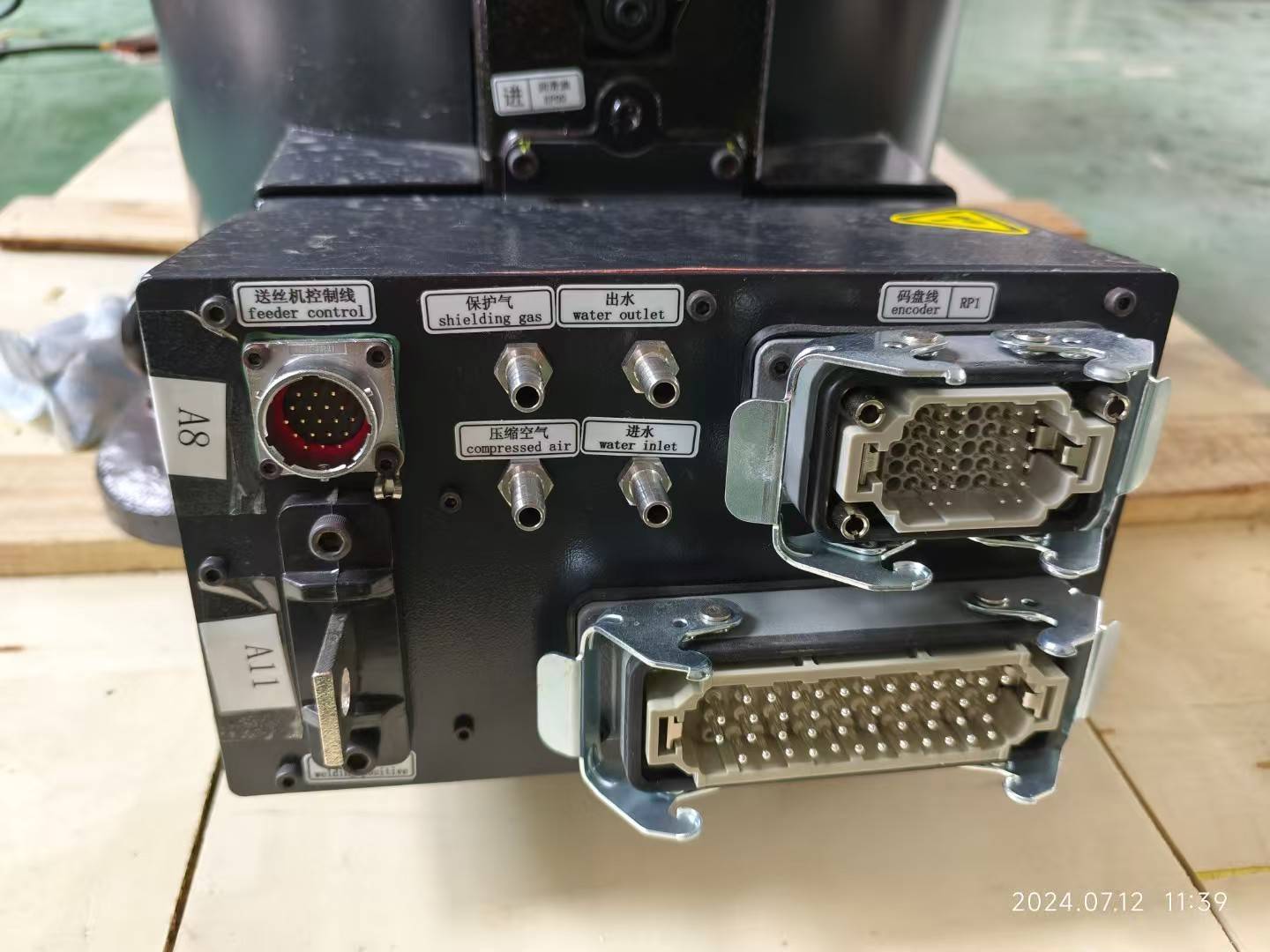
The true “brain” of this system is the 3D cutting head equipped with infinite rotation capabilities. Traditional 3D heads are often limited by internal cabling, requiring a “rewind” or “unwind” cycle after a certain degree of rotation. In a high-speed production environment, these seconds of downtime add up to hours of lost productivity over a month.
Infinite rotation utilizes advanced slip-ring technology and specialized optical pathways to allow the head to rotate indefinitely around the C-axis. When processing universal profiles—such as I-beams, H-beams, and large square tubing used in heavy-duty racking—the head can navigate complex corners and transitions without pausing. This is critical for creating “teardrop” patterns or specialized connector slots that are standard in the racking industry. The 3D capability also allows for ±45-degree beveling. For structural racking that must withstand seismic activity in the Mexico City basin, AWS-standard weld preparations (V-cuts, Y-cuts, and K-cuts) are essential. The laser creates these bevels during the primary cutting process, eliminating the need for secondary grinding or milling.
Optimizing Universal Profile Processing
In the world of storage racking, “Universal Profile” refers to the system’s ability to handle a diverse array of geometries beyond simple flat plates. This includes:
- C-Channels and U-Channels: Often used for horizontal beams and bracing.
- Structural Square and Rectangular Tubing: The foundation of high-capacity pallet racks.
- I-Beams and H-Beams: Utilized in massive cantilever systems and mezzanine floors.
The 20kW system uses sophisticated 4-chuck or 3-chuck material handling systems to rotate these heavy profiles under the laser head. The challenge with structural steel is that it is rarely perfectly straight. The universal system employs “search and center” tactile or optical sensors to map the actual deformation of the beam in real-time. The 20kW laser then adjusts its path to ensure that every bolt hole and connector slot is perfectly aligned with the beam’s neutral axis, regardless of the material’s mill-scale deviations.
Precision Requirements for Seismic-Resistant Racking
Mexico City is located in one of the world’s most active seismic zones. Storage racks here are not just shelves; they are structural engineering feats that must dissipate energy during an earthquake. The precision of the laser-cut holes in the uprights is paramount. If a connector pin has even a millimeter of “slop” due to a poorly drilled or punched hole, the entire rack’s integrity is compromised during a seismic event.
The 20kW fiber laser achieves a level of repeatability (±0.03mm) that mechanical punching cannot match. Furthermore, the heat-affected zone (HAZ) of a 20kW laser, when cutting at high speeds, is remarkably narrow. This preserves the metallurgical properties of the high-tensile steel used in racking, ensuring that the area around the connector slots does not become brittle—a common failure point in traditional thermal cutting.
Operational Efficiency in the Valley of Mexico
Operating high-power industrial equipment in Mexico City presents unique challenges, notably the altitude (approx. 2,240 meters) and potential power fluctuations. The 20kW fiber laser systems are designed with closed-loop cooling and sophisticated power filtration. From a fiber laser expert’s perspective, the high altitude affects air density, which in turn affects the dynamics of the assist gas (Nitrogen or Oxygen).
Modern systems compensate for this by using high-pressure proportional valves that maintain a consistent supersonic gas flow at the nozzle, ensuring that the molten dross is cleanly ejected from the cut. When cutting racking components, using Nitrogen as an assist gas with 20kW of power allows for “oxide-free” edges. This means the components can move straight from the laser to the powder-coating line without the need for acid pickling or sandblasting, significantly reducing the environmental footprint and operational costs for Mexico City manufacturers.
The ROI: Why 20kW is the “Sweet Spot”
Critics might argue that 20kW is overkill for some racking components. However, as an expert, I look at the “Cost Per Part.” A 20kW laser can cut 6mm steel nearly three times faster than a 6kW system. When you factor in the labor costs in the Mexico City industrial belt and the soaring cost of floor space, the ability to triple your output on the same footprint is a massive financial win.
Moreover, the versatility of the 12000mm to 15000mm beds usually paired with these machines allows for the processing of full-length structural mill sections. This reduces material scrap. The nesting software specifically designed for 3D profile cutting can “common-cut” the ends of beams, saving both time and gas. For a company producing thousands of pallet rack uprights a week, the savings in Nitrogen gas alone, thanks to the increased speed, can contribute significantly to the machine’s amortization.
Technological Integration: Industry 4.0 and Beyond
The deployment of such a system in Mexico City is often accompanied by a push toward Industry 4.0. These 20kW systems are typically integrated with ERP systems via IoT modules. In a racking factory, this allows for real-time tracking of every beam. Each component can be laser-etched with a QR code during the cutting process, containing data about its batch, its position in the warehouse project, and its structural certifications.
This traceability is becoming a requirement for major logistics providers like Amazon, Mercado Libre, and DHL, who are expanding their footprints in Central Mexico. They demand racking that is not only strong but also fully documented. The 20kW laser system provides the means to achieve this level of sophistication automatically.
Conclusion: The Future of Mexican Structural Fabrication
The 20kW Universal Profile Steel Laser System with an Infinite Rotation 3D Head is more than just a cutting machine; it is a catalyst for industrial evolution in Mexico City. By combining the speed of fiber technology with the geometric flexibility of a 5-axis robotic system, it allows racking manufacturers to design more efficient, safer, and cheaper storage solutions.
As we look toward the future, the trend in the Valley of Mexico will continue toward higher power and greater automation. The transition from 10kW to 20kW has already proven that the “more power” approach leads to cleaner cuts and higher efficiency. For the storage racking industry, which provides the literal foundation of the global supply chain, this technology ensures that the foundations built in Mexico are as precise and resilient as the modern economy demands. The infinite rotation head has removed the final mechanical barrier to total design freedom, allowing the steel to be shaped exactly as the engineers—and the earth—require.