1.0 Technical Overview: Integration of 20kW Laser Profiling in Haiphong Infrastructure
The expansion of aviation infrastructure in Haiphong, particularly regarding terminal frameworks and heavy-duty hangars, necessitates a departure from traditional mechanical sawing and plasma cutting methodologies. The deployment of the 20kW Heavy-Duty I-Beam Laser Profiler represents a critical shift toward high-fidelity structural fabrication. In the context of Haiphong’s maritime climate and the stringent seismic requirements of airport construction, the precision of structural steel joints is non-negotiable.
The 20kW fiber laser source provides the necessary energy density to achieve high-speed sublimation and melt-ejection across thick-walled I-beams (up to 25mm web thickness and 40mm flange thickness). Unlike traditional thermal cutting, the 20kW density allows for a significantly narrower Heat Affected Zone (HAZ), preserving the metallurgical integrity of S355 and S460 structural steels commonly utilized in large-span airport architectures.
1.1 Environmental and Material Considerations
Haiphong’s high humidity and salinity levels impose specific challenges on the oxidation layers of structural steel. The 20kW laser system, equipped with high-pressure nitrogen/oxygen assist gas manifolds, effectively clears the kerf of contaminants that typically hinder weld quality. The profiler’s heavy-duty chassis is engineered for the massive inertia of 12-meter I-beams, ensuring that the dynamic positioning remains within a ±0.05mm tolerance despite the external environmental variables of a coastal construction site.
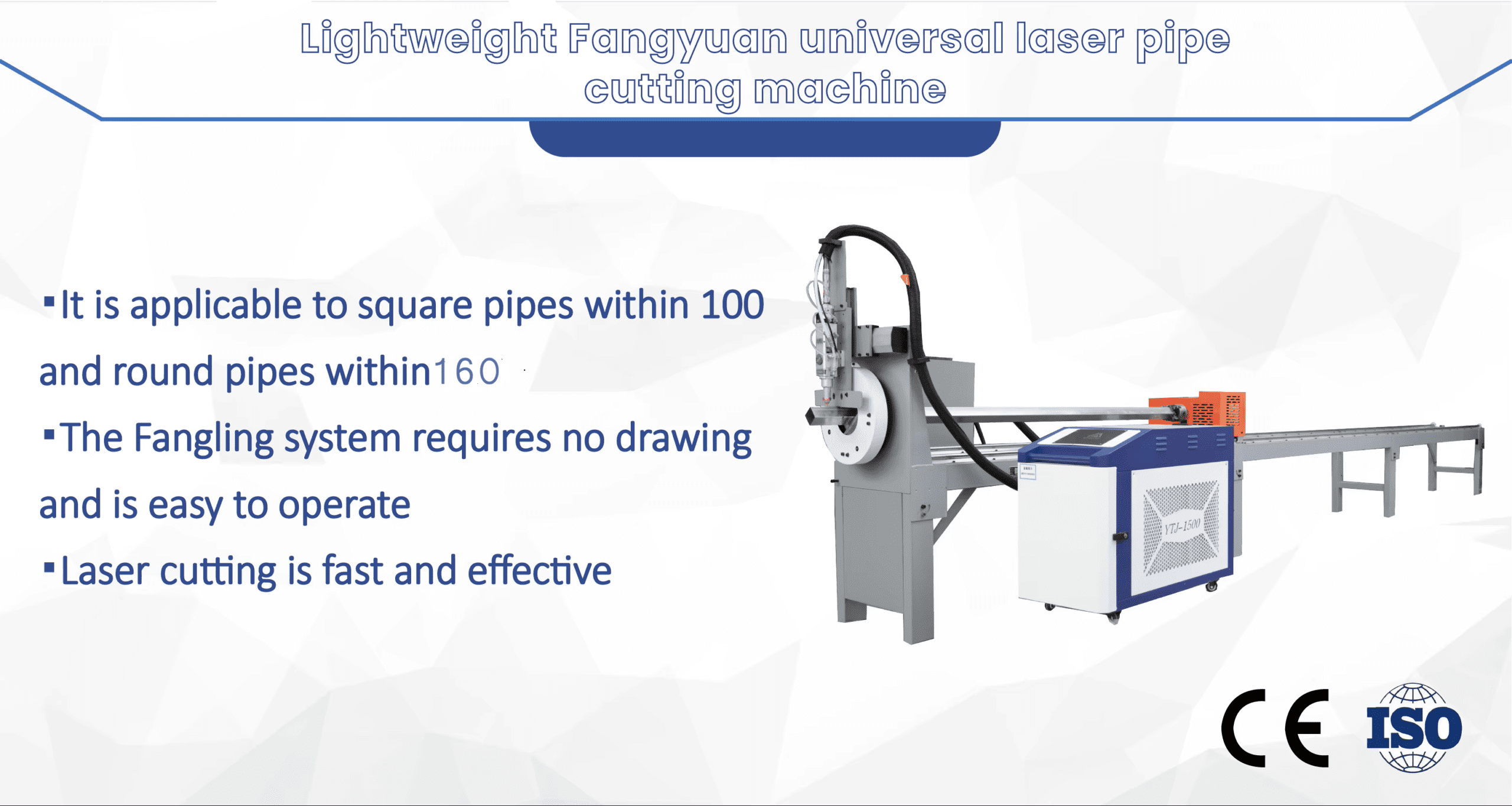
2.0 Kinematics and Mechanics of ±45° Bevel Cutting
The core technical advantage of the 20kW system is the five-axis head capable of ±45° beveling. In airport construction, structural beams rarely meet at simple 90-degree angles; complex geometries for roof trusses and bracing require precise V, Y, and K-type bevels for full-penetration welding.
2.1 Automated Weld Preparation
Traditionally, I-beam processing required a three-stage workflow: cutting to length, manual grinding/milling for bevels, and hole-drilling for bolt connections. The ±45° laser profiler consolidates these into a single-pass operation. By modulating the focal position in real-time relative to the beam’s surface, the system maintains a constant standoff distance even on the non-linear surfaces of heavy-duty I-beam radii. This eliminates the “bevel error” often seen in plasma systems where the arc wanders during thick-section transitions.
2.2 Volumetric Accuracy and Groove Geometry
The ±45° capability allows for the creation of complex transition zones between the web and the flange. When fabricating the primary support pillars for the Haiphong terminal, the laser profiler was programmed to execute variable-angle bevels that compensate for the rolling tolerances of the raw steel. This ensures that when the beams are hoisted into position, the fit-up gap is consistent within 0.2mm, drastically reducing the volume of filler metal required during the welding phase and minimizing residual stress within the joint.
3.0 20kW Fiber Laser Synergy and Structural Throughput
The jump from 12kW to 20kW is not merely a linear increase in speed; it is a qualitative shift in the “cutting envelope.” For the heavy-duty sections required in Haiphong’s airport hangars, the 20kW source facilitates “High-Power Air Cutting,” which significantly lowers the cost per meter while maintaining a dross-free finish on the lower edge of the flange.
3.1 Thermal Management and Beam Stability
High-power laser processing of heavy profiles generates significant localized heat. The 20kW system utilizes a sophisticated cooling circuit for both the cutting head and the internal optical components. This is vital in Haiphong, where ambient temperatures can fluctuate. The system’s “Active Anti-Collision” and “Thermal Compensation” algorithms ensure that as the I-beam expands slightly during the cutting process, the CNC adjusts the toolpath in real-time to maintain dimensional accuracy over a 12,000mm workpiece.
3.2 Perforation and Hole Precision
Airport steel structures rely heavily on bolted connections for modular assembly. The 20kW source allows for the “flash-piercing” of bolt holes in thick flanges that are traditionally the bottleneck of fabrication. The taper of these holes is kept under 0.1mm, ensuring that high-strength bolts (Grade 10.9 or 12.9) achieve full surface contact. This eliminates the need for secondary reaming, which is a significant labor-saving metric in large-scale infrastructure projects.
4.0 Impact on the Haiphong Airport Construction Cycle
The integration of the Heavy-Duty I-Beam Laser Profiler directly impacts the “Critical Path” of the project management timeline. By automating the structural processing, the fabricator in Haiphong can move from raw material receipt to “ready-for-erection” status in roughly 30% of the time required by conventional methods.
4.1 Reduction in Secondary Operations
In the Haiphong project, a comparative analysis was conducted between a standard plasma-cut I-beam and a 20kW laser-cut beam. The laser-cut profile required zero manual grinding before welding. Given that the ±45° head creates a “weld-ready” edge, the labor hours allocated to surface preparation were reallocated to assembly, effectively doubling the output of the fabrication shop without increasing the headcount.
4.2 Accuracy in Complex Geometries
The architectural design of the Haiphong airport expansion features tapered I-beams and curved structural elements. The 3D profiling capabilities of the laser system allow for the interpolation of the X, Y, Z, A, and B axes to follow the theoretical center-line of the beam even when the raw material exhibits “camber” or “sweep” from the rolling mill. This level of adaptive cutting is impossible with mechanical saws or fixed-axis plasma cutters.
5.0 Metallurgical Integrity and Quality Assurance
A primary concern for structural engineers in airport projects is the potential for micro-cracking in the Heat Affected Zone. The 20kW laser, due to its extreme power density, moves across the material at speeds that limit the duration of thermal exposure. Microstructural analysis of the cut edges on S355JR steel samples from the Haiphong site showed a martensitic transformation zone of less than 0.2mm, well within the safety margins for dynamic loading in aviation structures.
5.1 Kerf Consistency and Fit-up
The narrow kerf width (typically 0.3mm to 0.5mm with a 20kW source) ensures that the geometric intent of the CAD model is translated perfectly to the physical steel. In the assembly of the Haiphong hangar’s main span, this precision meant that the “cumulative error” across a 60-meter assembly was less than 5mm, a feat rarely achieved with traditional thermal cutting.
6.0 Conclusion: The New Standard for Heavy Steel Fabrication
The deployment of the 20kW Heavy-Duty I-Beam Laser Profiler with ±45° Bevel Cutting technology in Haiphong represents the technological zenith of current structural engineering capabilities. By solving the dual challenges of precision beveling and high-volume throughput, the system serves as a force multiplier for infrastructure development.
For the Haiphong Airport project, the technical benefits are clear: superior weld preparation, elimination of secondary processing, and the ability to handle the most demanding heavy-duty profiles with sub-millimeter accuracy. As structural requirements continue to evolve toward more complex, high-strength designs, the 20kW laser profiler will remain the foundational tool for ensuring both the safety and the efficiency of modern global infrastructure.













