The Dawn of 20kW Fiber Laser Power in Istanbul’s Infrastructure
Istanbul stands at a unique geographical and engineering crossroads. As a city spanning two continents, its reliance on robust bridge infrastructure—from massive transcontinental spans to intricate pedestrian overpasses—is absolute. For decades, the fabrication of structural beams and channels relied on plasma cutting or traditional mechanical sawing and drilling. However, the introduction of the 20kW CNC Fiber Laser has redefined the throughput limits of the city’s heavy industry.
As a fiber laser expert, I have witnessed the evolution of power density, but the jump to 20kW represents more than just a numerical increase; it is a qualitative shift in how we approach structural steel. At 20kW, the laser’s energy density allows for the “vaporization” of thick-walled steel with a Heat Affected Zone (HAZ) so narrow it is practically negligible. In the context of bridge engineering, where fatigue resistance and crystalline integrity of the steel are paramount, the ability to cut without compromising the base metal’s properties is a game-changer for Istanbul’s fabricators.
Specialized CNC Profiling for Beams and Channels
Bridge engineering rarely relies on flat sheets alone. The backbone of any bridge consists of I-beams, H-beams, U-channels, and hollow structural sections (HSS). Traditional methods of processing these profiles involved multiple machines: one for length cutting, another for hole drilling, and a third for manual beveling to prepare for welding.
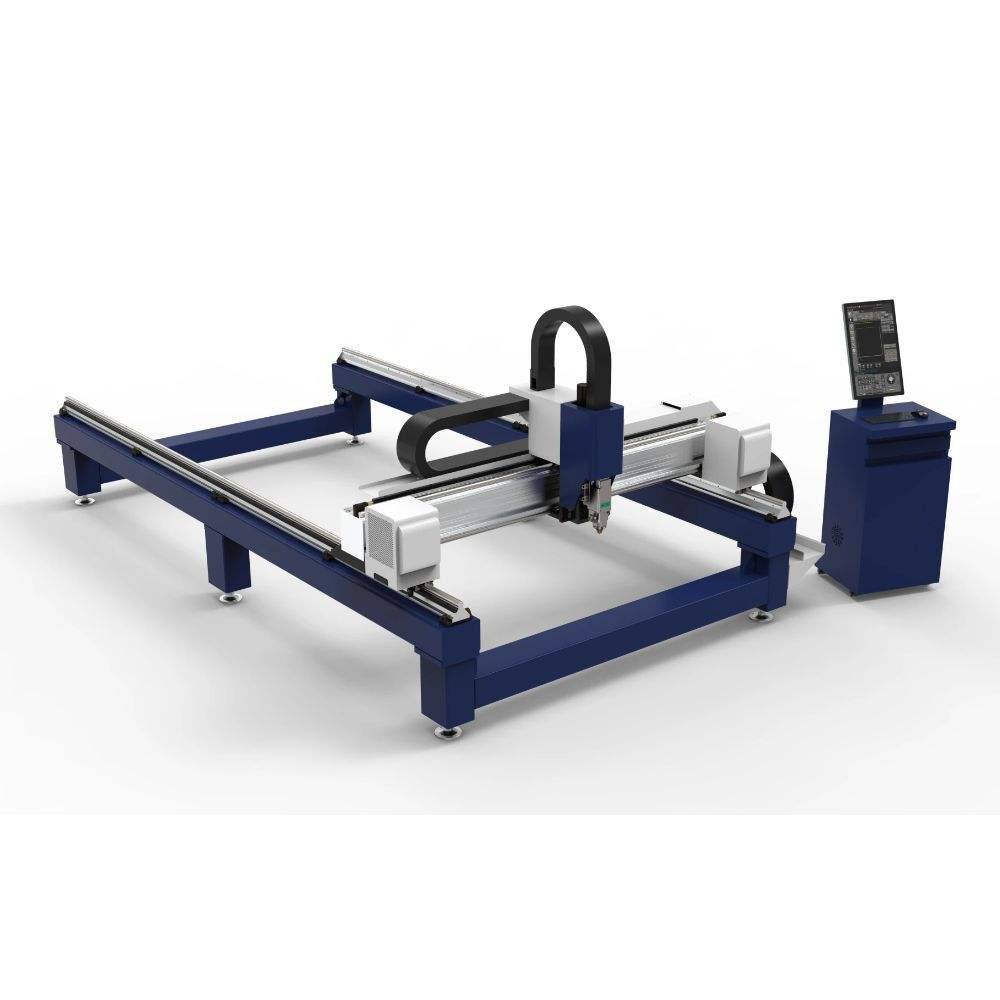
The modern 20kW CNC Beam and Channel Laser Cutter consolidates these processes into a single automated cell. Equipped with a rotating chuck system and a multi-axis 3D cutting head, these machines can process a 12-meter beam in a fraction of the time. The 20kW source allows these machines to pierce through heavy flanges—often exceeding 25mm in thickness—with surgical precision. This is particularly vital for the “dog-bone” connections and slotted holes required in seismic-resistant bridge designs common in Turkey, where the geometry must be perfect to allow for controlled energy dissipation during an earthquake.
Zero-Waste Nesting: Economics Meets Sustainability
In large-scale bridge projects, material costs can account for up to 70% of the total budget. Conventional beam processing often results in significant “drop” or scrap—the unused ends of beams that are too short for structural use. In Istanbul’s competitive construction market, the “Zero-Waste Nesting” capability of modern CNC lasers provides a critical edge.
Zero-waste nesting utilizes sophisticated software algorithms that analyze the entire project’s bill of materials. Instead of cutting one beam at a time, the software “nests” multiple parts across several lengths of raw stock. It utilizes “common-line cutting,” where a single laser pass creates the edge for two different parts, and “remnant management,” which tracks every centimeter of off-cut for future use. For a bridge project requiring thousands of tons of steel, reducing scrap from 10% to 2% represents a multi-million lira saving and a significant reduction in the carbon footprint of the project.
Precision Weld Preparation and Beveling
One of the most labor-intensive aspects of bridge engineering is the preparation of weld joints. For a bridge to support heavy transit loads, the penetration of the weld must be absolute. This requires complex “V,” “Y,” or “K” bevels on the edges of the beams and channels.
A 20kW laser system equipped with a five-axis tilt head can execute these bevels simultaneously with the primary cut. Because the laser is CNC-controlled, the angle of the bevel can vary along the length of a single cut, accommodating the complex geometries of curved bridge girders. The precision of a 20kW laser means the fit-up between two structural members is tighter—often within tolerances of 0.1mm. This reduces the amount of filler wire needed for welding and significantly lowers the risk of weld defects, which is a primary concern for the Turkish Standards Institution (TSE) and international bridge inspectors.
Navigating Istanbul’s Seismic Challenges
Istanbul is a city defined by its proximity to the North Anatolian Fault. Consequently, bridge engineering here is governed by some of the strictest seismic codes in the world. Structural ductility is key; the steel must be able to flex and absorb energy without fracturing.
The 20kW fiber laser contributes to seismic safety through its “Cold Cutting” profile. Unlike plasma or oxy-fuel, which dump massive amounts of heat into the material, the 20kW laser moves so quickly that the heat does not have time to migrate into the surrounding steel. This prevents the formation of brittle martensite structures at the cut edge. For Istanbul’s bridges, this means the bolt holes and connection points remain ductile, ensuring that under the stress of an earthquake, the bridge performs exactly as the engineers intended, without premature cracking at the laser-cut interfaces.
The Role of Fiber Technology in Local Manufacturing
Istanbul has become a regional hub for high-tech manufacturing, and the adoption of 20kW laser technology has bolstered Turkey’s reputation as an exporter of structural steel components. Local firms are no longer just building bridges for the Bosphorus; they are pre-fabricating components for projects across Europe, Central Asia, and the Middle East.
The 20kW fiber laser is particularly suited for this because of its reliability and lower operating costs compared to older CO2 lasers. The solid-state nature of the fiber source means there are no internal mirrors or turbines to maintain, which is crucial for Istanbul’s high-volume fabrication shops that often run 24/7. The efficiency of the 20kW source—converting electricity to light with nearly 40% efficiency—also helps local manufacturers manage the rising energy costs in the industrial zones of Dudullu or Hadımköy.
Software Integration and the Digital Twin
In the modern Istanbul fabrication shop, the 20kW laser does not operate in a vacuum. It is the physical execution arm of a digital workflow. Bridge engineers create complex 3D models in BIM (Building Information Modeling) software. These models are fed directly into the laser’s CNC controller.
This “File-to-Fiber” workflow eliminates manual marking and measurement errors. When the laser cuts a channel for a bridge in Istanbul, it can also engrave part numbers, assembly marks, and QR codes directly onto the steel. This creates a “Digital Twin” of the bridge component, allowing for real-time tracking from the factory floor to the construction site on the Golden Horn. The Zero-Waste nesting software integrates with this data, ensuring that every cut is accounted for in the project’s digital ledger.
Future Outlook: Beyond 20kW
As we look toward the future of bridge engineering in Istanbul, the trajectory is clear. We are moving toward even higher power levels and increased automation. However, the 20kW threshold is currently the “sweet spot” for structural steel. It provides the perfect balance of piercing speed, edge quality, and electrical efficiency for the specific grades of S355 and S460 steel commonly used in Turkish infrastructure.
The implementation of Zero-Waste Nesting is also evolving. We are beginning to see AI-driven nesting that predicts the best use of material based on historical data and upcoming project pipelines. For Istanbul, a city that never stops building, these efficiencies are not just luxury upgrades; they are essential tools for sustainable urban growth.
Conclusion
The deployment of 20kW CNC Beam and Channel Laser Cutters in Istanbul represents a fusion of raw power and intelligent resource management. By embracing the precision of fiber laser technology and the economic logic of zero-waste nesting, the Turkish bridge engineering sector is setting a global standard. These machines are not merely tools; they are the engines of a more resilient, efficient, and technologically advanced Istanbul, ensuring that the bridges connecting its historic past to its ambitious future are built with the highest possible integrity.