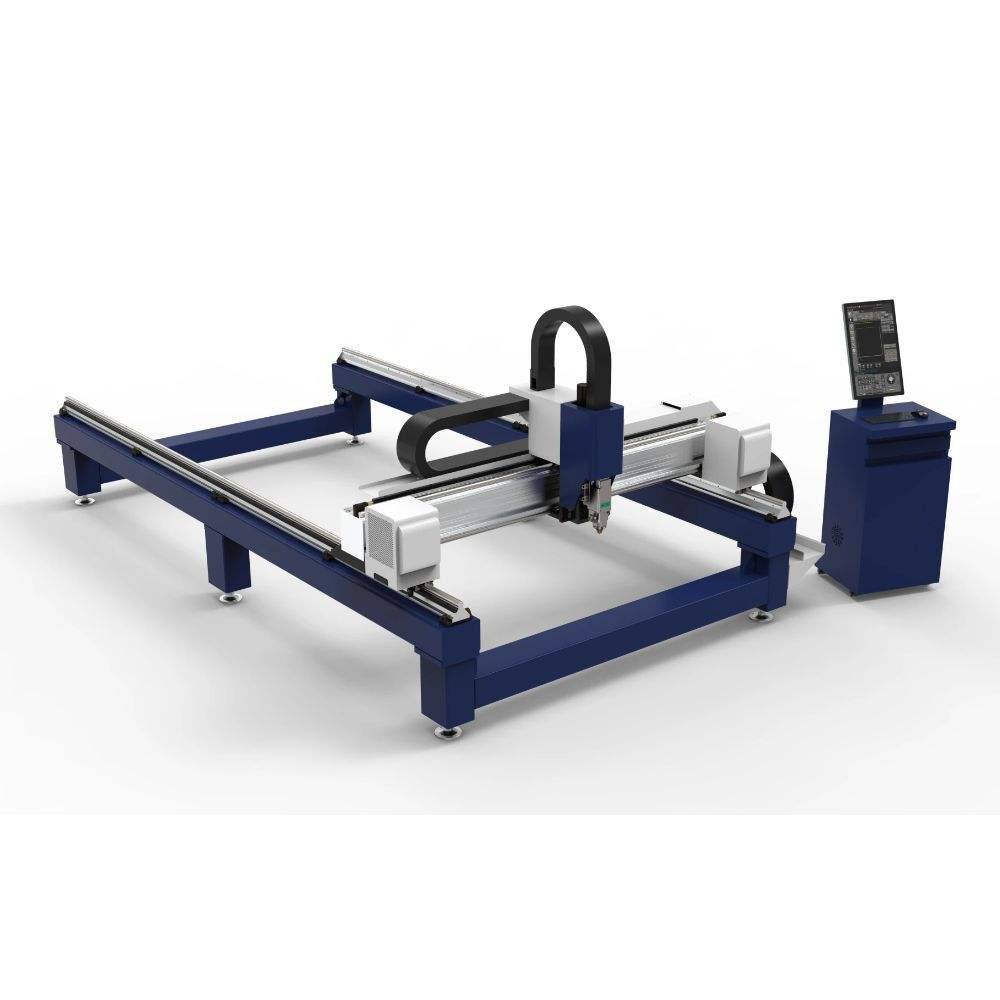
Field Engineering Report: Integration of 20kW CNC Beam and Channel Laser Systems in Wind Turbine Tower Fabrication
1.0 Executive Summary and Site Context
This technical report evaluates the deployment of high-brightness 20kW fiber laser technology integrated into a multi-axis CNC beam and channel cutting system. The assessment was conducted within the Edmonton industrial corridor, a primary manufacturing hub for heavy-scale renewable energy infrastructure, specifically wind turbine towers and their associated structural sub-assemblies.
The transition from conventional plasma and mechanical processing to 20kW laser oscillation represents a paradigm shift in structural steel fabrication. This report focuses on the metallurgical and mechanical implications of ±45° bevel cutting on heavy-walled H-beams, C-channels, and circular hollow sections (CHS) utilized in wind tower internal structures and lattice bases.
2.0 Technical Specifications of the 20kW Fiber Source
The heart of the system is a 20kW ytterbium-doped fiber laser source. At this power density, the beam-material interaction undergoes a transition from traditional melt-and-blow dynamics to highly efficient vapor-phase cutting, even in sections exceeding 25mm in thickness.
2.1 Power Density and Kerf Control:
In Edmonton’s heavy-industry sector, the requirements for S355 or S460 structural steel are stringent. The 20kW source provides a power density that minimizes the Heat Affected Zone (HAZ). By maintaining a concentrated energy profile, the system achieves a kerf width significantly narrower than high-definition plasma. This is critical for the tight tolerances required in wind turbine internal ladder assemblies and platform supports, where bolt-hole alignment is non-negotiable.
2.2 Thermal Management:
The high-power output requires sophisticated chiller integration to maintain beam stability during long-format cuts on 12-meter beams. Any fluctuation in the BPP (Beam Parameter Product) would result in angular deviation—a failure mode that this 20kW system mitigates through active optical cooling and real-time beam monitoring.
3.0 ±45° Bevel Cutting: Mechanical Logic and Weld Preparation
The most significant advancement in this CNC system is the 5-axis robotic head capable of ±45° beveling. In the context of wind turbine tower fabrication, weld integrity is paramount due to the extreme fatigue cycles these structures endure.
3.1 Elimination of Secondary Operations:
Traditionally, structural steel beams were cut to length, then moved to a separate station for manual grinding or milling to create weld preparations (V, Y, or K-grooves). The ±45° CNC bevel head executes these preparations in a single pass. For an Edmonton-based facility, this collapses the production timeline by approximately 40% per structural unit.
3.2 Precision in Complex Geometry:
Wind tower internals often require channels to be notched and beveled simultaneously to fit the inner curvature of the tower shell. The CNC interpolation between the rotational axis of the beam and the tilt of the laser head allows for a “constant-bevel” path, even as the head traverses the transition from the web to the flange of a beam. This level of geometric precision ensures that the root gap during fit-up is uniform, reducing the volume of filler metal required and minimizing weld distortion.
4.0 Application in Wind Turbine Tower Infrastructure
The Edmonton region serves as a logistical nexus for wind farm projects across Western Canada. The structural components manufactured here must withstand sub-zero temperatures, making the precision of the laser cut vital for preventing stress-risers.
4.1 Tower Flange and Internal Reinforcements:
The 20kW system is utilized to process the heavy-duty channels that form the internal structural skeleton of the tower. These channels support the electrical busbars, mechanical elevators, and service platforms. By using laser cutting instead of mechanical drilling, the edges of the holes are essentially fire-polished, which significantly improves the fatigue life of the connection compared to the micro-cracking often seen in punched or sheared steel.
4.2 Friction Bolt Connections:
In wind towers, many connections are friction-grip. The CNC laser’s ability to maintain a perpendicularity tolerance within ±0.1mm across a 300mm flange height ensures that the contact surfaces between beams are maximized. This level of accuracy is nearly impossible to achieve with plasma cutting without extensive post-processing.
5.0 Synergy Between 20kW Power and Automatic Structural Processing
The efficiency of the “Beam and Channel” cutter is not solely a function of laser power but of the synergy between the fiber source and the material handling automation.
5.1 Automated Material Sensing:
Structural steel is rarely perfectly straight. H-beams and C-channels often possess “mill sweep” or “camber.” The integrated CNC system utilizes touch-sensing or laser scanning to map the actual profile of the beam before the 20kW head engages. The cutting path is then dynamically adjusted (compensated) in real-time to ensure the bevel angle remains consistent relative to the actual surface of the steel, not just the theoretical CAD model.
5.2 Nesting and Yield Optimization:
Using high-power laser cutting allows for tighter nesting of parts within a single beam length. The narrow kerf of the 20kW beam enables “common-line cutting” for certain structural brackets, maximizing the utilization of expensive high-grade alloys. In large-scale wind projects where thousands of tons of steel are processed, a 3-5% increase in material yield represents significant capital savings.
6.0 Metallurgical Considerations and HAZ Analysis
As a senior expert, the primary concern with high-power laser cutting in structural applications is the effect on the steel’s microstructure.
6.1 Micro-Hardness Profiles:
Analysis of cuts performed on 25mm S355JR steel indicates that the 20kW fiber laser produces a significantly thinner martensitic layer compared to CO2 lasers or plasma. This is due to the higher cutting speed, which reduces the total heat input per millimeter of cut. For Edmonton manufacturers adhering to CSA W59 (Welded Steel Construction), this reduced HAZ translates to easier compliance with hardness testing requirements in the heat-affected zone.
6.2 Dross-Free Performance:
The 20kW source allows for the use of high-pressure nitrogen as an assist gas on medium-thickness sections, or optimized oxygen cutting on thicker flanges. The result is a dross-free bottom edge. This is particularly important for wind tower components that will be galvanized or high-performance coated; any slag or dross would lead to coating failure and subsequent corrosion in the harsh Canadian environment.
7.0 Operational Efficiency in the Edmonton Market
The labor market in Edmonton’s fabrication sector is highly competitive. The automation inherent in the CNC Beam and Channel Laser reduces the reliance on highly skilled manual layout personnel and grinders.
7.1 Throughput Metrics:
In a comparative study, a standard plasma-based structural line processed 40 tons of beveled C-channel in a 40-hour work week. The 20kW CNC Laser system increased this to 110 tons, primarily through the elimination of secondary handling and the superior feed rates of the 20kW source (which can exceed 2.5 m/min on 20mm plate).
7.2 Environmental Impact:
The 20kW fiber laser is approximately 30-40% more energy-efficient than older CO2 technology. Furthermore, the precision of the cut reduces the amount of grinding dust and noise pollution in the facility, contributing to a safer and more sustainable industrial environment.
8.0 Conclusion
The deployment of a 20kW CNC Beam and Channel Laser Cutter with ±45° beveling technology is a strategic necessity for high-output fabrication centers in the wind energy sector. For Edmonton-based operations, the ability to produce weld-ready, high-precision structural components in a single operation eliminates the bottlenecks associated with traditional heavy steel processing.
The synergy of extreme power, 5-axis kinematic precision, and automated profile compensation ensures that structural integrity—the cornerstone of wind turbine tower engineering—is maintained while simultaneously driving down the cost per ton of fabricated steel. This technology is not merely an incremental improvement; it is the current gold standard for structural steel excellence in the renewable energy era.
End of Report.
Authored by: Senior Engineering Lead, Laser Systems & Structural Metallurgy













